 Written by
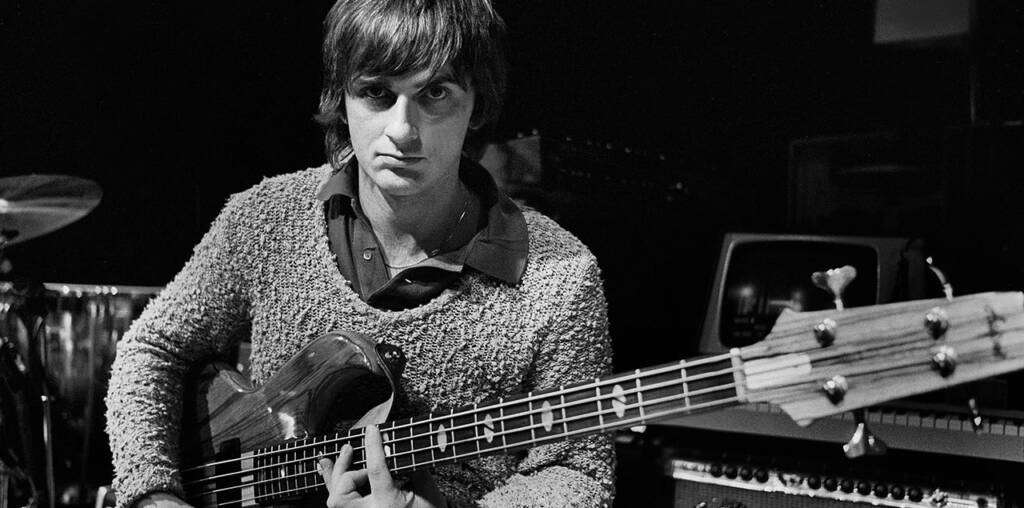
 In 2021 Mike Oldfield told Prog about his eighth album Crises, his satisfaction at returning to the charts after several years in the creative doldrums, and how the 1983 release took him back to his first musical love.
“According to Richard Branson, Virgin were looked on as a hippie label that wasn’t really serious,” says Mike Oldfield of his situation in 1977. “I was their one hit artist, so they were feeling a little foolish, I suppose, and that’s why they signed the punk acts and switched all their attention onto them. At the time Richard was quite a close friend – he was my manager as well – but I felt a little brushed under the carpet.”
It was a decade that many prog musicians had made their own; and few had done so as spectacularly as Oldfield. With 1973 debut Tubular Bells he’d expanded musical possibilities for good, demonstrating that if an artist had the instrumental facility, they could – through overdubbing and more than a little inspiration – produce large-scale pieces almost entirely solo; in this case, one that sold vast amounts worldwide and almost single-handedly kept Virgin afloat.
Latest Videos From Louder

Tubular Bells had been fresh, new and perfectly tuned to the zeitgeist. But four years down the line, progressive rock had done what no other popular musical movement had before – provoked an enormous backlash. The genre was under fire from punk rock and sections of the music press, which all coincided with Oldfield reaching something of a creative impasse.
“Tubular Bells was fantastically successful and then Hergest Ridge (1974) was very successful; but on the back of Tubular Bells it got critically attacked. Ommadawn (1975) was very well received critically and that sold pretty well, and then I had this Incantations album [1978], which took me three years – and my heart wasn’t really in it, to be honest.”
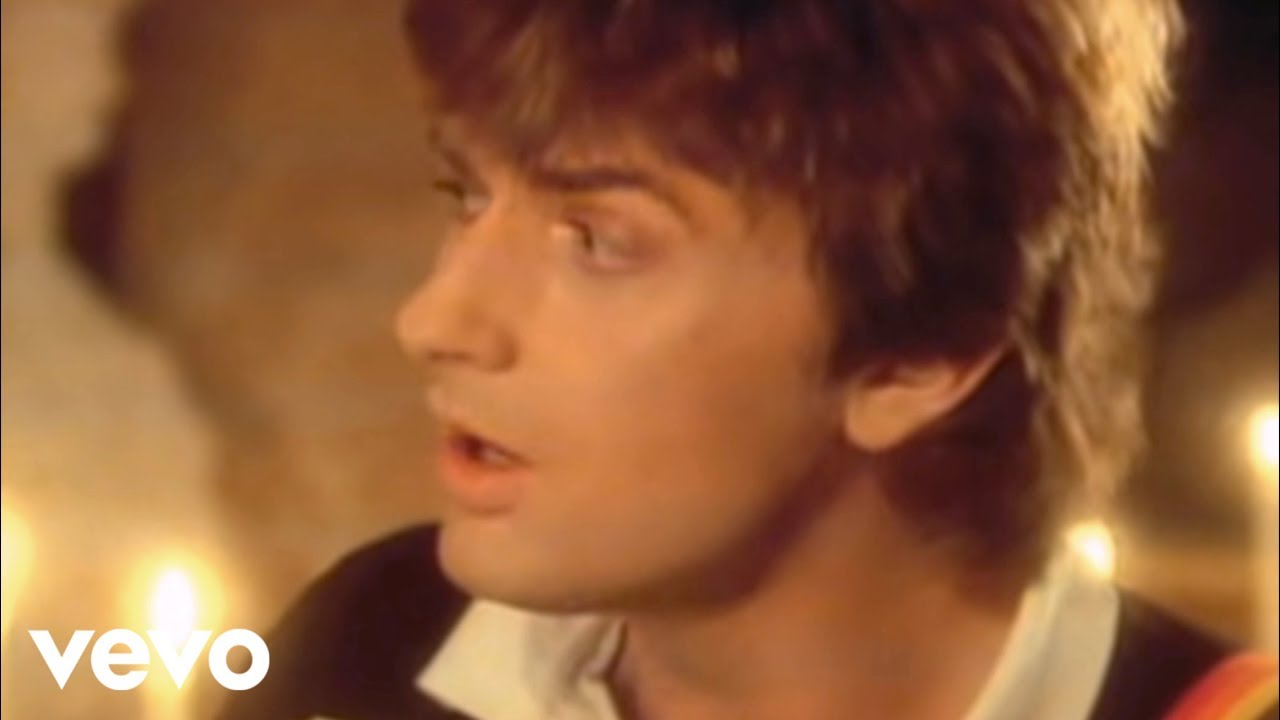
Oldfield was faced with both creative frustration and an industry in a state of flux. “In a way I had to reinvent myself,” he admits. He participated in Exegesis – a form of alternative therapy involving rebirthing – travelled to New York to record and embarked on a number of tours, “tossing the chips in the air to see where they would land.”
The new tack didn’t yield instant results. With subsequent albums Platinum and QE2 featuring some less than convincing songs, cover versions of music by the likes of Gershwin and ABBA, and ill-advised, jocular excursions like the punk-folk instrumental Punkadiddle, Oldfield was in danger of heading into a creative cul-de-sac. But on Five Miles Out [1982] he balanced the 25-minute, largely instrumental Taurus II with shorter pieces, of which Family Man signalled an improvement in his songwriting.
He further refined his approach on 1983’s Crises – not only was it artistically his best album since Ommadawn, it charted at Number 6, the highest position since the earlier album’s Number 4, and yielded an international hit single with Moonlight Shadow. “Suddenly I was popular with the record company again, with people going: ‘Mike, Mike, hello! Where have you been?!’” he recalls, clearly amused at the memory.
With another side-long instrumental title track and a group of shorter songs, Crises kept his original fans on board while appealing to a pop audience. But was he worried that in taking this approach he might fall between two stools? “No – I never think I’d better do something because of this or because of that,” he counters. “It just felt like the right thing to do at the time. I don’t really make plans for things.
“I first started out making music in folk clubs when I was about 11 or 12. I used to write these little songs, they weren’t very good at all, but then I would make long instrumentals on steel–stringed acoustic guitar. So I have always had these two aspects: short songs and long instrumentals.”
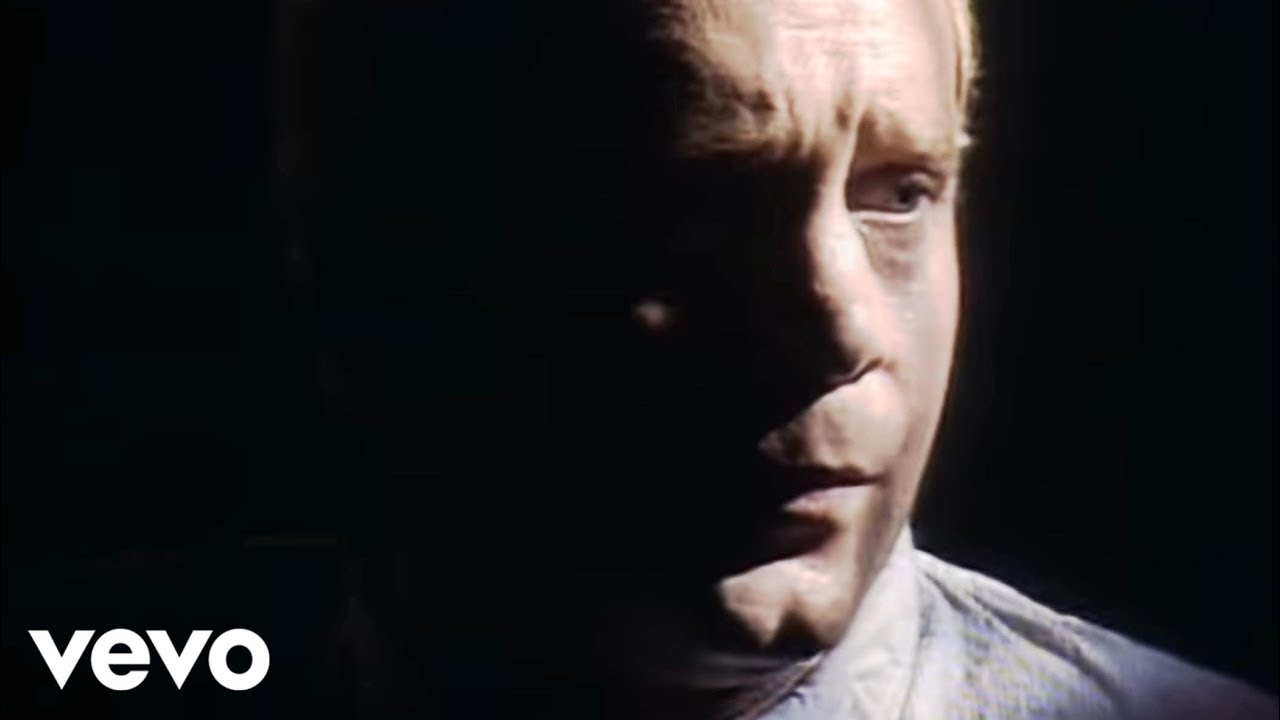
The 20-minute title track weighs is formed from a number of sections. Did he have an idea of an overall structure when he began composing it? “There’s usually a long period of coming up with little bits and then seeing how I could fit them together, with musical motifs that crop up throughout the piece, or a theme that links it all,” he explains. “I throw out a lot of ideas that don’t even get to the drawing board.
“If I sit down and try and write something, it doesn’t usually work out very well. But there are times when out of the blue a little tune, motif or harmonic progression will appear in my brain, and I’ll go: ‘Ah, thanks!’ I’ve likened it to receiving a cosmic email from someone, or some force. I suppose that’s called inspiration, but I’ve never really got to the bottom of it. I’ve learned not to question it – just follow it if I get it.”
When I was remixing it I thought: ‘Oh God, I’ve got to listen to my voice.’ But it wasn’t that bad actually
A new name appeared on the credits for the first time alongside Oldfield: the prodigiously talented drummer Simon Phillips, who was originally drafted in as a session player, but who ended up with credits as assistant producer. Although he was new to working in the control room, he learned quickly and did a lot of the engineering when Oldfield overdubbed guitars or keyboards.
Although Phillips wasn’t involved compositionally, he did make his mark musically, particularly on the title track, which feels sleeker and better integrated than the similarly lengthy Taurus II on Five Miles Out. His drumming helps to knit the elements together, especially when playing his near-melodic tom-tom patterns with Oldfield’s sequencers.
Oldfield was not blessed with much of a voice, but on the title track his brief snatches of singing are urgent and effective, most notably on the ‘Watcher in the tower’ section. “Funnily enough, when I was remixing it I was dreading that, as I thought: ‘Oh God, I’ve got to listen to my voice.’ But it wasn’t that bad actually – it sounds alright,” he concedes.
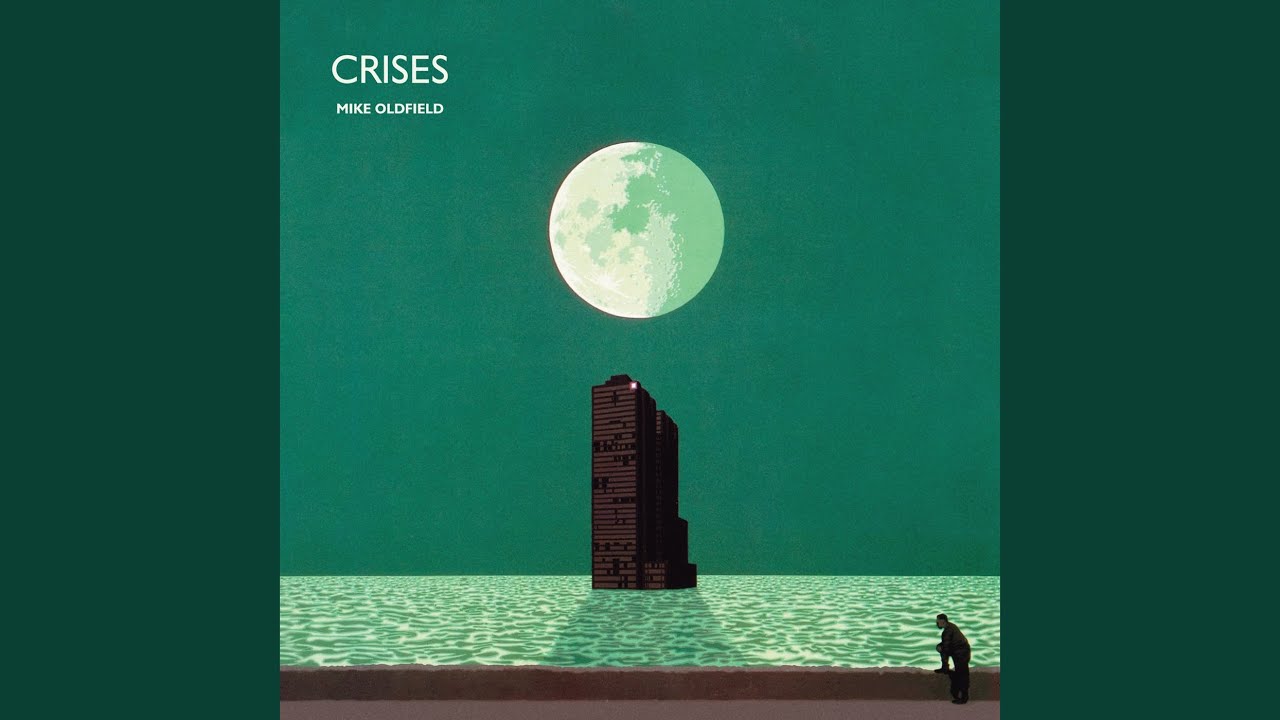
But if some of his previous songs had come across as a tad self-effacing and a bit like makeweights, the songs on Crises sound more fully realised and far more confident – particularly the single Moonlight Shadow. After a long pause, Oldfield responds: “They ended up like that, but they didn’t start off like that,” he explains. “For example, Moonlight Shadow – I got the musicians together, scribbled out some chords and said: ‘Here you go, boys, let’s play this,’ and bashed out this backing track that sounded marvellous straight off.
“And I thought: ‘What is it? Is it an instrumental? Is it a song? What should I do with it?’ Something in me thought it would make a great song, but then I had to think of lyrics and a singer.” He invited Hazel O’Connor to write her own words and have a go at singing, but it wasn’t quite what he wanted. After thinking it over for months, he booked Maggie Reilly, who’d sung on Family Man on Five Miles Out for a session, and forced himself to come up with lyrics.
Maggie Reilly wanted to sing it as a rock song. And I thought that wasn’t going to work
“I sat down one night with a lovely bottle of Chateau Latour, a rhyming dictionary, thesaurus, pen and pad,” he recalls. “The first thing that came into my mind was that it was night; there had to be ‘moon’ in it. The Moon was making shadows of the trees and I thought, ‘Alright, I‘ll have some of that in.’ Ideas and phrases and words poured out in a great big mixture onto the pad, and I started fitting them together. At about five o’clock in the morning I had something that looked like a reasonable song.
“Maggie turned up next day. She wanted to sing it out in a soulful way – belt it out as rock song. And I thought that wasn’t going to work, so I put the mic up very close to her mouth and said: ‘Maggie, just whisper it, like you’re whispering in someone’s ear,’ which she’d never done before.”
Later, when Oldfield was putting on his guitar solos, he and Phillips agreed that there should be two: one clean, and one that should sound “almost like a saxophone.” Then after an all-night mixing session, the song was finally complete. Moonlight Shadow reached Number 4 in the UK and Number 1 in many European countries. “I’m pleased with all the work that went into it,” says Oldfield, “because it was successful and it still sounds very good today.”
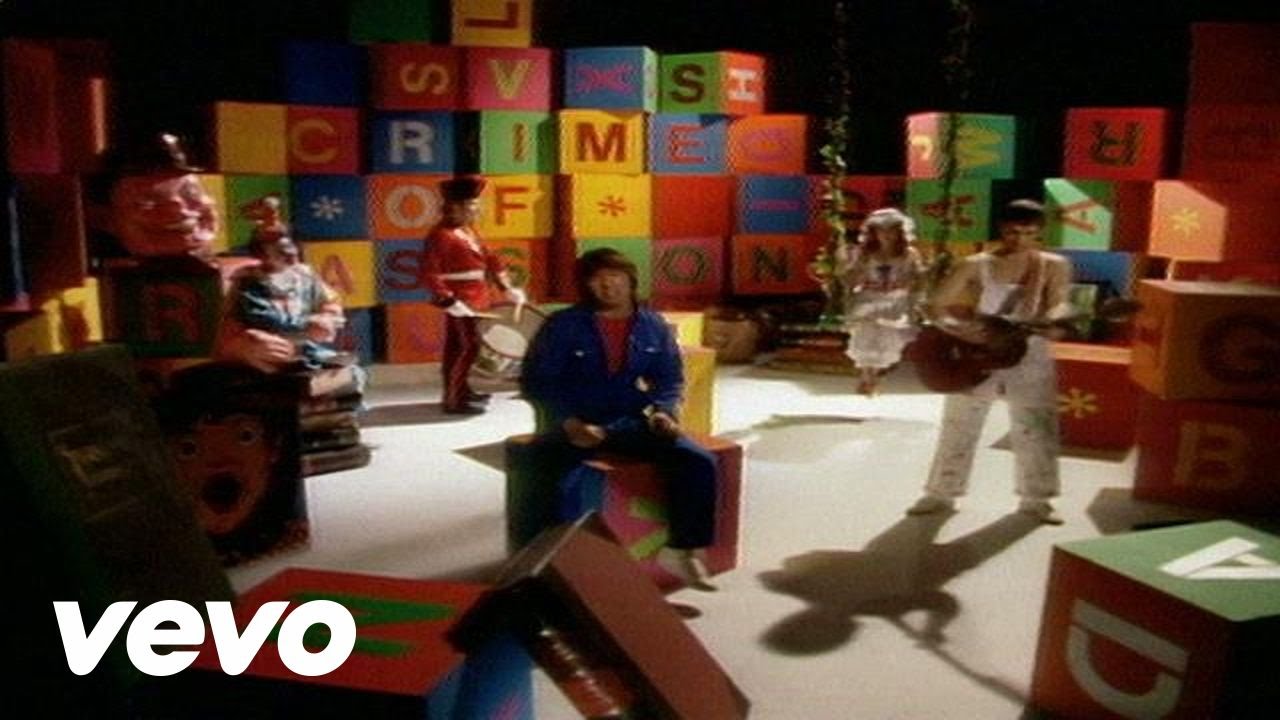
Reilly also sings on the seductive, cyclical melody of Foreign Affair, again with a light touch. The one instrumental on the second side is the concise but flamboyant acoustic guitar-based instrumental, Taurus 3. Jon Anderson helped create another highlight with In High Places; having left Yes and already achieving success with Vangelis, he was looking for other collaborations, and got in touch with Oldfield – who recalls that the song was put together in a completely different way to Moonlight Shadow.
“It was just around the time I was doing The Killing Fields soundtrack. It was at Jon’s house in Kensington and Vangelis was there – he’d just done Chariots Of Fire with David Puttnam, who was now working on The Killing Fields, so I was able to pick his brains about technical things in film music, like syncing up.
Roger Chapman belted it out and it made your hair stand up. It became a sort of anthem in the Eastern Bloc before the Berlin Wall came down
“I had another bit of backing track which I thought could make a song and Jon took it off on a cassette and wrote some lyrics. Simon and I flew off to Paris in the morning to record – Jon was a tax exile at the time – and flew back late at night.”
The other outstanding vocal performance is by Roger Chapman, formerly of Family, and by then leading The Shortlist. Oldfield had recorded another backing track at the same time as Moonlight Shadow, but he had a far more concrete idea of what to do with it. He‘d been reading about the subjugation of the Polish trade union Solidarity and its leader, Lech Walesa. Having travelled a lot in Germany and the rest of Europe, Oldfield had experienced the stark contrast between the Iron Curtain countries and the West, all of which inspired the song Shadow On The Wall.
Oldfield had auditioned for Family after leaving Kevin Ayers in 1971, but although he didn’t get the job, he remembered some encouraging words and “good vibes” from Chapman. “He belted it out in one take and it made your hair stand up,” Oldfield says. “It became a sort of anthem in the Eastern Bloc before before the Berlin Wall came down, which is great.” His guitar playing sounds tougher and grittier than usual. “Well, it had to be for that song,” he agrees, adding, “but then I always go for it.”
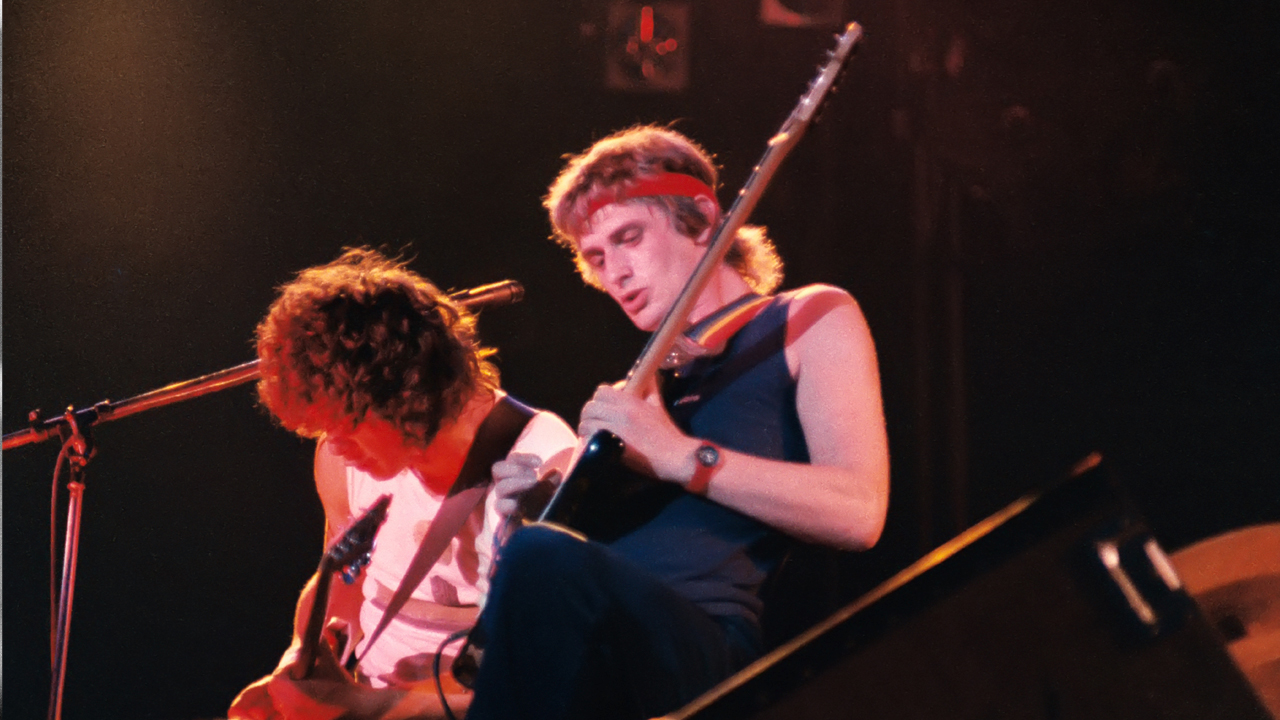
Crises saw Oldfield sharpening his artistic focus and effectively setting himself up for the second phase of his career by re-establishing himself as a composer of large scale, intricately structured instrumental suites, while taking his songwriting onto another level and into the charts. He was firmly back in the spotlight. The following tour included a headline show Wembley Arena in July 1983 – but it wasn’t quite all plain sailing from there.
“There’s nothing that makes you more popular with your record company than having a hit,“ Oldfield reflects. “Richard was so happy; he said I should do more albums of songs like that. As a result I came up with a couple of albums that I wouldn’t have done otherwise, that were all songs – Discovery and Islands. They aren’t really my best work, although there is the occasional good idea on them. But that was a result of Crises and the success of Moonlight Shadow.
“Then came Amarok (1990), which was one hour of only hand-played instruments; a crazy, mad, wonderful thing. I’d swung right back to my first love in music – the long instrumental.”