 Written by
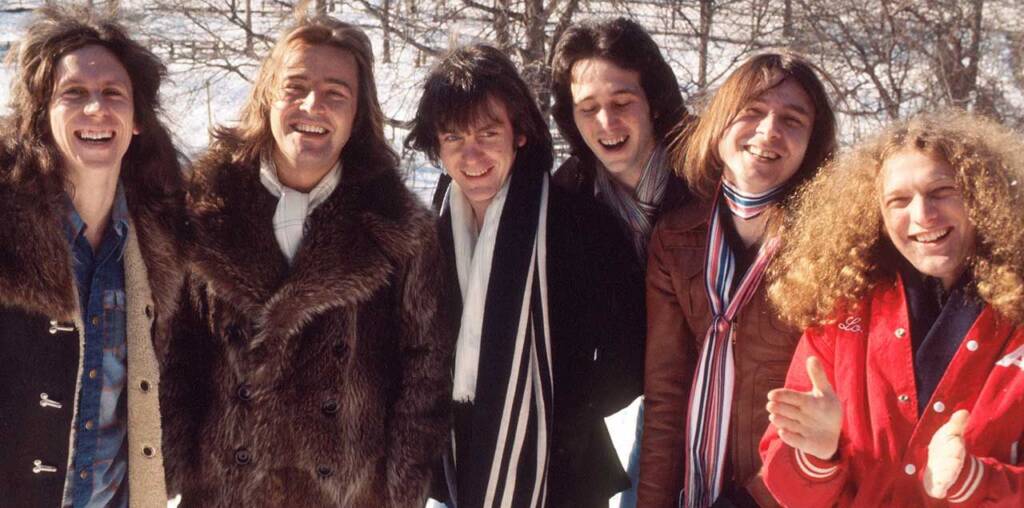
 In 1976, following the break-up of former Mountain vocalist/guitarist Leslie West’s solo band, guitarist Mick Jones was stranded in New York City without a gig. Fortunately, the Englishman, a former member of Spooky Tooth who done session work for George Harrison and Peter Frampton among others, had a decent contacts book, and when West’s manager Bud Prager offered him a rehearsal space in the city, he began casting around for like-minded musicians to play with.
Soon enough he had a new band, Trigger, featuring two fellow Brits (former King Crimson multi-instrumentalist Ian MacDonald and ex-Ian Hunter drummer Dennis Elliott) and three native New Yorkers (vocalist Lou Gramm, bassist Ed Gagliardi and keyboardist Al Greenwood).
“It was a very heady time,” Jones recalls. “I’d played in bands before, but this was the first time that I was the principal writer and had the responsibility of leading the band. We were in the studio but we didn’t really know yet exactly where we were going. But I knew that I wanted to be in a successful group.”
Initially, when the new group submitted demo tapes to major label A&R departments, no-one wanted to bite. “Disco was at height,” Jones pointed out, “and punk and new wave were just hitting. So things didn’t look at all good for what we were doing!” But after a young Atlantic Records talent scout named John Kalodner came across their tape and recognised the commercial potential of Jones’ Feels Like The First Time, the sextet were offered a deal. As Kalodner was aware of another band called Trigger, one that he thought “stunk”, he suggested that a name change might be advisable.
“I never liked the name Trigger anyway,” Jones told Classic Rock writer Malcolm Dome, “and we all agreed that it should be changed. We had pages and pages of ideas, and a lot of them were embarrassing. Eventually, I suggested Foreigner, because we had three Englishmen and three Americans, so wherever we went there would always be a foreign element in the band. We did briefly toy with the idea of calling ourselves Alien, which is another way of saying we were foreigners, but it never sounded right.”
Jones wanted Roy Thomas Baker to produce the first Foreigner album, mainly due to his work with Queen. But when Baker had to decline the approach due to having prior commitments, he recommended Gary Lyons and John Sinclair, who co-owned Sarm Studios in London where he’d done a lot of work in the past. Ironically, if Gary Lyons hadn’t expressed his opinion that one song earmarked for the record didn’t fit, Cold As Ice might never have been written.
Latest Videos From Louder

“I had bought a mini-piano, a Melody Grand, and I started to fiddle around on it, and hit upon a couple of interesting chords that I’d never played before,” Jones recalls. “Lou [Gramm] came around to the house and I just threw it out there and we started fleshing it out. I’d never written a full song on piano before and I was rather surprised how quickly I took to it. The piano I played in the studio was actually one that Atlantic had bought specifically for Aretha Franklin.
“It’s a strange, quirky little song, basically a pop song written back to front. The structure is unusual: it starts with the title, and it’s only further down the line that you realise that the pre-chorus is actually the chorus. I knew it was the poppiest song we’d done, which I was a little worried about, but everybody seemed to dig it. I didn’t see it being indicative of the direction of Foreigner, so it was a bit of a surprise addition to the album. But one thing I wanted to do with Foreigner was to show that the band had some versatility, and this was definitely different and a bit commercial, not just another hard rock song.”
The song’s lyrics, Jones says, were based on “the idea of the stereotypical cold-hearted, bad girl – the sort of woman Joan Crawford would play in a film.”
“It wasn’t aimed at anyone specific,” he insists. “Well, there was one girl at school that dumped me, so maybe that trauma stayed with me over the years and subconsciously filtered in! The other contributing factor was that it was about minus 20 degrees in New York at the time we were writing it, which may have fed into the atmosphere.”
Trusting John Kalodner’s initial instincts, in March 1977 Foreigner released Feels Like The First Time as the first single from their self-titled debut album, and were rewarded with their first Top 10 hit in the US, the single peaking at number 4 on the Billboard Hot 100 on June 18, 1977. The following month, Cold As Ice was released as the record’s second single. It too entered the US Top 10, reaching number 6 on October 22, 1977.
“I must admit though that I was surprised when it went into the Top 10 in America,” Jones recalls. “But then we were a new band, and everything was exciting and surprising at the time. I guess radio was ready to see what we had next.”
Looking back on the song’s durability five decades on, Jones said, “I don’t think we’ve ever played a Foreigner show without playing Cold As Ice.”
“It’s a big one for the fans, probably in our top three songs in terms of recognition,” he added. :”It’s a proper singalong at gigs, everyone likes to belt it out. It’s a bit of an oddity, but it’s done very well for us. I guess it’s part of our identity now.”