 Written by
 Nestled between a betting shop, a taxidermist and a kebab joint, among other local businesses and some shuttered shop fronts, Kriminal Records feels like a porthole to another world. Rock, metal, reggae, soul, hardcore, jazz… little music goes unrepresented here. The decor is triumphantly odd. A couple of doors away, live venue The Cab is plastered with a sign reading: ‘Voice of The People’. It’s easy to picture Skindred here. Which they will be, shortly.
“It’s just things I like,” Kriminal’s owner Dean Beddis says of the assorted tribal masks, plush toys, paintings, 70s Action Man figures and, on one wall, an enormous pair of Iron Age Celtic horns. “Like the carnyx,” he muses, looking at the latter. “They found one of those recently that they dug up in England…”
Twenty-six years ago, Skindred formed from the ragga-metal ashes of Dub War, in the basement of St Joseph’s Boxing Club across town. Today their boundary-averse legacy remains one of Newport’s biggest music success stories, with homegrown frontman Benji Webbe capturing an extroverted intersection between Jamaican vibes, heavy metal and Liberace.
Latest Videos From Louder

All that now comes out in You Got This, Skindred’s ninth album. Collaboratively, meticulously honed by the whole band, it’s a lean, fiery affair: think sucker-punch riffs, hooky melodies, reggae sunshine, a touch of heartbreak. Songs play like short stories, packed with humour, hardships and messages of empowerment.
“Now, more than ever, we’re chasing the ‘A’ songs,” guitarist Mikey Demus will tell us later. “I’m interested in the songs that make people go: ‘Fuck me, that’s a big song.’ Those are harder to come by.”
In Kriminal, Beddis reflects on Webbe’s early immersion in Rastafarian culture through his elder brothers, through which he gained his name ‘Benji’ (his birth name is Clive). Bald and plaidshirted, with punk bling and a Rezillos T-shirt, Beddis used to be in a band called Cowboy Killers; he and Webbe became friends in the 80s, when Kriminal was located in the market and Webbe used to rifle through ska singles.
“Yeah he’s always been the same,” Beddis says fondly. “He was a gobby little kid, I was a gobby bigger kid.”
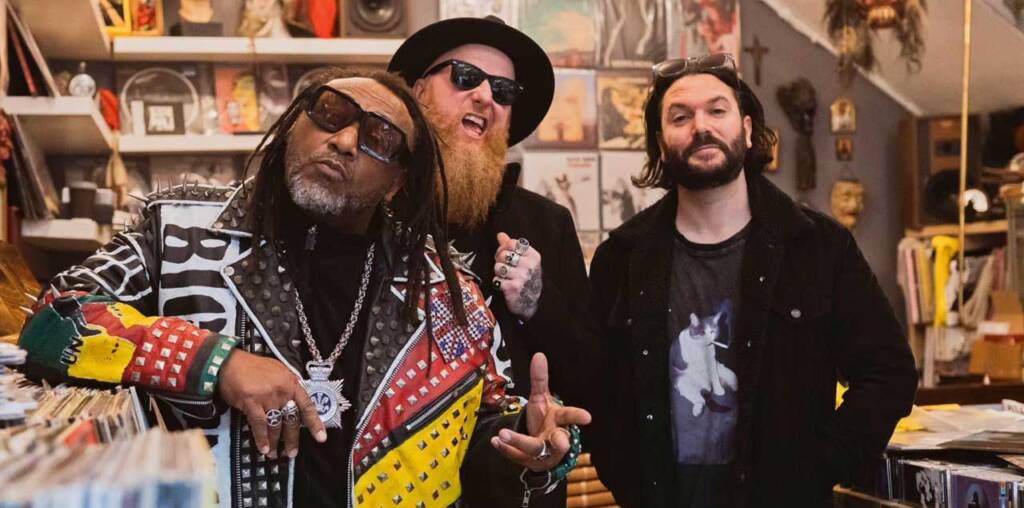
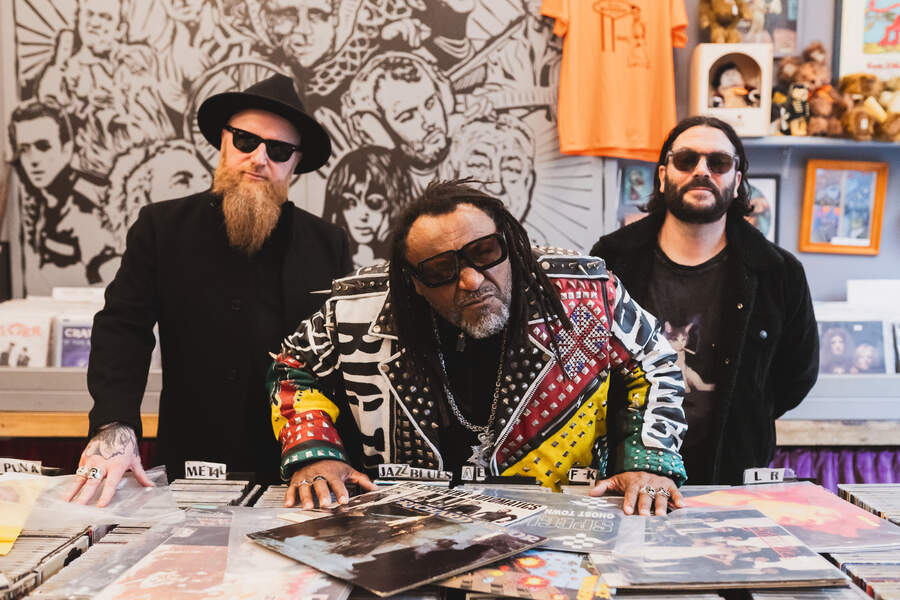
Moments later Webbe and drummer Arya Goggin arrive. Completed by Demus (he’ll come later), Skindred have the striking presence of an alternative superhero gang, tempered with real-world warmth and experience, and driven by a heavy, charismatic sound unlike anyone else’s. On stage (notably at big-scale festivals) they pack an explosive punch that’s sharp yet welcoming. Cool without being too cool.
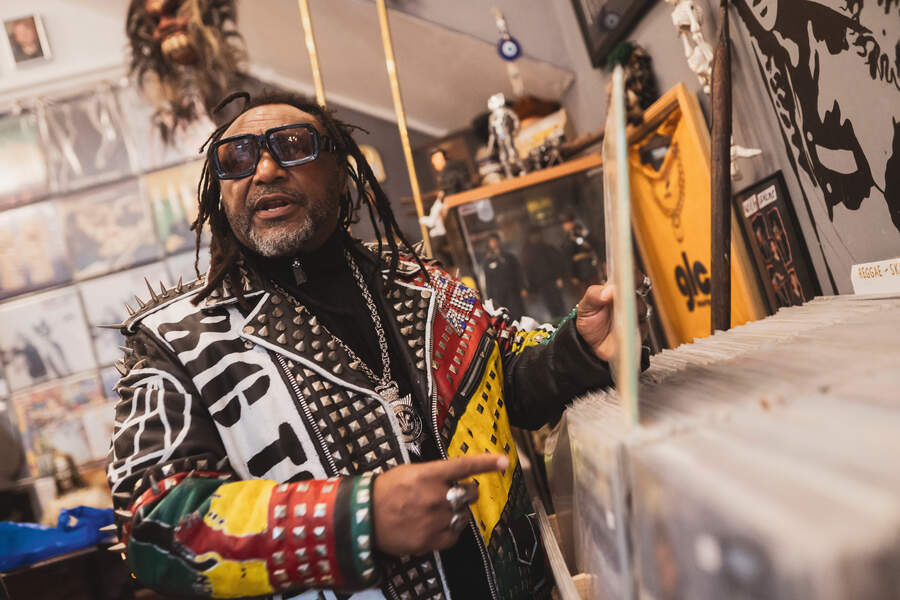
Today Goggin looks relaxed in black, his statement sunglasses and dark expressive eyes giving him a subtle edge. Webbe, on the other hand, is not one for subtlety. The studded jacket, giant shades and huge silver medallion prove that.
“Welsh police innit?!” Webbe shoots back delightedly, lifting the medallion. “You get in trouble, come and see me, I’m an official policeman of Wales…”
Born, raised by his brother Herbie and still living in this town, Benji Webbe has the affable bravado of someone who doesn’t mind being a local celebrity. He appears regularly on Welsh TV. His extrovert stage presence is reflected in his everyday persona – in a nice way. Most days in Newport he’s recognised by someone wanting a photo or autograph. Does he mind?
“You know what? I signed on the dole for a long time and I prefer this,” he considers. “Just giving people three minutes of your time, it’s cool. They enjoy it. Some people get a little weird on you but you…” he shrugs. “It’s Newport. You gotta realise who’s naughty and nice, and it don’t take a lot to suss them out.”
Upbeat tastes of Webbe’s “feral” childhood are captured on You Got This, recorded last year with producer Jay Ruston (Corey Taylor, Mike Patton, Steel Panther). Life was hard but mostly happy. As a kid he went to school for free dinners, and to smoke cigarettes and sing in the girls’ toilets.
“Not everyone could go in there,” he says with some pride. “They saw the art in me… And I used to do voices of the teachers. The kids loved that.”
He bought his first record in Kriminal: Bad Manners’ Loonee Tunes!, with a tenner from his aunt. The Clash, The Specials and others followed, often reminding him of his father’s old Jamaican records. Meanwhile, he customised his clothes using belts from his dad’s drawer. He wore bondage trousers to school. By then, aged 11, he’d found his voice at a punk jam above the boxing club – where he grabbed the mic and sang Sex Pistols and Sham 69 songs.
“These punk rockers, a lot of the ska stuff was people like The Selecter and Madness. They were doing Toots & The Maytals covers, all this stuff my dad had. I was playing these songs as a little boy growing up, and all of a sudden these British guys were playing them.”
He pulls out an LP titled My Conversation. “Slim Smith. He was a Jamaican artist my father would have had in our record collection. He’s a top singer, really good.”
Part of the Windrush generation, Webbe’s father died when Benji was eleven. In a time wrought with tensions between local white and black communities, he cautioned him severely against bringing any police trouble to the house. Benji listened. It comes out now in Can I Get A: ‘Well I was crap at crime,’ he sings sweetly to a reggae groove.
“My friends would go nicking or something, and I couldn’t do it because I was too scared. Even after my father died I was too scared, thank god.”

A few paces away, Goggin eyes up a selection of sleeves on the wall behind the counter. “What’s the Master Of Puppets deal, then?” he asks, nodding at an £800-priced Metallica LP. It turns out to be a 1986 pressing, unopened. Deciding it’s not one for today’s budget, he turns to the ‘G’ stack in the rock section – Genesis, Guns N’ Roses, both of whom he loves. “I got into Genesis in the late eighties, during that whole Invisible Touch era.”
Friendly, engaging company, Goggin is Skindred’s ‘business head’. Growing up in 80s/90s Exeter, he was part of the scene that produced Muse. By 15 he was touring in bands. His Iranian mother and British father, both rock’n’roll fans, never discouraged him. At 21 he joined Skindred and never looked back. Today he talks music and drums over email with Mötley Crüe skinbatterer Tommy Lee.
“I’m always suspicious of people who say: ‘I used to like rock music’ or ‘I used to like metal music,’” he muses. “This whole ‘I grew out of that’, it’s a snobby thing. But this is absolutely my identity.” But it’s Queen – one of Skindred’s less obvious but justified touchstones – that really lights him up.
“That’s why I got into music,” he says, lingering over a copy of A Kind Of Magic. “And it wasn’t just the rock stuff I was into. It was the eighties pop stuff that everyone was always shitting on if you were a rock fan. I thought it was great, but people do get very sniffy about it.”
Webbe has appeared at his side: “We’re a band which draws on a lot of genres,” he states, turning over a copy of Queen II. “But you know what? Queen drew on a lot of genres. Disco? Queen was doing it. Classical? Queen was doing it. And all on one record.”
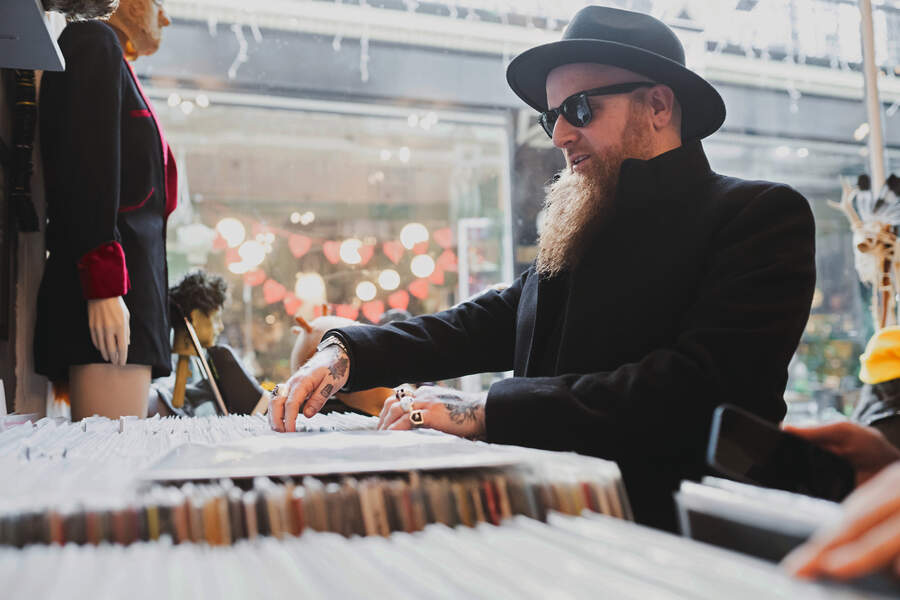
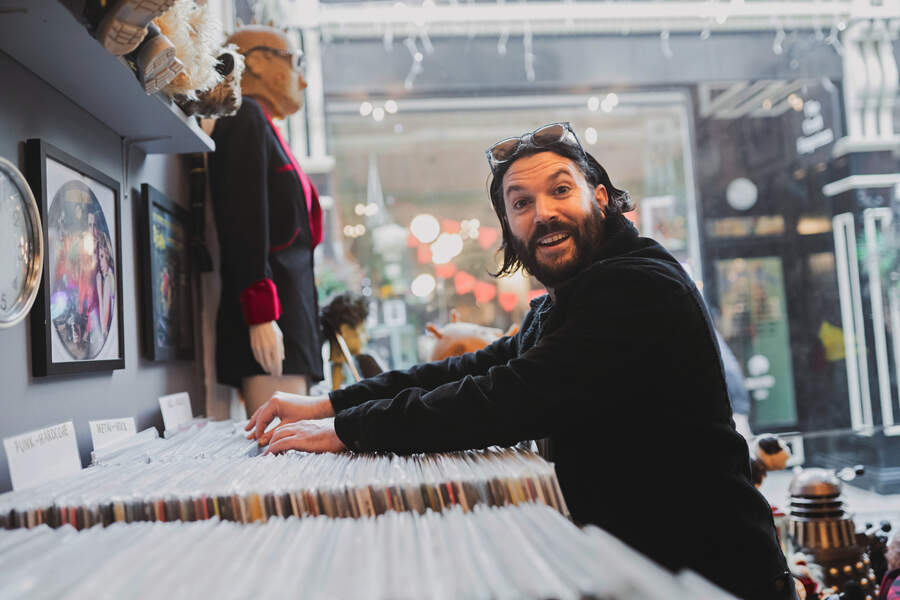
Guitarist Mikey Demus arrives in a wave of black coat, fedora and Billy Gibbons beard. He doesn’t sound the way he looks (“Oh great! Love that!” he beams, learning that they have actual Classic Rock pounds to spend here). When he removes his signature Ray Bans it’s briefly disarming. Less aloof man-in-black, more chilled guy who you can easily picture being liked by the students he’s taught at BIMM Music Institute.
Growing up, he learned via experience. As a 16-year-old, he thrashed out Green Day and Nirvana covers in the garage of a drummer friend, who now plays with Mumford & Sons. “I wanted to play songs at the end of the day,” he reasons. “I learn by playing along to things, I’m not interested in exercises.”
We jump at the sound of a loud toot on the carnyx, Beddis and Webbe grinning like schoolboys. The band pose for photos in front of a shelf of plush teddy bears, a framed picture of Webbe next to them. They like this place. At one point they all lived in town. “The guys were nice enough to move to Newport, because they believed in the band,” Benji says, smiling, nodding approvingly as Ian Dury & The Blockheads plays on the shop stereo.
He drifts back to the reggae racks, finding an Aswad record (“the most amazing live album”) and Bob Marley’s Exodus (“Yeah, Bob’s invited to the barbecue…”).
Meanwhile, Demus eyes up Blondie’s Parallel Lines before moving on to the metal stacks. Now based in Eastbourne, Demus grew up on 90s alternative guitar music: Soundgarden, Smashing Pumpkins, Nirvana, Rage Against The Machine. His dad – who introduced him to the Rolling Stones, Black Sabbath and other classic staples – was in the RAF, so the family moved a lot. Demus’s decision to move to Newport and join a band wasn’t popular.
“I was supposed to go to university, do all this… My dad was not impressed. He really encouraged me to play the guitar, but at the same time I was brought up to get a job, be self-sufficient. I just wanted to play rock’n’roll, see what happened. I went into it headfirst without looking back.”
“Wise move,” Benji says, nodding sagely, looking up from a copy of Led Zeppelin II.

Purchases in hand, we head over to The Murenger – Joe Strummer’s watering hole of choice back in the early 70s when he lived here. Webbe chats eagerly about the illegal reggae club in the docks area, Silver Sands, where Strummer soaked up the vibes, later stirring them into The Clash songs. “That’s what we do now,” he enthuses, “that’s what the Clash did. If you listen to the Clash’s stuff, every one of their songs is different.”
Demus points out Le Pub across the road, where he used to do bar work. In the 00s, coming home from America to rehearse, they all drank there with other local bands. “But I always felt we were part of the old guard,” Goggin muses over pints at a corner table. “Because of what happened with Dub War, when we started doing Skindred, we weren’t in the same gang drinking with Funeral For A Friend and these other bands of our age. We were almost older than our years, because of our situation. I loved that.”
“We never fit into any scene or genre, ever,” Demus says. “Bands that belong to a scene, we never had any of that, and so all our friends are weirdos.”
This is reflected in their CV, which includes support shows with Kiss, numerous metal festivals and a MOBO Award nomination (for 2023’s UK No.2 album Smile). Back in the 00s, in the States, they stood alongside emo heavyweights like My Chemical Romance, without sounding anything like them. It’s reaped a diverse circle.
“Beers with Nate from Flogging Molly one day,” Arya says, “Benji’ll hang out with Eugene from Gogol Bordello. Valiant Thor, Karnivool, Papa Roach. When we played with Volbeat, Napalm Death were opening and there was this understanding, these nods from each other: ‘Yeah, we’re weird fucking outlier bands.’”
“I mean,” Webbe giggles, “we don’t get asked to tour with people very often. I wish we did!”
After their 2002 debut, Babylon, Skindred ound themselves consistently in demand for US tours. It kept them there for several years, memories of which are littered with A-listers. The time Benji went to Tommy Lee’s house with friend Rob Trujillo, disappointed because it wasn’t Tommy Lee Jones (“I wanted to ask him about The Fugitive!”). The time Billy Connolly approached them backstage at the Conan O’Brian Show (“He said: ‘You guys are great! Do you have a copy of your album?’” Webbe recalls. “I said: ‘You got loads of fucking money, go buy one!’”). Johnny Depp in a hotel bar one week, Dan Ackroyd the next, Kevin Spacey after that.
Webbe and Demus also met their (now ex-) wives. Webbe lived in Florida, Demus in Denver. By about 2010, though, things were shifting and they were all ready to return home.
“We’d only worked with American producers at that point,” Goggin reflects, “the records had been recorded in America. It was amazing, but we became quite disillusioned with it. I think we just got burned out by thinking we were an American band. But we couldn’t be any less American, culturally.”
At this point, that feels especially true. Sort of British, sort of Jamaican, entirely song-centred, new album You Got This could only have been made today – by these three. Big Em Up is groovy and pummeling. Broke has a Caribbean-soaked sweetness. Lyrics to Give Thanks were written by Webbe in Barbados, on holiday with his wife Julie.

Perhaps most surprising, though, is Glass, written in memory of Webbe’s childhood mate Trevor – the other black kid on their estate who also liked the Sex Pistols. He died of cancer in 2024. Glass peaks with a final cry from Webbe and a stirring piano finish from Demus. From a band so full of dancehall braggadocio and enormo-riffs, it’s quietly devastating.
“This album is based on real events,” Webbe says. “And what I’m singing about, you know, it’s from the cradle to the grave.”
More drinks are ordered. They coo over photos of Webbe’s youngest granddaughter (he has 19 grandchildren) and talk about old times. Webbe recalls the four months he worked as a panel beater, beating and spraying trucks; Michael Jackson’s Thriller was in the charts, so he sang along – until he was fired. It was the last ‘job’ he ever had.
You can see the same fierceness in his bandmates’ memories – the sense, in all three of them, that there was never a Plan B.
“That’s what made Skindred work, the commitment people put in,” Webbe says. “I’d watched my brother’s band on stage when I was fourteen, and I knew there was nothing school was ever going to teach me again.”
That’s Skindred all over: heavy music’s misfit superhero gang, still punching high, still not like the others. Rock is a noisier, weirder and brighter place with them in it.
You Got This is out now via Earache Records.
Checkout: What Skindred spent Classic Rock’s £50 on
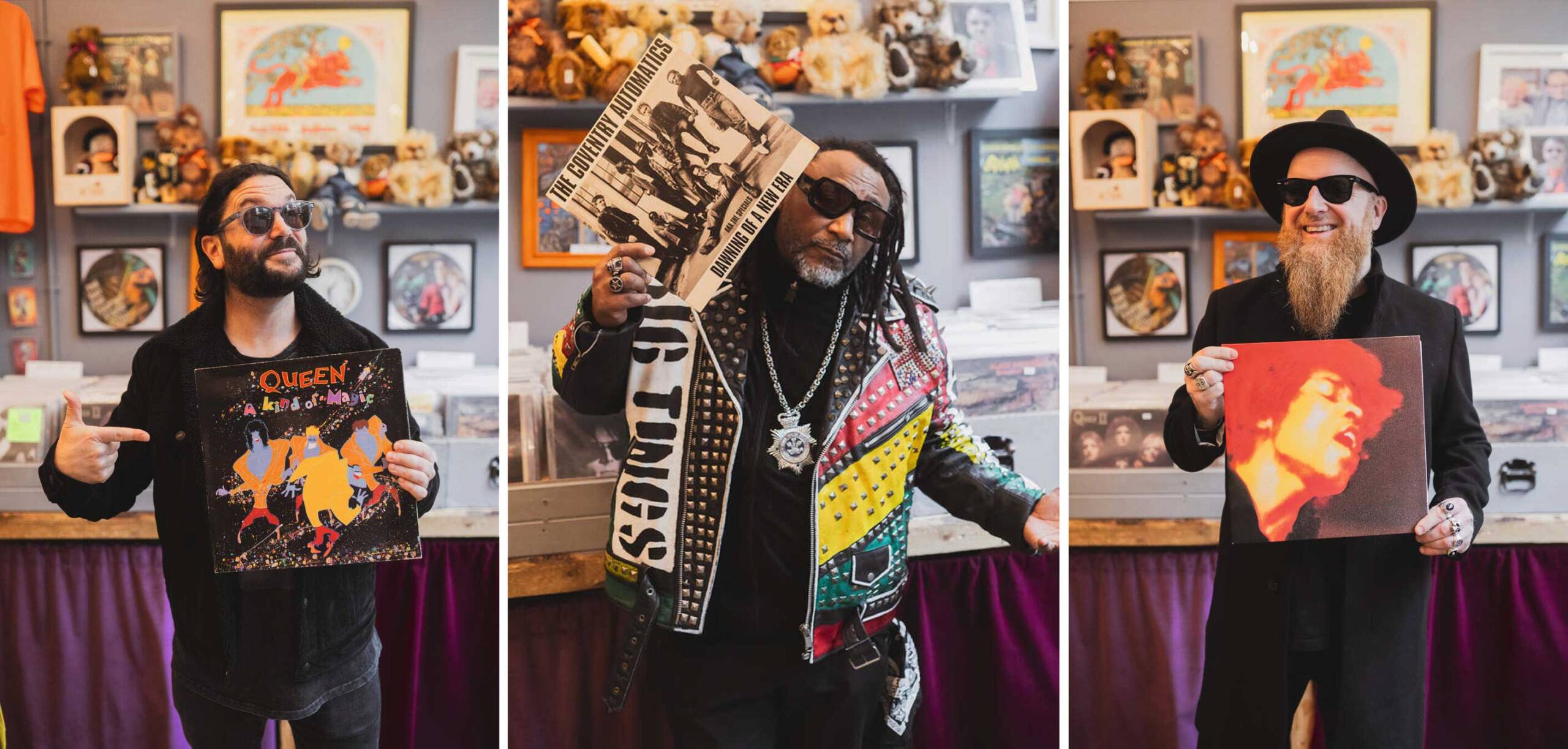
Arya Goggin (drums): A Kind Of Magic, Queen
“Have you seen what Freddie looks like here?!” Queen fan Arya points incredulously at the hench, cartoon figures on the cover (he also buys an Altered Images record for his wife back home in London). “I mean, Brian May does not look like that… But it’s cool, isn’t it? This was the Highlander era, it was a huge record for them. I mean, there are shockers on it, to be honest, but Prince Of The Universe is a banger. Gimme The Prize, big old riff. Kind Of Magic, One Vision… massive songs.”
Benji Webbe (vocals): Dawning Of A New Era, The Coventry Automatics (aka The Specials)
Webbe lights up at the sight of this collection from the band’s earliest incarnation, released in 1993. “Pete Waterman and Jerry Dammers, they got this together,” he enthuses, “so it was like a boy band, basically. Terry Hall was in a goth band, and they’d gone to see him play in a couple of pubs, and they wanted someone to be in the band who looked like they didn’t want to be – cos the other guys were all really into it and running around.”
Mikey Demus (guitar): Electric Ladyland, The Jimi Hendrix Experience
“It’s actually a really weird niche, Hendrix,” Mikey muses in the pub, the immortal record resting in a Kriminal tote bag against his chair. “Because I’m not really into, like, fucking flashy players, not really. But with Hendrix’s stuff it had enough sloppiness about it. It’s got an attitude, but it’s also a bit arty. I don’t like psychedelic shit, not interested, and I’m not interested in doing virtuoso stuff. This had an attitude, though, and it was basically marketed to white people at the time.”