 Written by
 On May 14, 1996, an aspiring industrial metal three-piece took to the stage of Bar Deluxe, a two-floor club in a grotty area of Hollywood known as Crack Central. Someone captured grainy footage of the band, which has inevitably found its way to YouTube.
The short clip focuses on their frontman, a skinny dude with black hair shaved close to the skull, mechanically attacking his guitar. The band’s name was Static, and the singer was Wayne Wells. The two other people onstage with him were bassist Tony Campos and drummer Ken Jay. They had been kicking around the bottom level of the club scene without much success, as indicated by the sparse crowd that night.
“There were maybe 15 people,” says Tony Campos today. “But two of the people happened to be Dez [Fafara] and Meegs from Coal Chamber. They said, ‘You guys are cool, here’s the number for the promoter at [Sunset Strip club] The Roxy.”
Article continues below
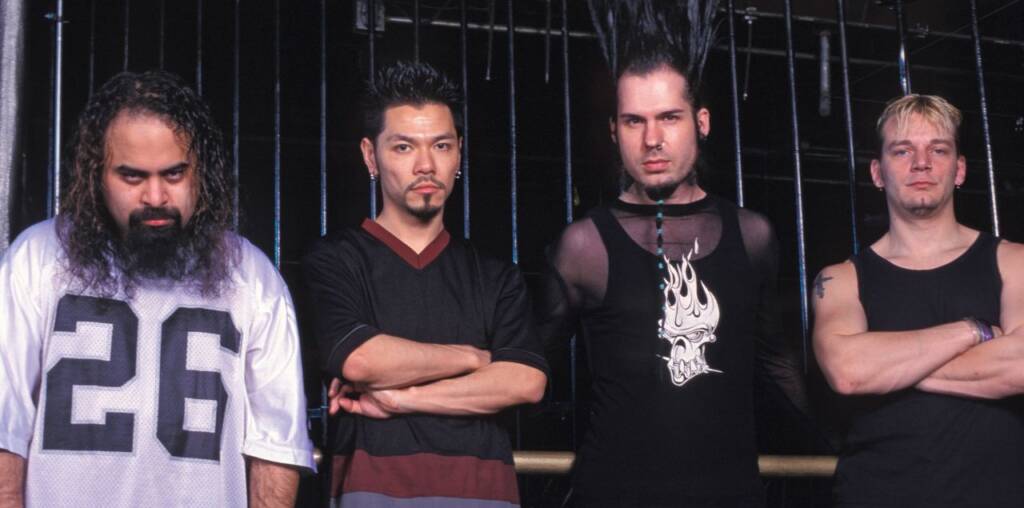
Within three years of that fortuitous meeting, things had changed for Static. The band’s name, for one – they added an ‘X’ to the end, becoming Static-X. They recruited a second guitarist, Koichi Fukuda. And then there was their frontman – crop-haired Wayne Wells became Wayne Static, a juddering, grimacing figure with a gravity-defying tower of hair styled like a man who had rammed his fingers into a live socket. But the biggest thing of all that happened to Static-X was success.
Their debut album, 1999’s Wisconsin Death Trip, placed the band in the centre of nu metal’s second wave. It opened with one of the era’s great singles – a pulsing, pulverising slab of malevolent disco-metal titled Push It that would take the band a long way from Crack Central.
“Did we realise how important it would be for us? Oh, hell no,” says Tony. “We just wanted to write a song to make people dance.”
Wayne wasn’t what I expected
Tony Campos
Wayne Wells and Ken Jay had been introduced to each other in the late 80s in their hometown of Chicago by a mutual friend, Smashing Pumpkins frontman Billy Corgan, who sometimes played with Wayne’s band Deep Blue Dream. By the early 90s, they’d swapped the Windy City’s hipper-than-thou music scene for the blazing sunshine and fuel-injected dreams of LA.
“I met Ken when we both worked at Ticketmaster, taking orders for tickets on the phone,” says Tony, a native Angeleno. “He said, ‘You should come and try out for my band.’ I was in a death metal band, so I wasn’t keen. But after a week of just sitting round with no gigs, I said, ‘OK, I’ll jam with you guys.’”
Ken and Wayne’s band were a grunge-knock off named Drill. Wayne himself looked less like the striking figure he would become and more like a thrift shop version of The Cult’s hippie-goth frontman Ian Astbury.
“Long, straight, black hair, bell-bottom corduroy pants, flowery shirt,’ says Tony. “He wasn’t what I expected. He was a quiet-spoken dude. But he had a dry sense of humour.”
With Tony onboard, Drill began searching for a sound. They dispensed with grunge and began dabbling with punk, with just as little success. The lightbulb moment came when Wayne picked up a drum machine and brought it into their dingy Downtown LA rehearsal room.
“He hit play and started playing a riff over it,” says Tony. “We were all, like, ‘Yeah, let’s rip off Ministry!’”
He laughs about it now, but it wasn’t as cynical as it sounds. Chicago was the home of Wax Trax! Records, the pioneering industrial/dance label that had given Ministry their first break, and that scene’s jackhammer noise was part of Wayne and Ken’s musical DNA. They had a more legitimate claim to that sound than most bands in their adopted hometown.
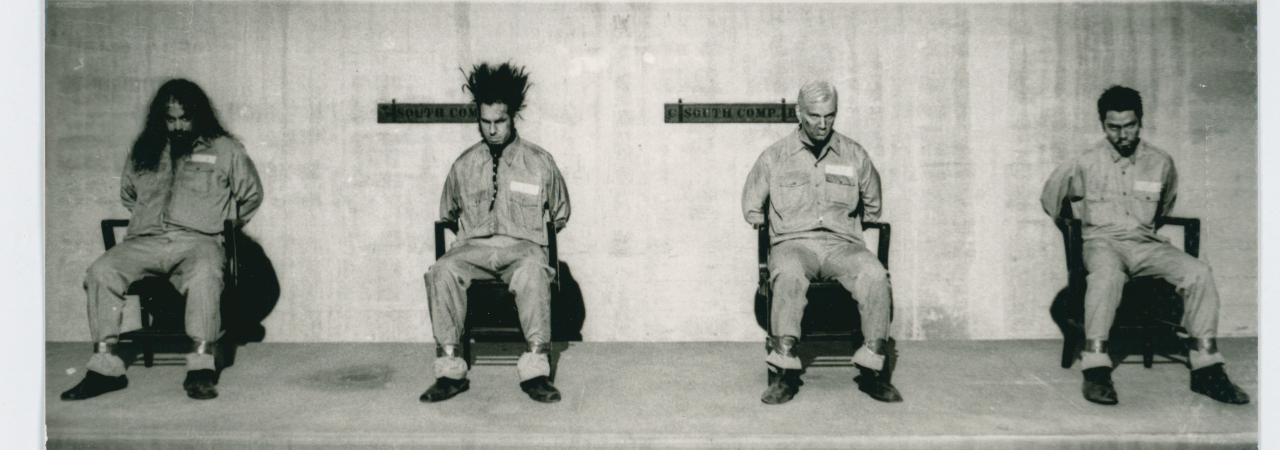
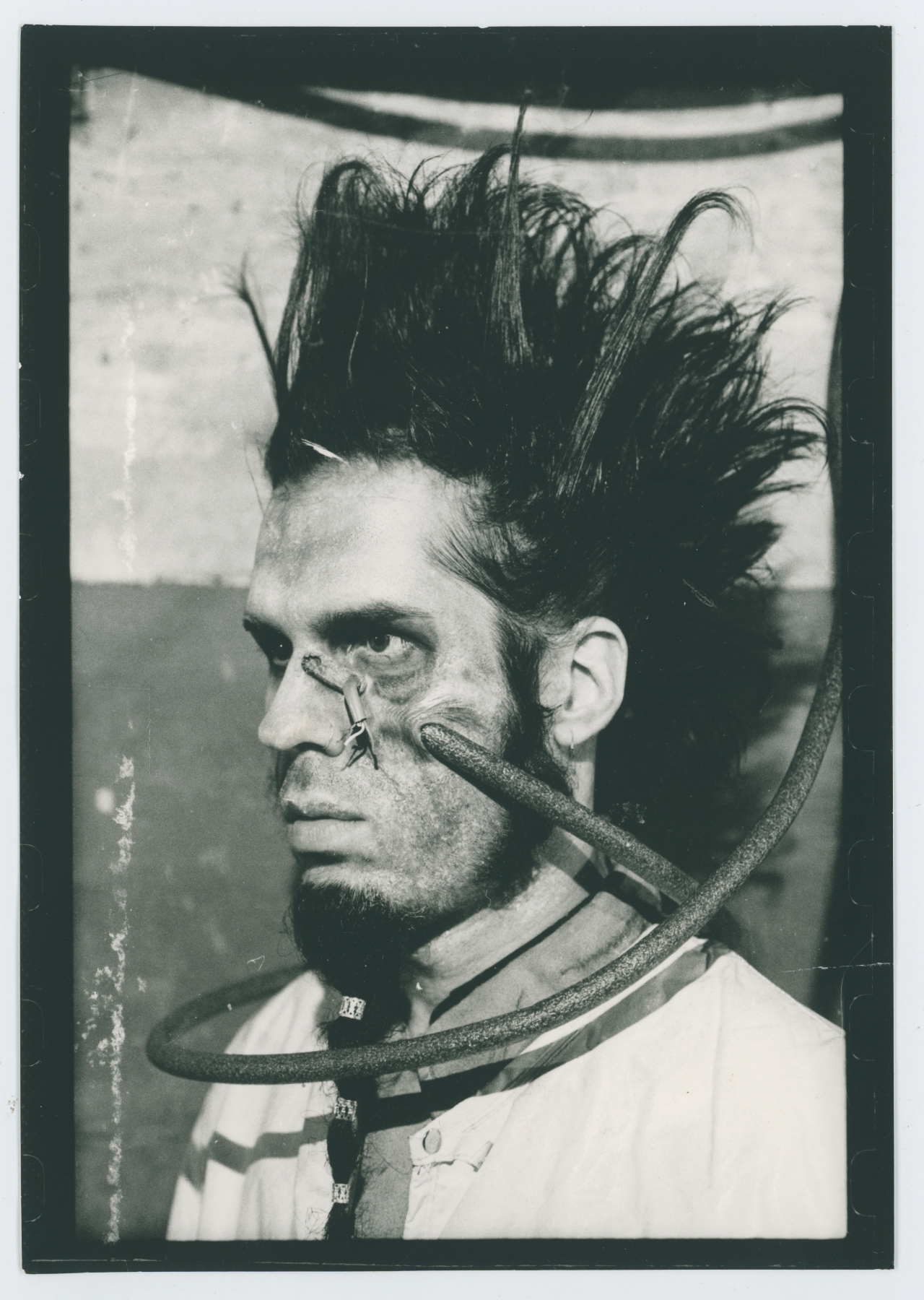
Tony can’t remember exactly when Drill became Static, but it was before the Bar Deluxe gig in 1996. Wayne Wells’ transformation into the uniquely coiffed Wayne Static happened a little later. The frontman had shaved his head bald before that show, but started growing it out again. One night he turned up to a gig with the beginnings of the swept-up vertical ’do that would become his signature.
“It was pretty out there,” says Tony of Wayne’s new hairstyle, which the singer would jokingly tell journalists was kept aloft by semen (prosaically, it was just the product of time, effort and a lot of a hairspray).
The band had been stockpiling songs while they slogged it out on the LA club circuit. The three-piece line up of Wayne, Tony and Ken recorded a three-track demo tape in 1996 featuring future Wisconsin Death Trip songs Bled For Days and Love Dump, plus Structural Defect, which would be cannibalised for the title track of their second album, 2001’s Machine. A second, six-track cassette followed a year later. The new demo opened with a new track called Push It.
“The modus operandi we had was, ‘Let’s see how goofy we can make this – let’s go really goofy,’” says Tony of the song, which kicked off with a sample of Kiss’ Paul Stanley screaming “Are you ready to rock’n’roll?”, lifted from Kiss’ Alive II album. “I even threw in some death metal vocals.”
The modus operandi we had was, ‘Let’s see how goofy we can make this’
Tony Campos
And the title? “It was just a straight-up rip-off of the Salt ’N’ Pepa song,’ says Tony, referring to the female rap duo’s 1996 hit of the same name.
Wayne Static memorably described his band’s sound as “Evil Disco”, and Push It lived up to that billing even in its demo form. The relentless industrial rhythm and mechanised riff echoed Ministry and Prong, but it had a danceability too.
“We were listening to a lot of electronic stuff like The Chemical Brothers and Prodigy too,” says Tony.
Push It may have had the musical bounce of a classic party-starter, but Wayne piled on the dark, abstract imagery. “Corrosive, tainted by my sin,” he sang on the track’s opening lines, while the chorus found him growling: “I want it / I need it.” Some read it as a song about addiction, a meaning given weight by the singer’s subsequent struggles with drugs. A less harrowing interpretation was that it was a song about defecation.
“It definitely wasn’t about taking a shit,” says Tony with a laugh. “We already had the poop song with Love Dump. When we wrote it we just thought, ‘This sounds like a cool, fun bouncy song that girls will hopefully shake their asses to.’ When you get a good response, you know you’re on the right track.”

So it proved. The six-track demo headed up with Push It helped bag Static-X a deal with Warner Bros. The label bundled the band – now augmented by guitarist Koichi Fukuda – into Hollywood’s Grandmaster Studio with producer Ulrich Wild to record Wisconsin Death Trip. The whole album cost $50,000 to make – peanuts in the heady days of the late 90s. There was just one catch: they wanted the band to change their name.
“They said ‘Static’ would be too hard to market,” says Tony. “We were, like, [noncommittally], ‘Uh, OK, sure.’”
The first taste the wider world got of the newly-christened Static-X came when Bled For Days appeared on the soundtrack of 1998 comedy-horror movie Bride Of Chucky. It was followed early the next year by Wisconsin Death Trip, which took its name from a book looking at a series of bizarre deaths in late 19th century Wisconsin. Their timing was impeccable. The band arrived as nu metal transitioned from buzzy scene-to-watch into all-conquering cultural force, even if it was a tag the band were unhappy with being saddled with.
Push It was the first single released from the album, accompanied by a striking part-claymation video. It reached No.57 on the US singles chart, still the band’s biggest single. And it received the ultimate accolade – the stripper seal of approval.
“The coolest moment was going into a strip club and seeing a girl dancing naked to it,” says Tony. “It wasn’t like we announced ourselves coming in.”
Propelled by Push It, Wisconsin Death Trip went on to sell more than a million copies in the US. Yet the years that followed were marked by line-up changes and diminishing commercial returns. By the end of the decade, insurmountable tensions between Wayne and Tony – the two remaining original members – precipitated the end of the band, bar a brief and underwhelming attempt by the singer to resurrect the band with a new line-up in the early 2010s. Wayne’s drug-related death in 2014 seemingly brough the curtain down on Static-X permanently.
But there was an unexpected twist. In 2018, Tony Campos, Ken Jay and Koichi Fukuda relaunched the band, subsequently recruiting a new singer, Xer0 (actually Dope frontman Edsel Dope in a zombie Wayne Static mask). They’ve subsequently released two albums featuring music written by their late frontman, but they still close every show with the song he wrote more than a quarter of a century ago that lifted its sound from Ministry and Prong and its title from Salt ’N’ Pepa.
“Push It is just a fun song,’ says Tony Campos. “Everybody can sing along to that chorus, no matter what language they speak. It just gets people dancing.”
Wisconsin Death Trip (25th Anniversary Corrosive Edition) is out now on Otsego Entertainment Group. Static-X play Download Festival in June