 Written by
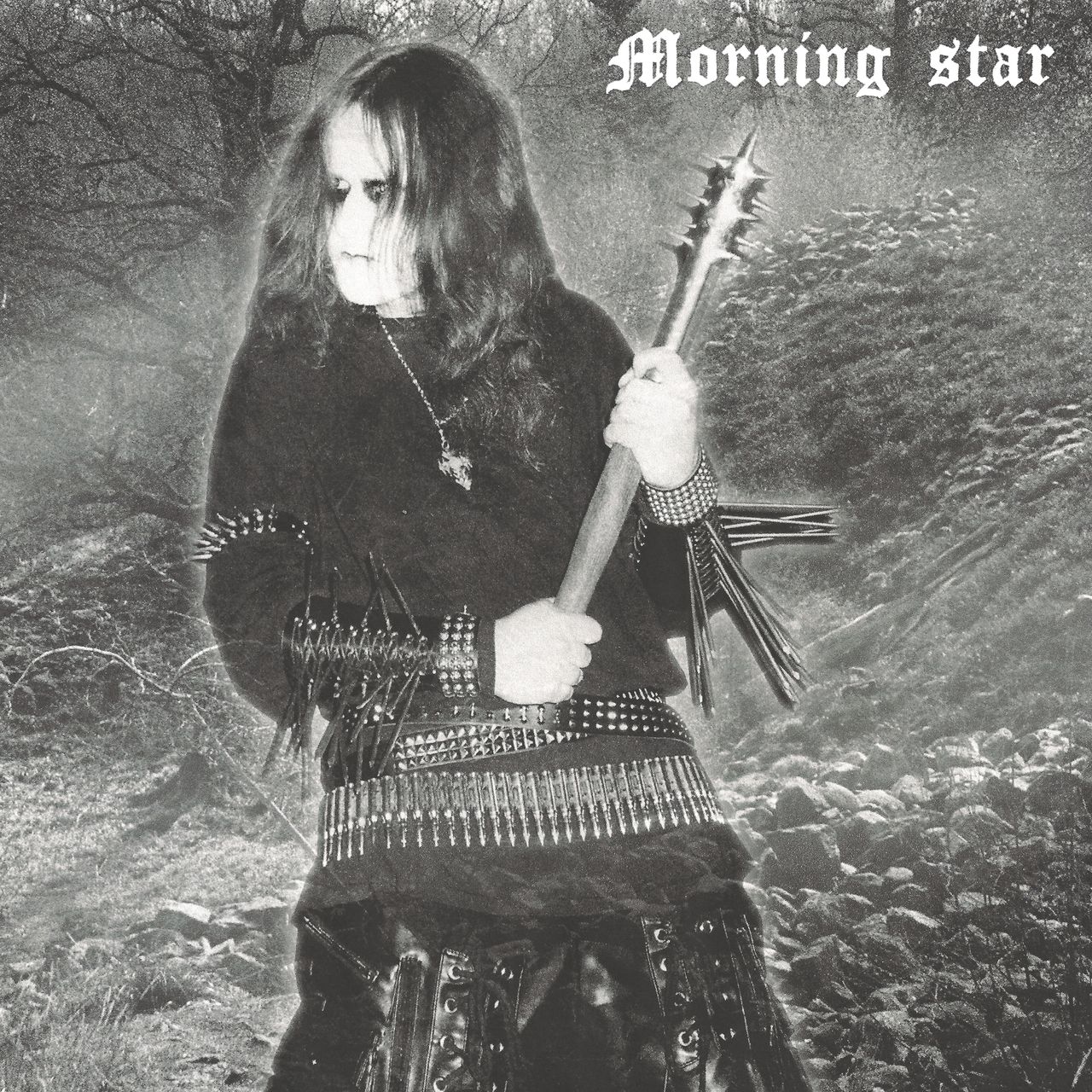
 Some 30 years later, the ugly spirit unleashed by a dozen or so Norwegian teenagers has proven to be surprisingly adaptable and, strangest of all, marketable: As musicians have found ways to diversify the sound of black metal via shoegaze, folk music, drone, and bluegrass, corporations like e.l.f. cosmetics and KFC have used corpse paint and blastbeats to move products. Black metal itself has evolved to become more adventurous, curious, and—above all—comfortable with how queer the whole putting-on-costumes-and-makeup-to-sing-about-your-fantasies thing is. In response, traditionalists have gnashed their teeth and complained that the dark essence of the music has been lost. So you might be able to understand why, when the Ukrainian artist Këkht Aräkh, whose corpse paint and wrist spikes make him virtually indistinguishable from black metal’s progenitors, got off a few poses in his “Wänderer” video that made him look like Lil Peep cosplaying as Per “Dead” Ohlin, he became the most polarizing figure in the genre since the dude who wore sunglasses on an album cover.
Dmitry Marchenko’s first two albums as Këkht Aräkh—2019’s Night & Love and 2021’s Pale Swordsman, both reissued in 2022 by Sacred Bones—were relatively straightforward collections of frosty Depressive Suicidal Black Metal (DSBM) offset with neoclassical acoustic guitar interludes and ambient whooshing. What both records suggested, and what Morning Star makes clear, is Marchenko’s understanding of the campiness inherent in black metal. Crucially—or most perniciously, depending on your perspective—Marchenko barely departs from black metal orthodoxy. While Deafheaven used the music’s prettiness to power their pink-and-blackgaze, making it as accessible to fans of My Bloody Valentine as Xasthur, Marchenko embeds his digressions more deeply in the music; not even the plaintive singing of Swedish emo-rapper Bladee on single “Eternal Martyr” pulls us out of the familiar.
No score yet, be the first to add.
Marchenko’s primary aim has always been to develop a warmer, more tender version of DSBM. That’s apparent not only in the sweetness of his lyrics but also in the way he delivers them. Rather than a crackling shriek, he tends to croak his vocals, landing somewhere between Death’s Chuck Schuldiner and an anthropomorphic bullfrog. That means when he sings a line like “No stars in the sky/Night is so black” in “Lament,” you can actually hear and understand what he’s saying. Morning Star was recorded straight to tape on a Portastudio in Stockholm and Marchenko’s current home of Berlin, cloaking everything in a thin mist of hiss. That in turn creates an illusion of heaviness that Marchenko exploits—because a song like “Castle” feels heavy, it doesn’t have to be as heavy, which frees up space in the music; it’s what allows the clean guitar in “Wänderer” to become the focus, drifting as it does like moss in the song’s skeletal branches.
Play Morning Star through your Macbook speakers and it might sound like relatively standard lo-fi black metal. Play it in decent headphones and the hail of tremolo-picked guitars recedes a bit, allowing the elegance of the chord progressions to come through. You’ll also discover that Morning Star is the rare black metal album in which you don’t have to hunt through a thicket of noise to find the bass. The low end fills out a song like “Three Winters Away,” its syncopation providing an emotional counter to the speedy blur of the guitars. A clean picking pattern emerges, like a cautious fox in a clearing, then just as suddenly turns tail. While Marchenko produced the album himself, Swedish electronic musician Varg2™ assisted with the sound design; the latter’s feel for flossy ambience is most obvious in the album’s “Outro,” but you can hear his influence in the dusty air that spaces out the vocals in “Angest” and the drifting among the ruins of “Castle.” Bladee blows gentle whispers down the sides of “Eternal Martyr,” and his feathery singing on the second verse seems to prompt Marchenko to get more guttural in response.
As many musicologists have noted, the rapidfire blastbeat atop which most black metal is built leaves no room from swing; considering the unashamed racism of genre architects like Burzum’s Varg Vikernes, it can feel at times like black metal was designed specifically to exclude anything related to Black expression. With that in mind, Marchenko’s ability to weave hip-hop influences into what is still obviously a black metal record feels uniquely subversive. He rides “Lament”’s verse with a lightly bouncing flow to his vocals, then coughs out a few “yuh”s in “Genom sorgen” that make him sound like Drake trying to fit into the Burzum-ish atmosphere of Ye’s Vultures. “I said, ‘blech!’” he ad-libs in “Castle,” then drops into a verse he delivers with genuine swagger. There are scraps harvested from hardcore, too—the chanted opening of “Vigil,” a stray “aw yeah” picked up from Turnstile’s Brendan Yates—but each of these departures from black metal orthodoxy are woven so deeply into the fabric of this record they’re essentially impossible to pull out without unravelling the whole thing. By staying so close to black metal’s core sound, Marchenko does more to undermine the dogmatism—both racial and aesthetic—of Vikernes and his ilk than a more obviously experimental project might.
Crucially, Marchenko is using these sounds not just to provoke but to express something about the nature of an uprooted life. Marchenko fled Ukraine several years ago, and the complications of being in exile color much of this record. “Three winters away from my old life,” he sings in “Three Winters Away, “I look back and I smile.” Later, in “Raven King,” he’s on an aimless stroll through Stockholm (“hidden in a foreign city”) pondering “black skies, no stars, but there’s one to come/The lonesome one.” Këkht Aräkh is not unique in his loneliness; the pain of being alone is as thematically central to DSBM as the hatred of Christianity. But the way Marchenko insists on drawing lines of uncomplicated beauty through the howling darkness of these songs gives his solitude a luxurious, almost decadent quality. “Divine love comes,” he sings over a gently swaying blastbeat in “Mörker över mörker,” or “divine storm.” Either way, he senses a kind of hope beyond the shadows. “Ur mörkret ska jag träda fram,” he sings in Swedish. Roughly: “Out of the darkness I will emerge.” Presentation is important to Këkht Aräkh. The xeroxed zinester vibes, the lo-fi production, the corpse paint—they’re all ways of insisting on the project’s rooting in black metal tradition, even as he suggests that tradition’s myopia keeps it from a richer view of the world.