 Written by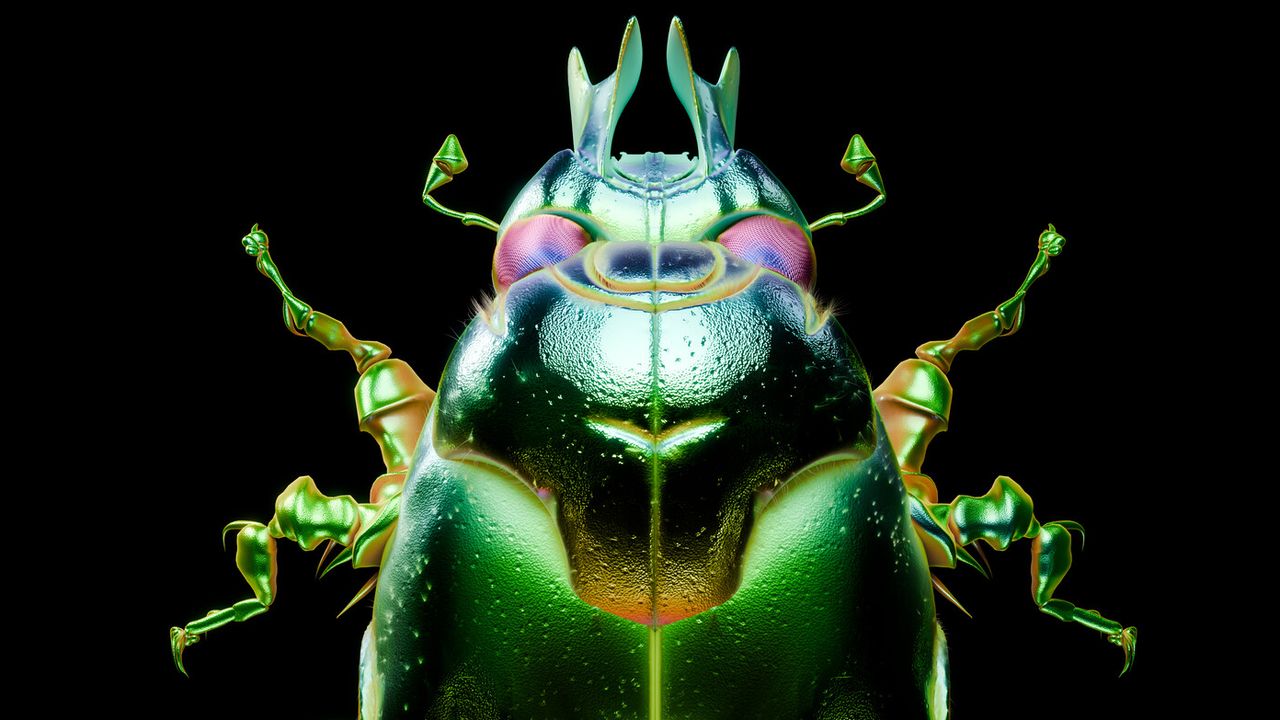
For a one-stop-shop for the latest in new-school taste, you can’t do much better than GRRL’s Twitter feed, where he’s always peddling Hideo Kojima updates, a new Boomkat-backed reissue, or a Janet Jackson deep cut. The North Carolina-based DJ and producer has spent the last 10 years developing a reputation on the North American club circuit as an arbiter of cool. On previous records, GRRL has seemed fascinated by the cogs that churn out cultural commodities, borrowing from a potpourri of radical electronic influences to challenge and digest modern aesthetics: from the Drexciyan worlds he built on his records Odyssey and Marathon to the melodious East Coast club sounds on Side by Side. On Beetle, GRRL’s latest release, he harnesses the caustic energy of digital experimentalism and places it within the context of raucous club play.
The sonic worlds on Beetle are built one of two ways: by taking modern club standards and churning them through experimental processes, or doing the opposite. Take, for example, the recurring motif first heard on “Camber,” which bounces its distorted kick around like two glass bottles clinking into infinity. The signature evokes the infinite digital depth of SOPHIE’s music (which, in turn, borrowed from Autechre’s asymmetric textures). Here, GRRL transcribes that bounce onto hitters like “Mosquito,” proving there’s room for experimental textures in everyday dancefloor settings. A track like “Tumble” follows the inverse process: With its vocal chops, grounded in Baltimore club, and its indiscriminate rapid-fire of percussion, the song seems more geared toward a technical demonstration of extremity than getting crowds moving.
No score yet, be the first to add.
GRRL’s laser-sharp focus on setting pristine sound design in classic club-music molds makes its tracks ideal for a sound system that blows through the chest. “Butterfly” places delectable hyperpop rhythms onto a swirl of psychedelic textures, reminiscent of the work of umru and Ninajirachi. “Amber” sounds delightfully chaotic as a mess of lasers, claps, and kicks collapse in on one another. It reminds me of an old-school Detroit techno workout, the kind Jeff Mills would perform in a perfectly white background. “Chlorophyll Light Reactor” packs so much depth into every miniscule movement: the bounciness of its kick; the buzz of its synth, which pushes and pulls like a chainsaw. Beetle can be quite a bare record, often letting three sounds (or fewer) bounce around the air, allowing for a deep focus on its details, like the reverbed vocal chop on “Daisy” or the little grunts that give “X-Metal” its edge.
Not all of Beetle’s most daring moments strike a perfect balance between chaos and groundedness. “Rattlesnake” pulls it off, moving with the jaggedness of Foodman’s experimental footwork and extremity of DJ K’s violent funk. But the rotation of indecipherable vocal samples on “Twist” feels like hearing Pingu hold a press conference, and without a focused direction, the track buckles under the weight of its digital gibberish. The disparate aspects of “Tumble,” meanwhile—a kick drum that never sticks to one pattern; a contracting synth that solos during the breakdown; claps that seem distant—feel like they’re constantly running away from each other, never quite cohering like Beetle’s best tracks.
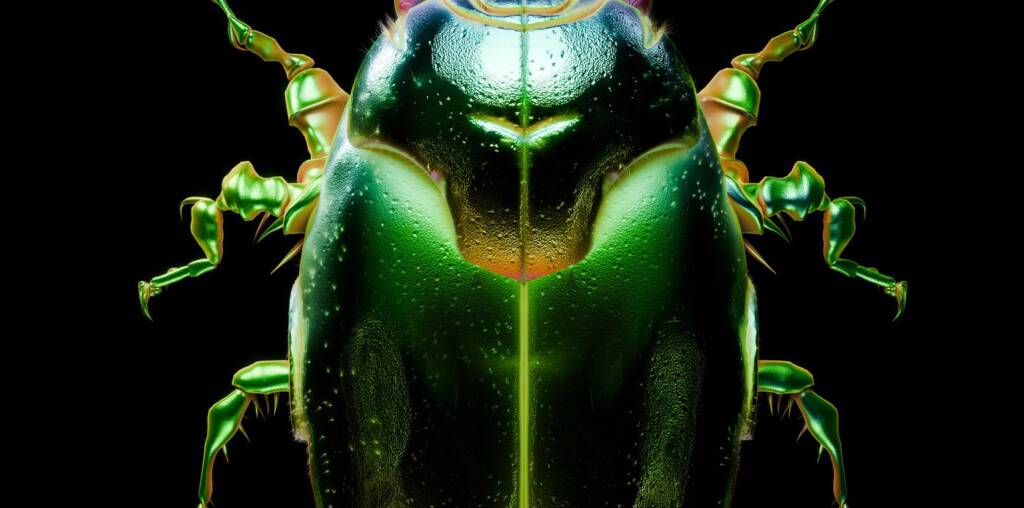
Beetle shines the brightest at its poles. It hits an early peak with “Moire,” an immortal club banger filled with propulsive confidence that offers a sonic abstract for the next hour, pairing experimental nervousness with a powerful rhythmic foundation. Its fluttering top line, buzzing like a winged bug, plays seamlessly with the propulsive kick drum: not quite a straightforward four-on-the-floor, but still a predictable and rousing rhythm. The release’s final and longest cut, “Beetle (Wildlife Hypercolor),” helps the release come full circle. The track remains at a dizzying 180 BPM, but never stays in the same place for more than a few beats, so it doesn’t exhaust a sober or casual ear the way gabber or happy hardcore might. There’s nuance and complexity in the shimmering synths and the kick drum that’s slightly and tastefully pulled towards the back.
Hearing the mastery on display in these two tracks feels like watching a Formula One car blast down its track with as much care for precision as for speed. But in between, as Beetle rages on for an hour without a single slow moment, it can start to feel like each of the 24 tracks is trying to one-up each other. Pair the extremity with the runtime, and Beetle can be a daunting and dizzying listen. The same mechanisms that make the record such a unique offering also hinder it as a digestible product.
Beetle marks the first release of new music from PC Music since the seminal hyperpop label announced a pivot into archival releases in 2023. Its sprawl is reminiscent of PC Music label head A.G. Cook’s records—similarly belabored releases packed with gems that nevertheless often work better as thought experiments. A certain playfulness has long defined PC Music’s presentation, even when it’s gotten them in trouble, and it’s on display here: Beetle is currently being sold not as an album but as a “quattuorvigintuple single,” a term as cheeky as the slew of entomological references across the record. But beneath the impish exterior—both GRRL’s and PC Music’s—lies an utter seriousness about craft. And like its peers in the PC Music catalog, Beetle is a gold mine of innovative textures, simultaneously capable of challenging its contemporaries and fueling the dancefloor.