 Written by
 Back in 2011, I wrote a piece on Stuart Adamson and Big Country for Classic Rock. It opened with part of an interview I’d done with drummer Mark Brzezicki. It makes my toes curl now. I pointed out that Big Country used to do a great cover of Smokey Robinson’s The Tracks Of My Tears. The song opens with the lyrics: ‘People say I’m the life of the party/Cos I tell a joke or two/ Although I might be laughing/Loud and hearty/Deep inside I’m blue.’ Do you think, I asked Mark, that even with those words he was trying to tell us something?
I didn’t know the half of it. This year marks 25 years since Stuart Adamson took his own life. I’ve been working on his authorised biography since 2023. Stay Alive is about alcoholism, abuse, family, fame, addiction, depression and working-class pride. For the first time, both of Stuart Adamson’s wives, his children and bandmates tell their side of the story.
If there’s one thing I’m sure of, it’s that – forget the lyrics of Smokey Robinson – Stuart used his songs to talk about his mental health and tell stories about abuse, about frightened children and beaten women, throughout his career and from the very start of his work with Big Country.
Article continues below

Let’s start in Brighton, February 1982, the opening date of the UK leg of Alice Cooper’s Special Forces tour. Big Country were the support band, playing just their second gig. It did not go well.
Decades later, it seems like a weird pairing – the Shock Rocker and the Jock Rockers – but you can see the thinking: Coop had been an influence on the punk scene, as well as on the goth scene that was still spreading across the UK, and his new album was an attempt to court fans of the new wave. But no one had told his audience.
“Everybody had long hair, leather jackets, denim with the patches,” says guitarist Bruce Watson.
Big Country, meanwhile: “We looked like Duran Duran, with headbands and eyeliner,” says then keyboard player Peter Wishart. “They wanted a standard heavy metal support, and here was us, challenging them with this sort of new wave Scottish music. It meant nothing to them.”
“You could hear a pin drop,” says former Big Country manager Ian Grant. “In a room of five thousand people.”
And then it kicked off.
“We got bottled,” says Bruce. “Bottles of pish. ‘Boo! Get off, fucking poofs!’”
The next night in Birmingham was even worse, and the band were thrown off the tour. “I called Stuart,” says Grant. “He was over the moon.” Adamson’s wife Sandra had given birth to their son Callum the night before the first show. It meant he could go home and see his baby.
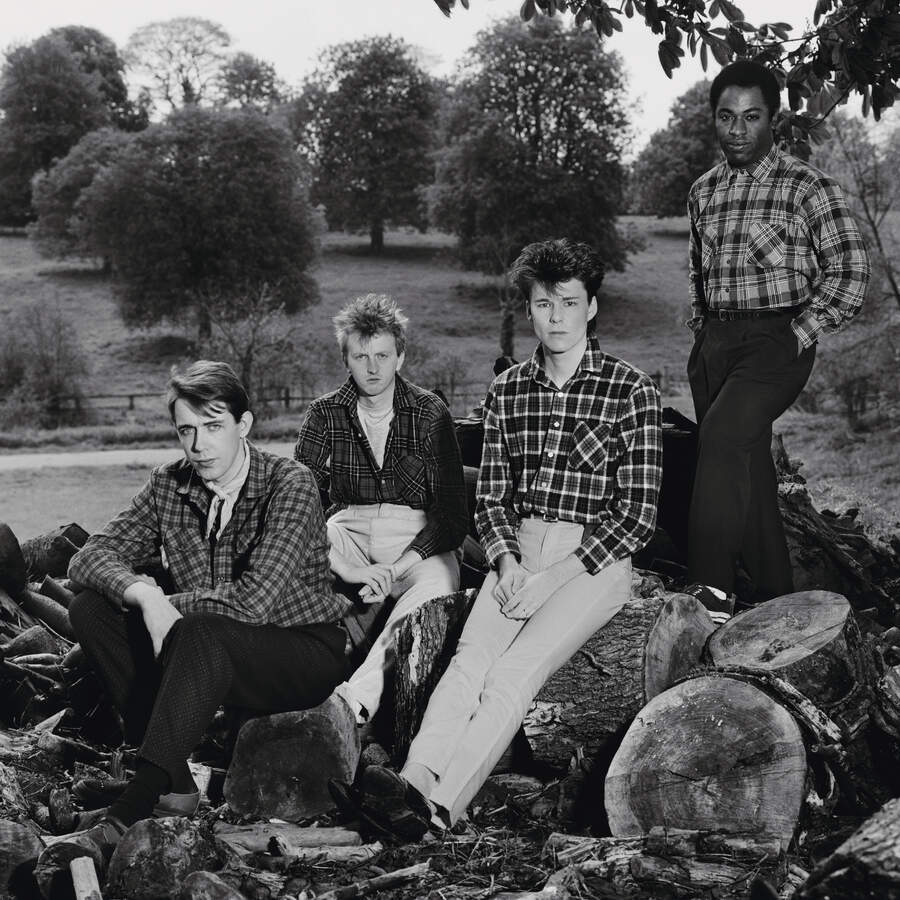
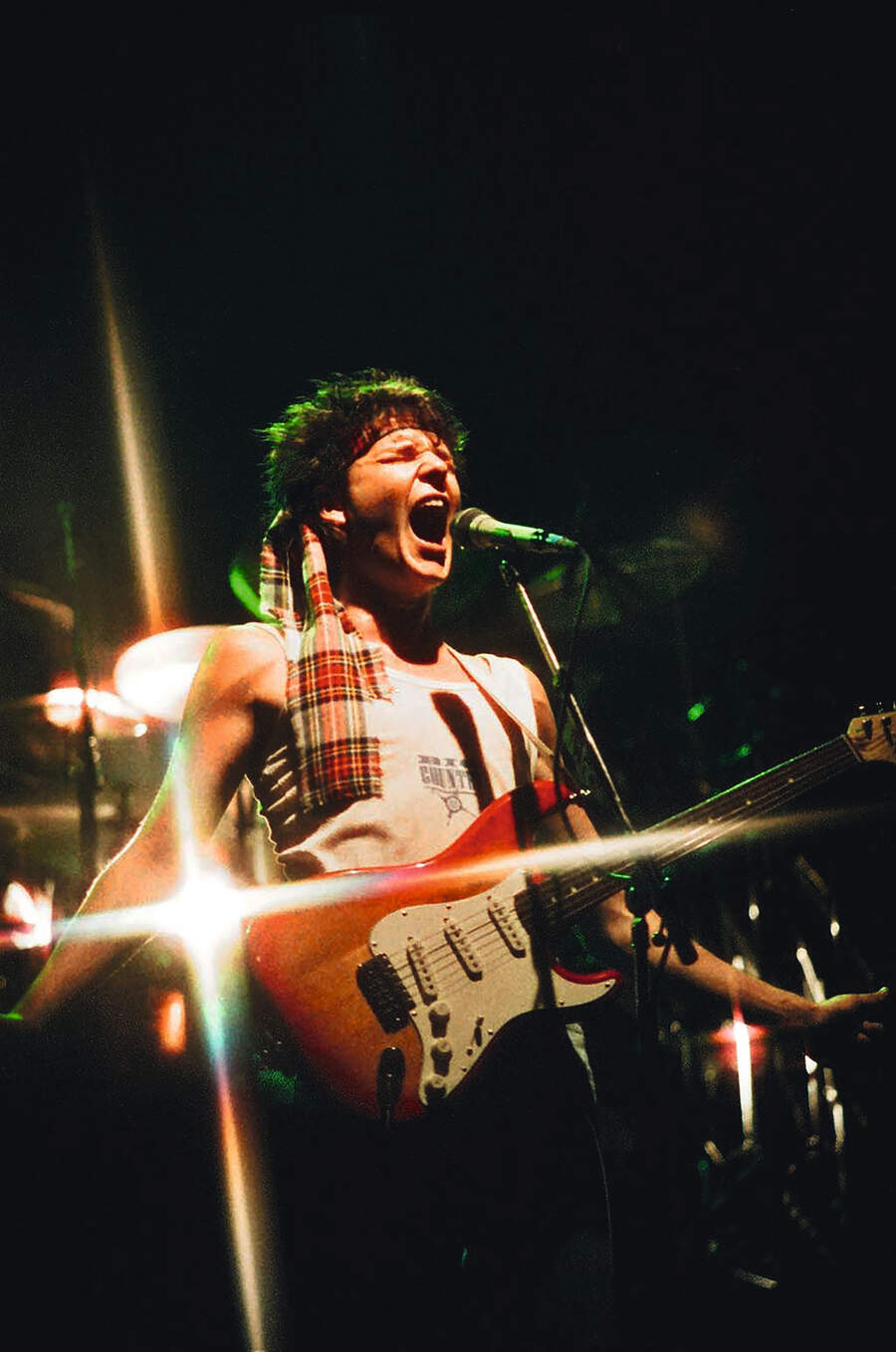
At this point, Stuart Adamson was just 24 years old and already tired of music industry bullshit. A guitarist, songwriter, and now frontman, he had formed Big Country after leaving the Skids – the punk band he’d formed in Dunfermline in 1977 – at their artistic and commercial peak. His final album with the band, The Absolute Game, was their first to reach the UK Top 10.
But underneath it all, Adamson was cracking up. His final months with the Skids were characterised by disappearances and meltdowns, as he tried to balance life in a band with his desire for an ordinary domestic life, severe full-body rashes from allergies that drove him to alcohol just so he could sleep, and all the while reckoning with a childhood that involved some kind of abuse.
On the day of the Skids’ last gig on the UK mainland, at London’s Hammersmith Odeon, Adamson had disappeared, turning up just five minutes before the show. It was a pattern of behaviour that had characterised much of their short career. Before he’d had a hit, let alone tasted real fame, Stuart had already walked out on two major label recording sessions and left his band. Before the Skids’ debut album was released, before their single Into The Valley went Top 10, Adamson temporarily walked away and wrote a long letter to Record Mirror to explain his disenchantment with the music business.
“Artistic control is a joke,” he raged. “Unrestrained rock’n’roll exists only in the minds of hopeless romantics. Music only exists in the free meals and handouts of high-powered business executives.
“I don’t need it, that’s all.”
He went back, but by 1981 he’d had enough again. The Skids were a songwriting partnership with singer Richard Jobson, and Adamson was tired of compromising. He could write his own songs and he had something to say.
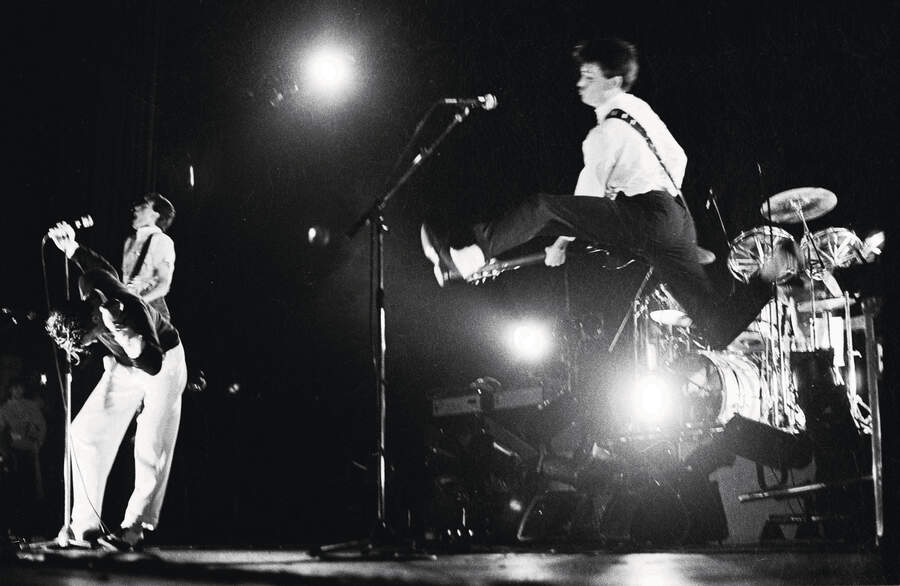
After the Alice Cooper tour, he reconfigured Big Country. Originally envisioned as an all-Scottish band, only Stuart and fellow founding member and guitarist Bruce Watson remained, and two Londoners – drummer Mark Brzezicki and bass player Tony Butler – were brought in. Butler and Brzezicki were pros: young session players with a background in prog rock, who’d recorded with Pete Townshend and had a ton of sessions behind them.
The new band gelled. Butler and Brzezicki were killer. The songs came to life. Record companies got excited. A&R man Chris Briggs got them a deal with Phonogram and put them in the studio with producer Chris Thomas. Thomas seemed ideal. He’d produced some of the tracks on The Beatles’ White Album, gone on to produce Roxy Music and Procol Harum, and mixed Pink Floyd’s The Dark Side Of The Moon. When musical fashions changed, he changed with them, producing Never Mind The Bollocks by the Sex Pistols and the first two albums by The Pretenders.
This mix of session musicians and Scottish punks, this collision of prog and new wave styles, might benefit from a pro at the helm, Briggs thought. But something went wrong. The chemistry didn’t work. Chris Thomas rubbed people up the wrong way.
And then something terrible happened. On June 16 or 17, bass player Pete Farndon appeared at the studio. Farndon had been sacked from The Pretenders a couple of days previously for his drug use. He’d come to see Chris Thomas with some news.
“Jimmy’s just died,” he said. Pretenders guitarist James Honeyman-Scott had died from heart failure, brought on by cocaine abuse. He was 25 years old.
“Chris Thomas broke down,” says Bruce. “He couldn’t finish the session.”
There was no point in continuing.
“Stuart and I just went down to King’s Cross and got the train back up the road.”
Phonogram released a single from the sessions, Harvest Home. It peaked at No. 91 on the charts.
So as 1982 ended, Big Country seemed no further forward: an album that had been canned, a single that had flopped. Apart from supporting The Jam on their farewell shows at Wembley, “it was a bit of a lousy Christmas going into ’83”, says Grant.
There was a final member of the team, a piece of the puzzle, missing: producer Steve Lillywhite.
Steve Lillywhite’s productions for Ultravox!, Siouxsie & The Banshees, XTC, Peter Gabriel and U2 were beginning to define the sound of the 80s. He had just finished producing U2’s third album, War. In March 1983, War knocked Michael Jackson’s Thriller off the No.1 spot in the UK and stayed in the top 40 for the rest of that year.
“I was sent a few demos and the Chris Thomas recordings, which I agreed sounded flat and uninteresting,” says Lillywhite. “So they contracted me to record a single, to see how it went.”
They went to Mickie Most’s RAK studios and got to work.
Stuart’s biggest challenge was transitioning from a guitarist-who-sings, into a singer-and-guitarist. “And that’s when Stuart found his voice,” says Tony Butler.
On Fields Of Fire, Lillywhite put the frontman through his paces. Originally written in the key of D, fitting Stuart’s range, the producer asked them to do it in F instead.
The problem was that Stuart and Bruce used drone strings, a technique where you leave a lower string open and unfretted, but hit it consistently so that it rings out. Often used in folk music, Jimmy Page famously used it in Led Zeppelin. It’s also a feature of bagpipe playing. Bagpipes have at least one pipe that is not played – it produces a single, consistent note, with melodies played over the top.
To play Fields Of Fire in F, “We had to tune the guitars up physically,” says Bruce, “every string, something like about three frets, maybe even four. The strings are getting to breaking point. If you used a capo, the intonation would go out and you’d run out of frets anyway.”
Then once the band had nailed the backing track, Stuart had to sing on top of it, in a key that was way out of his range.
“Steve kept him at it,” says Tony, “for a day. He made him sing and sing and sing. And what you hear on the final record is this newborn singer. Stronger, more assured. It sounds natural, but it was done incredibly unnaturally. I remember Stuart looking like he was going to pass out at times. But Steve had worked with Bono. He knew what you could do with people.”
It was a breakthrough. Stuart once described Fields Of Fire as “thoughts on a train journey”, and that journey is almost certainly the one from Scotland to London. ‘Four hundred miles,’ goes the chorus, ‘without a word until you smile.’
Dunfermline is four hundred miles from London, the city taking him away from his own family, Sandra and Callum (‘Between the woman and the boy/Between a child and his toy’). ‘I will be coming home again,’ he promises.
In a classic Stuart Adamson move, he later suggested that Fields Of Fire was partly about the Falklands conflict of 1982 – describing train journeys to London in which he and Bruce chatted with guys from the forces – but there’s very little in the lyric to support that, beyond the title.
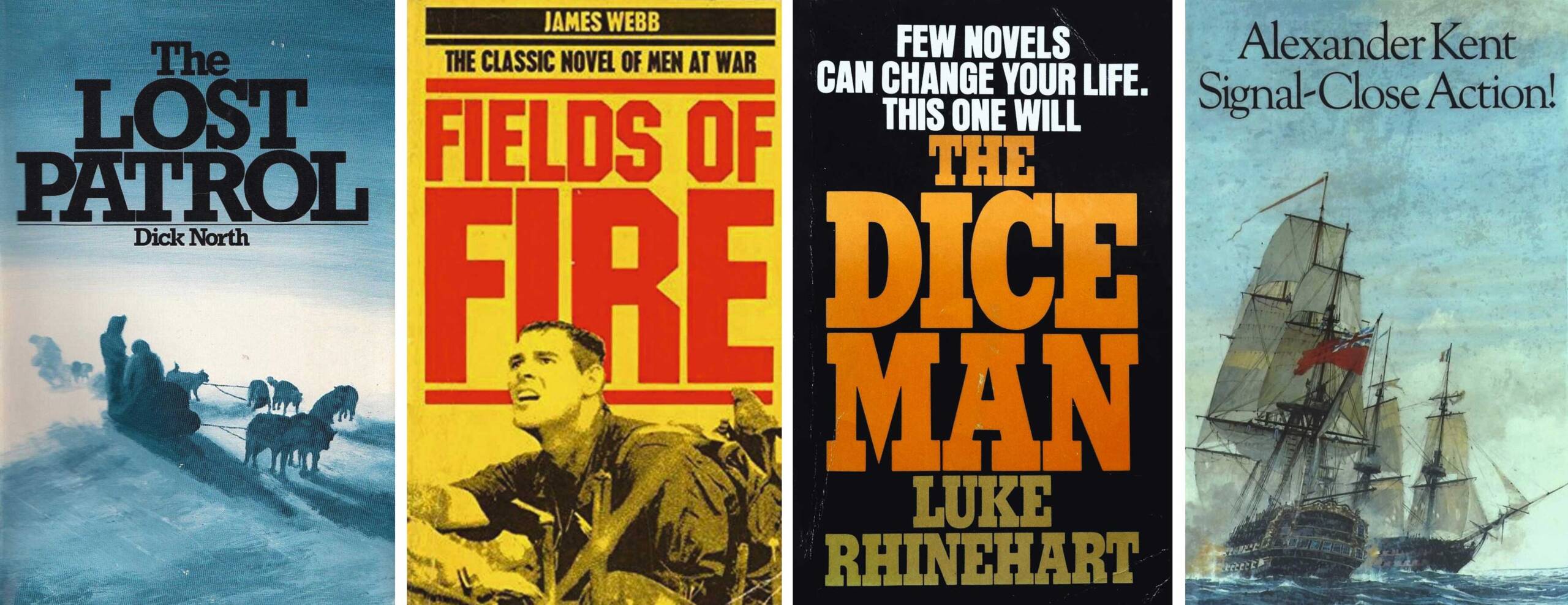
Fields Of Fire was the name of a novel from 1978 by James Webb, set in the Vietnam War, and exactly the sort of book that Adamson – a fan of Michael Herr’s Dispatches and Tim O’Brien’s If I Die In A Combat Zone – would have read. The song can then be seen as a soldier’s feelings on leaving his family. Misdirecting people like this – suggesting that Fields Of Fire was about the Falklands and not about himself – was a great way of deflecting people from the personal material in his songs.
“That’s how he liked it,” says Sandra, “because people were left wondering. He would never tell anybody the truth. I still see a lot of crap written about his lyrics, and I think, ‘Oh, if only you knew.’”
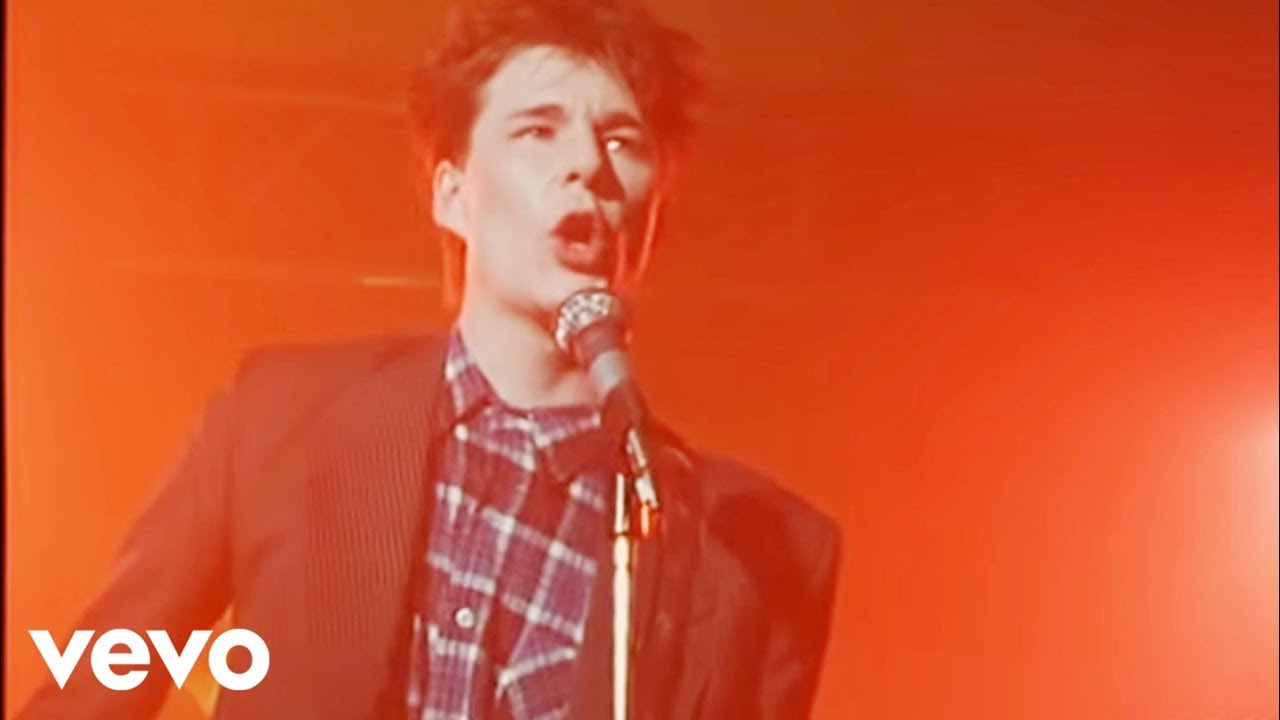
Lillywhite brought the song to life. It was dynamic, uplifting, original. Stuart’s voice was strong, and Fields Of Fire introduced an exclamatory vocal tick that he would become famous for. In karate they call it the ‘kiai’: the cry that often accompanies a blow, designed to intimidate opponents, drive confidence and increase power, tensing your body. Big Country’s songs are full of kiais: ‘Shot!’ ‘Cha!’, ‘Haat!’ and more. In Fields Of Fire it’s ‘hup’ – an uplifting rhythmic ‘giddy-up’ to the band, which in concert would give the audience something to sing along with.
Fields Of Fire sounded like the work of a band, each member heard distinctly as they rolled into the fadeout: Tony’s bass soloing, Mark’s snare rattling, the guitars skirling elegiacally.
On February 26, 1983, it went into the UK chart at 64. Seven weeks later it was at No.10, matching the Skids’ highest-ever chart position.
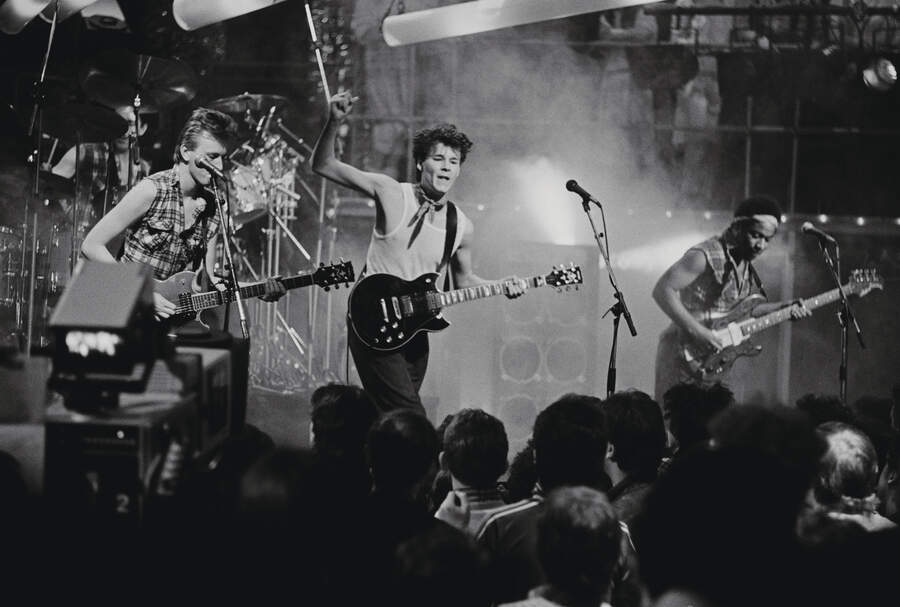
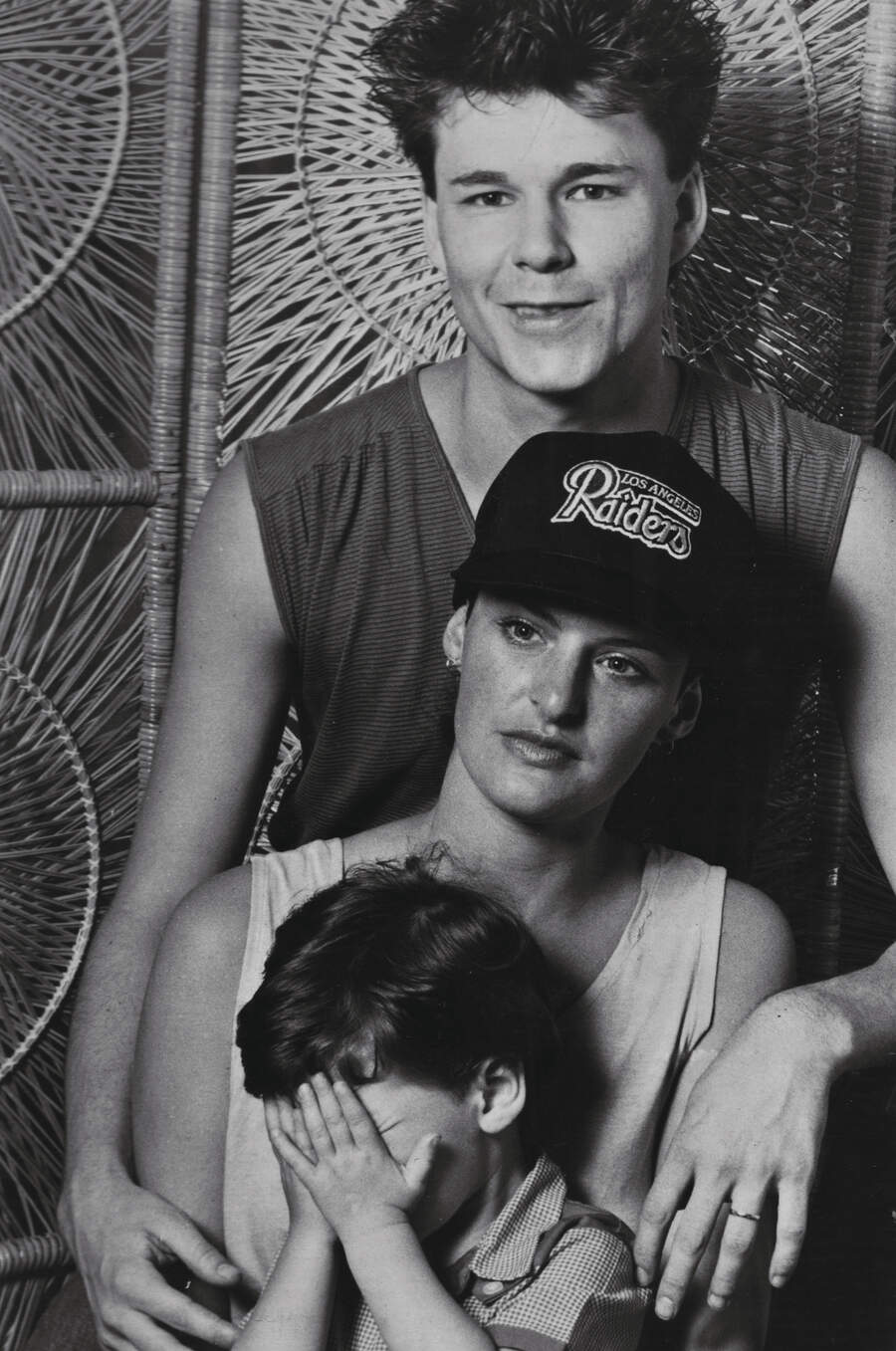
The single’s B-side was Angle Park. It was the first song that Bruce and Stuart had worked on, and they had even named the band after it for a while. The song itself was named after an old house with high walls in his hometown of Townhill, and Stuart’s lyrics are dark, gothic imaginings of what might go on in such a menacing old house. The lyrics allude to abuse and violence, to children hiding behind their mother (‘The beaten cry behind white dress… While mothers wring their hands of tears/The spelling books are in arrears’). In the garden, the fountains crack and statues grin menacingly, and the lyric points to the source of this misery: the father. ‘The evil genius hugs his wife,’ Stuart sings, ‘as tiles ring with fear of life.’
The opening guitar line recalls the melody of Joy Division’s Love Will Tear Us Apart. Released in June 1980, a month after singer Ian Curtis’s suicide, Love Will Tear Us Apart stayed in the UK Indie Singles chart for 195 weeks and was reissued several times. Bruce was a fan and Stuart had moved in similar circles to Joy Division, so possibly the melody is a deliberate nod to Curtis.
Deliberate or not, Big Country’s first hit single was a song about the anguish of leaving home, coupled with a song about domestic abuse that referenced a contemporary who had died by suicide.
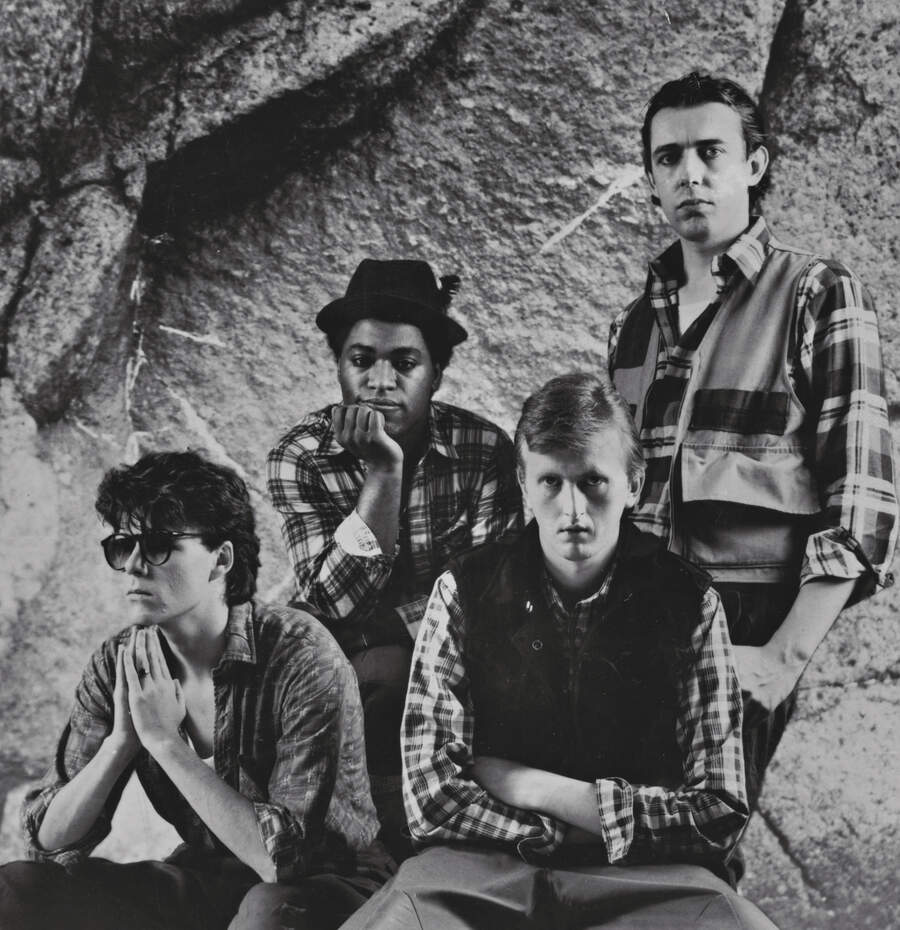
A change in Steve Lillywhite’s schedule made him available to do Big Country’s debut album. The Fields Of Fire experience had energised Stuart. “When I’m good, this is what I can do,” says Lillywhite. “Stuart was inspired by the sound of Big Country. We gave them this great spirited, uplifting feeling and from that Stuart went off and wrote In A Big Country.
“I remember playing Bono the demo of In A Big Country, I was so knocked out by it,” he says. “I felt very honoured by that.”
“I think Steve actually burst into tears when he heard In A Big Country,” says Ian Grant. “Maybe not ‘burst into tears’, but became emotional. It clicked with him.”
In A Big Country had actually been kicking around as an instrumental for a little while, says Bruce. After Fields Of Fire, Stuart wrote words, added vocals and brought it back, complete. “It was like: ‘What the fuck… How did you come up with that?!’” says Bruce.
The lyrics for In A Big Country were incredible. In the song, Stuart addresses someone – possibly himself, possibly the listener, possibly someone in his life – and asks them to stay strong, despite all they’ve been through.
Sandra Adamson has wondered if it’s partly directed at her. Around this time, somewhere on the road, or in London – in the period right before he wrote the lyrics to In A Big Country – Stuart admitted to her that he had been unfaithful.
“I don’t even know her name,” she says. “And she was probably one of many, but she was the one I was aware of.”
The song is filled with great turns of phrase – ‘Dreams stay with you/Like a lover’s voice fires the mountainside/Stay alive’ – grand and romantic on the one hand, but realistic and grounded on the other: ‘I’m not expecting to grow flowers in a desert/ But I can live and breathe/And see the sun in wintertime.’ Just ‘because it’s happened’, he says – whatever it is – it doesn’t mean your life is over. ‘Stay alive,’ he exhorts.
Stay alive.
In a piece of studio ingenuity, Lillywhite took a drum break from Porrohman, the epic album closer that they’d already finished, and “snipped it, copied it onto another tape and put it at the front of In A Big Country,” says Bruce. “It’s the same part twice – that’s why it sounds weird.”
Drum intros became as much a part of the signature Big Country sound as the guitars. “From then on,” says Bruce, “every new song, Mark would be like: ‘I’m starting it!’” “What blew me away was when Stuart did his vocal,” says Bruce. “He did a double track of his vocal, and then he did a harmony, then he did a fifth. Instead of Tony and Mark doing backing vocals like we would do in a live situation, Stuart just went in, and he built it up, like the Beach Boys. I thought, ‘This could be a hit single!’”
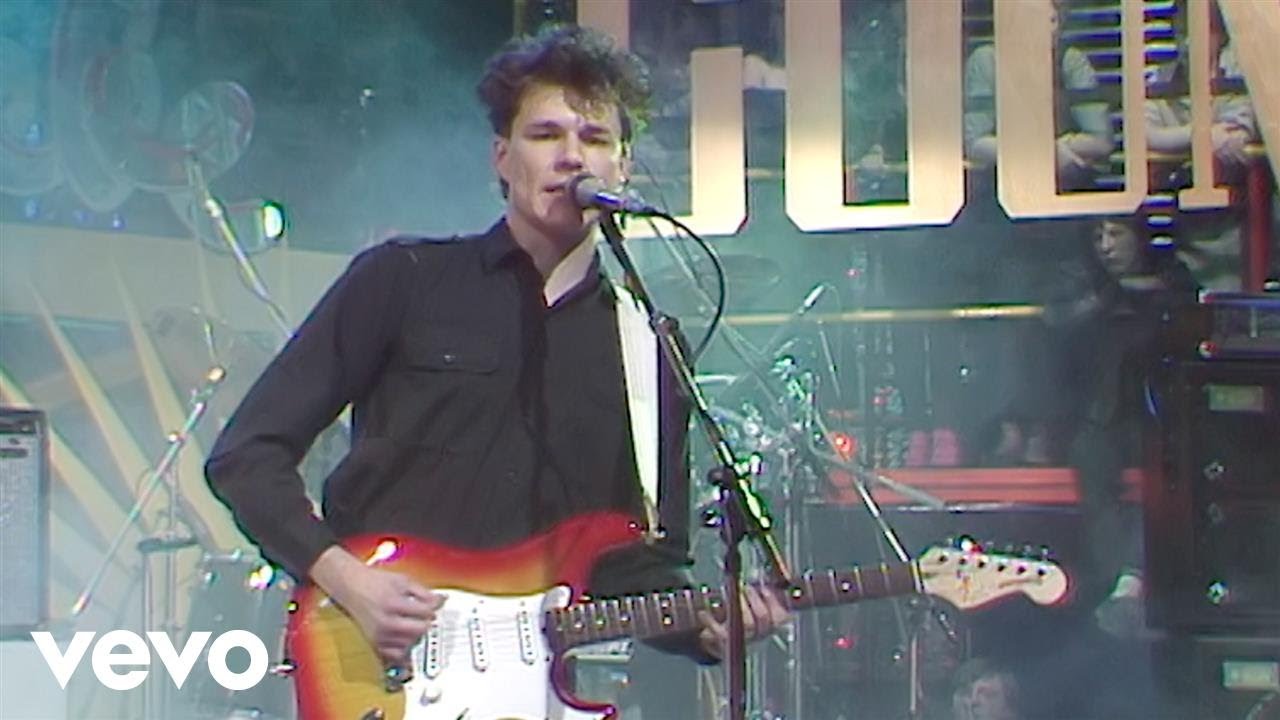
Bill Nelson, formerly of Be-Bop Deluxe, had produced the Skids’ second album Days In Europa, and during the sessions had given Stuart an EBow. The EBow – or ‘energy bow’ – was a handheld effects unit. You held it with your picking hand over the strings of an electric guitar, and it reacted with the pickups, creating a field of magnetic energy that made the strings vibrate. With no picking involved, the notes sounded like they were being bowed.
It was a sound that became synonymous with Big Country. “At the time,” says Greg Heet, the inventor of the EBow, “and for a long time, people would reference Big Country as their inspiration for getting an EBow.”
But, as with the constant references to ‘bagpipe guitars’, the band became bored of talking about it. “The EBow has nothing to do with the guitar sound,” says Bruce.
They used the EBow on tracks such as The Storm to get a long, sustained note, almost like a violin. “But again, it’s like bagpipes,” says Bruce. “On their own, they sound fucking horrible. But when you add reverb and all that stuff, that’s where you get what people call the bagpipe sound. It gives you infinite sustain, and you’re better using it with a cleansounding guitar – with a distorted guitar it’s just too much.”
Quite early on, the two guitarists had settled on some rules. “There was no master plan apart from the fact that we didn’t want to do the Thin Lizzy/ Status Quo thing,” says Bruce. “We didn’t want to do that blues bendy kind of thing.”
Thin Lizzy’s twin harmony guitars and Phil Lynott’s Celtic influence do seem like an obvious precursor.
“If you were to pick a song, it would be Whiskey In The Jar,” says Bruce. “That would be the one that would fit alongside Fields Of Fire or something. But it’s more of a sound thing – the reverb on the guitars and a melody. But there’s a bit of string bending, and we didnae do that.”
Inwards had been written in Stuart and Bruce’s first songwriting sessions, but the lyric was written a month after Stuart left the Skids in May 1981. He was in London, he later told Sounds, and Sandra phoned him with news that his grandmother had died.
“I just felt a real mess inside,” he said. Inwards seems to be about trying to keep emotions under control (‘I pull everything inwards but everything’s loose… Pull everything inwards but everything’s shame’).
Musically, Tony saw it as an opportunity. “Inwards reminded Mark and I of our prog days and we thought, ‘Okay, let’s attack this.’ We got to employ such a range of styles and attitudes towards it, it became something. It’s almost five minutes long but it didn’t feel like it when you played it. It was a huge song and you could tell it was going to be a great live event.”
Chance had started life in Bruce’s kitchen. Back in the early days, Bruce and Stuart had used a four-track TEAC Portastudio to capture their ideas. Portastudios were changing how music was made, giving songwriters the ability to capture ideas and work them up – to add to them, to accompany themselves – without having to go into a studio. The same year that Bruce and Stuart worked on those early Big Country songs, Bruce Springsteen was sitting in a rented house in New Jersey recording what would become his next album, Nebraska, on the same machine.
Bruce asked Stuart if he could borrow it, and in his house, mucking around, he wrote what would become the intro for Chance. Almost two years later, Stuart added the melody, and turned it into another song about an abusive father – ‘Your father’s hand that always seemed like a fist’ – and a woman escaping an abusive family situation only to end up a single parent, trapped and aging before her time: ‘You never knew you were young.’
A Thousand Stars imagined a nuclear war. In the early 1980s, the threat of nuclear attack seemed so real that the UK government had created and distributed a leaflet titled Protect And Survive, outlining the steps the public should take in the event of a nuclear attack. “No part of the United Kingdom can be considered safe from both the direct effects of the weapons and the resultant fallout,” it said.
You can talk about ‘lucky stars’, sings Stuart, but ‘the luck of a thousand stars won’t get me out of this… Some say protect and survive, I say it’s over.’ This is humanity’s final hand. As the missiles rain down, he pulls his loved ones close ‘while all the city’s on fire’.
“There are apocalyptic images in the songs,” said Stuart. “It is something that’s with me constantly and it’s something that’s brought home quite hard, living in this area.”
Rosyth naval base, home to nuclear submarines, was just a few miles away.
“We’re a prime target here, make no bones about it. If anything does happen, it’s going to be bye-bye this area.”
The Storm imagines a different type of apocalypse. With its haunting EBow intro and layers of acoustic guitars, The Storm plays out like Celtic prog, lyrically evoking cruelty from some time in Scottish history. The chorus – ‘Ah, my James/They didn’t have to do this’ – has led some to assume it’s about the Battle of Culloden, with ‘James’ a reference to James Francis Edward Stuart, the son of deposed King James VII and II of England, Scotland and Ireland.
The source of its weird didgeridoo sounds are far less high-minded. “Steve decided that we needed a far-off foghorn sound,” says Tony. “He got myself and Stuart to stand over a couple of mics and fart as much as we could. Then he put it through harmonizers and digital delays and basically it just goes ‘PFFOOOOOOORT!’ all the way through the track and he mixed it in.”
Later, at RAK they were doing some overdubs of The Storm and there was an actual storm outside. “There’s lightning going off, the lights flashing,” says Tony. “It was like, ‘Oh. This is weird.’”
The lyrics for Lost Patrol dated from Stuart’s time with the Skids, and could have been inspired by The Lost Patrol by Dick North (1978), a detailed account of the search for a mail patrol in the Yukon in the early 20th century. More than just a straightforward telling of the story, Lost Patrol is also to be a bit of self-mythologising in the style of The Clash’s Last Gang In Town.
‘We lay the night in anguish/Snakes drawn out by the tide,’ go the opening lines. The men of the Lost Patrol died near the point where the Snake River meets the Peel River and heads to the sea. ‘The compass of decision/Falls always on one side’: The cover art for The Crossing features a compass, and the ‘compass of decision’ seems key to understanding the album: something to do with the choices we make and the directions we take. Like the men of the Lost Patrol, we could all be choosing a path that ends in death.
Close Action took its title from the 1974 novel Signal – Close Action! by Alexander Kent, a story of adventure at sea. Amid apocalyptic imagery (‘The continents will fly apart/The oceans scream and never part’), Stuart sings what seems to be a devotional love song, while the final verse suggests something dreaded arriving from the sea: ‘For endless hours the sirens wail/Await the tide that brings the sail/Cling to the walls and close the shore.’
The album ends with Porrohman, a seven-and-a-half-minute-long multi-part epic. “There was no noodling,” says Lillywhite. “We didn’t like solos in those days. Guitar breaks that were nicely structured were fantastic. Having said that, a song like Porrohman is sort of progressive rock.”
Porrohman’s title comes from Pollock And The Porroh Man, a short story by HG Wells from 1895, about a man hunted and then haunted by an adversary before being driven mad and killing himself. The lyrics use the same phrase ‘tiles ring with fear of life’ employed in Angle Park, that early song of abuse. ‘The fear of life is strong,’ goes Porrohman, and suggests that the course of our lives is just a matter of chance: ‘Our fate is in the hands of a demon or a god.’
“I wanted to go for this big, cinematic sound,” said Lillywhite, totally understanding the brief. “I tried to make everything larger than life.”
Musically, The Crossing was epic and inspirational. It was rock music, but not the rock music of Led Zeppelin, AC/DC or the Stones. It was modern – with guitar tones and effects that you’d find on records by U2 and New Order – but sometimes it sounded positively ancient. Its lyrics talked of mountainsides and ploughmen and harvests and the westerly winds sighing.
In Scottish music, its effect may be unparalleled. To young people growing up in central Scotland of the 1980s, the image of the country on TV was one of castles and lochs and Highland dancing at Hogmanay: a world of ‘Teuchters’ and tartan that seemed at odds with the reality of life in 1983. Scotland had not voted for the Conservative government of Prime Minister Margaret Thatcher, but got it anyway. Unemployment soared. Traditional industries closed. In the early 80s, Edinburgh became the AIDS capital of Europe. Heroin flooded the estates of Glasgow and Edinburgh, where sharing dirty needles was a way of life. The nuclear threat felt real.
The music of Big Country seemed to embody both sides of Scotland – a Scottishness that connected to the country’s history, but felt modern and vibrant. “When I first heard Big Country,” said the great Scottish comedian and actor Robbie Coltrane, “I thought The Clash had hijacked a pibroch player.” (‘Pibroch’ is the gaelic name for a piece of music written for the bagpipes.) It was music, he said, that made “every Scotsman in London eat a bus stop out of homesickness on the way home from the pub”.
“The storytelling is timeless,” says Sandra. “It’s visual. The stories that he tells can be interpreted loads of different ways. People ask me, ‘What do you think that song means?’ But if Stuart hasn’t already said it, there’s no way that I would ever talk about anything that he told me. It’s an experience – a Scottish experience or a war experience. A heartfelt experience.”
Many of the song titles on the album are obscure and don’t appear in the songs’ choruses. Even the single, Chance, takes its title from a line in a verse: ‘You played chance with a lifetime’s romance/ And the price was far too long.’ The idea of ‘playing chance’ – any game that involves luck and risk, usually involving dice – might have come from another source.
Peter Wishart remembers Stuart recommending a book to him. “Stuart said, ‘You have to read this.’ One of his favourite books was The Dice Man by Luke Rhinehart. It was a book that actually changed my opinion and philosophy on life.”
Published in 1971, The Dice Man became a cult sensation. It’s about a man who feels suicidal and – instead of killing himself – puts his fate in the roll of the dice. The opening lines of the book are: “In the beginning was Chance, and Chance was with God… All things were made by Chance.” The word ‘chance’ appears 11 times in the first two paragraphs.
It’s tempting to read more into this, to see Big Country and The Crossing – an album filled with songs of depression, loss, abuse, persecution and death; an album that begins with a plea to someone, possibly Stuart himself, to stay alive – as Stuart Adamson’s last roll of the dice. If Big Country’s music had been depressing, like Joy Division’s, then it would have been more obvious. Instead, the lyrical content was wrapped up in music so passionate, so uplifting and beautiful, that its message was obscured.
Some people heard it differently. When Skids drummer Tam Kellichan heard Chance, he thought it was a suicide note. “When I first heard it,” he says. “I thought he wrote it for his own death. It was all in the chorus, all this, ‘Oh gawd, help me now.’ I thought, ‘Fucking hell, he must have been in a bad state.’ I thought it was the last song for him.”
The album took its title from one of the songs written by the first line-up, with credited contributions from Peter and Alan Wishart. The Crossing had also been one of the tracks that had excited Mark and Tony: an ambitious, proggy epic.
The song never made it onto the album, so why did it become the title – what is the significance of ‘The Crossing’, as a song or a phrase? A ‘crossing’ can be another name for a crossroads, a place where roads intersect and ‘the compass of decision’ is needed: Which road will you choose?
A crossing is also a journey by boat or ship, and there are several references to the sea in the song and the album. As a Merchant Navy seaman, Stuart’s dad would have made many crossings. The song The Crossing – and those words aren’t used anywhere in the lyrics – seems to be about someone’s return. On the face of it, they are returning triumphant (‘Your islands are conquered and you are returned/To the throne’) but, as in Close Action, their return is also dreaded: ‘Martyrs take penance and fill up the mattress/With stones.’ The returning person ‘wears out their welcome again’.
There is what could be a description of abuse or fear in the night, someone becoming alert in the dark as feet creep to their door: ‘Mornings hit hard with an uncontrollable light/Piercing the senses that click deep in the night/Crouched in a pillow of straw, feet on the floor/Creeping a path to the mat that holds back the door.’
You also cross the threshold of a door, maybe a door that you have no business crossing. You cross boundaries. You can cross people – double-cross them – betray people who trusted you.
In a room, sings Stuart, there are ‘scratches on walls’ that ‘draw out your loss’ – symbols of the damage caused. The chorus, meanwhile, suggests an escape from this returning threat, this thing that creeps into your room at night.
‘Pull straws with holy men,’ sings Stuart.
They could pray, but it’s just another game of chance.
‘Stain the atlas pink.’
Destroy the maps so they can’t be found.
And, finally, run away: ‘Find a beach, where we can cross our hearts.’
And what do you do when you cross your heart? You hope to die.
Maybe Stuart Adamson saw Big Country as his last chance, a final roll of the dice, and he constructed the band’s material – from their very first song, Angle Park, to their first album – to tell a story about abuse.
Maybe he couched these tales of frightened children, beaten women, these references to suicide, to the effort required to stay alive, in songs that were so life-affirming that their message – although right there in plain sight – wasn’t obvious.
Maybe talk of ‘Jock rock’ and ‘bagpipe guitars’ trivialised his grand artistic statement. Maybe he was such a charismatic performer and his talent so huge and obvious that we were blinded to what he was saying all along. Or maybe it’s a mistake to read too much into things.
On August 6, 1983, The Crossing went into the UK album chart at No.4, rising to No.3 the following month. It spent 39 weeks in the top 40 through 1983 and into ’84 and had gone platinum by February 1994. Big Country were big time.
Stay Alive: The Life & Death of Stuart Adamson, by Scott Rowley, is published on March 26 by New Modern.