 Written by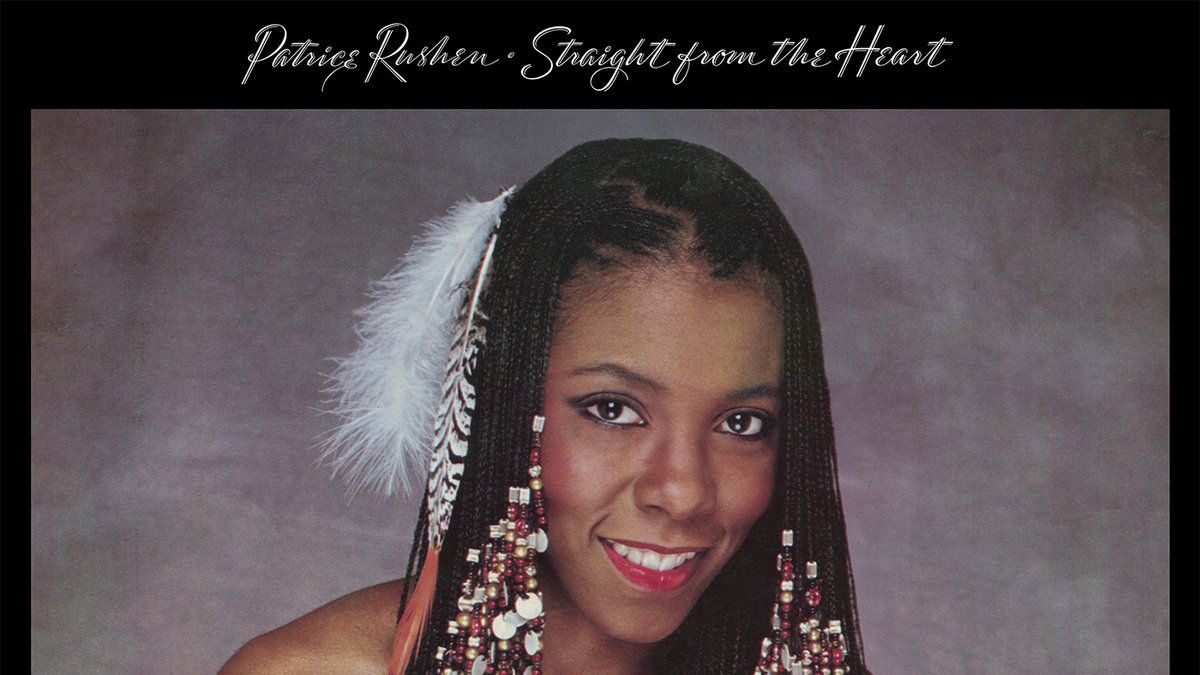
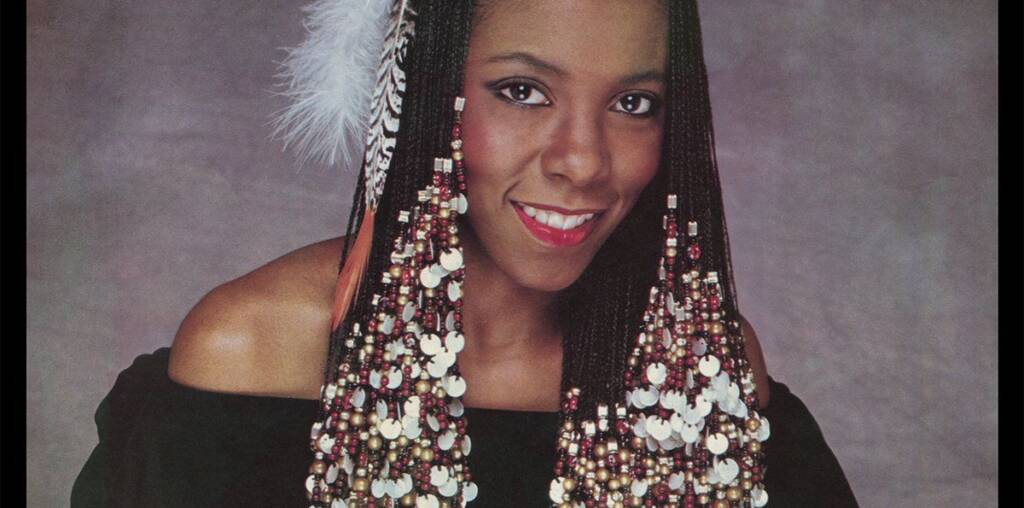
There are talents so enormous that their reputation precedes them, their feats whispered in hushed tones in cafeterias and on street corners. Little league batters so skilled their names are known three counties over, by kids who’ve never seen them play—pint-sized John Henrys at bat. In Southern California jazz-band circles in the late 1960s and ’70s, Patrice Rushen was just such a figure. Her name rang out before she had even entered a recording studio. In 1972, days before the Monterey Jazz Festival, co-founder Jimmy Lyons told of a maestro in the making: “Wait until you hear Patrice Rushen play piano on Sunday afternoon,” he said to a reporter from the San Francisco Examiner. “She’s 17 and she’s a gas.”
Lyons had good reason to be confident in the allure of the festival’s starpower; he’d helped stock the 15th edition with jazz icons like Quincy Jones, Thelonious Monk, Sonny Rollins, Art Blakey, Cal Tjader, Herbie Hancock, and Roberta Flack. But the reason that Lyons was hyping up Rushen’s Sunday performance was because he knew talent when he saw it. Lyons, who got his start as a radio disc jockey in the 1940s, had begun turning his attention to younger musicians, wondering what his beloved genre held in its future. The ’72 Battle of the Bands at the Hollywood Bowl doubled as a debutant ball for Rushen, who collected three trophies as a pianist that night: one as one of the top instrumentalists, and two others as part of the Msingi Workshop, her student band at the all-Black Alain Locke High in Watts, California, led by Reggie Andrews (who ended up mentoring the Pharcyde and co-wrote Dazz Band’s “Let It Whip”).
No score yet, be the first to add.
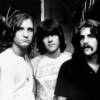
Rushen’s brilliance stood out in the juvenile outfit: She wrote and arranged two tracks on the band’s self-titled LP—“I’ll Be There” and “You Got It.” The latter maintains an exuberant push-and-pull between Rushen’s electric piano, bounding with lightness and dexterity, and her classmate Bobby Bryant’s blaring tenor saxophone. Rushen constructed the track in such a way that Bryant would break through the listener’s defenses while she slid in behind to soothe and help pick up the pieces.
Rushen’s Sunday in Monterey made Lyons look prophetic. As a member of the All-Star California High School Band, she caught the attention of critics and record scouts alike. Playing keyboard on composer Oliver Nelson’s arrangements, she moved between inventive improvisation and grooving, grounding presence, becoming a centering force for her talented peers. Praised by Leonard Feather from the Los Angeles Times and Eric Kress of the Peninsula Times Tribune for outshining professionals and legends many years her senior, and leading to her signing with Fantasy-Prestige Records, Rushen’s appearance at the jazz festival served as a sturdy stepping stone for her entrance into the professional recording world.
Born in Los Angeles in 1954 and plucked out of nursery school at three years old to attend USC’s program for musically gifted children, Rushen was the epitome of a child prodigy. Her parents started her on piano; she was playing classical recitals by age six, and began composing before she became a teenager. But Rushen was far from a traditionalist. Black music (and its rock-adjacent offshoots) flowed through her childhood. As she explained in a 2022 interview, classical music provided the base for her technical piano skills—along with “an appreciation also for Bach and Beethoven”—but her days were spent humming along to James Brown, Stevie Wonder, and the Beatles.
Once Rushen entered high school at Locke under the tutelage of Andrews, a rookie teacher with an experimental bent, exploration and expansion became just as important as technical brilliance, as she told the St. Louis Dispatch in 1984: “For me, music is organic. It’s a reaction based upon my situation, my imagination, and, hopefully, my creativity.” By the release of Rushen’s seventh studio album and major breakout, Straight From the Heart, in 1982, it felt like a culmination of her prodigious upbringing. Displaying her effortless mastery of the piano across R&B, disco, and jazz—genres she picked up naturally along the way in her career—Rushen merged technicality with improvisation in a way that she’d been toying with since her teenage years.
Rushen’s 1974 debut, Prelusion, landed like it was destined to be a Blue Note classics reissue, laced tight with strictly jazz compositions. She anchored an eight-piece outfit (which included Joe Henderson playing tenor sax, Leon Ndugu Chancler on drums, and Oscar Brashear on trumpet), romping through jams on her piano and electric keyboard with blistering energy, while the band’s esteemed members calmly stepped in and out of the spotlight. The follow-up, Before the Dawn, allowed her to dip her toe a little further into fusion. She shelved the guardrails of jazz standards, largely playing electric piano, synthesizer, and clavinet.
Similarly, the sessions were littered with heavy hitters, including Hubert Laws on flute and Lee Ritenour on guitar. Rushen’s tendency for ambling through different styles feels instinctual; she bounds between genres before settling on a sound for too long—take the way that the titular track patiently crawls as she lumbers in the lower octaves while the band flutters with cosmic echoes and effects, before leading into the closer “Razzia,” which evolves into a sprawling funk-rock breakdown, entropy increasing with each strummed note.
While her professional solo career was beginning, Rushen pulled double duty and worked as a studio musician for the titans of ’70s jazz fusion—partly out of necessity, due to the muted commercial success of Prelusion and Before the Dawn, but mostly to satisfy her taste for unique forms of musical expression. Also proficient on flute, guitar, bass, and drums, she became a Swiss army knife as a session player and arranger. Rushen quickly became a favorite keyboardist of Jean-Luc Ponty and Ritenour, and was often found in the credits of jazz artists like Stanley Turrentine, Donald Byrd, and Laws, earning trailblazer status as a Black woman session musician. Explaining to the St. Louis Dispatch the urge to work in the background, Rushen found that contributing to other geniuses’ compositions and directions offered its own form of creative freedom. “My entire upbringing was about not being limited,” she said, “becoming a studio musician seemed to be a way out. As a studio musician, you never know what kind of music you’ll be playing on any given day.”
Rushen first appeared as a vocalist on her third and final record with Prestige, 1976’s Shout It Out, an album that began her gradual turn toward hitmaking R&B (a strategy that would have earned her the criticism of “selling out” from jazz purists, as noted in her 1982 profile with Blues & Soul). Even as Rushen switched to Elektra in 1978, celebrating the move with her album Patrice, the increased radio exposure seemed like a symptom of her creative output, rather than a driving force. Her determination to follow her curiosity buoyed the brilliance of 1979’s Pizzazz and 1980’s Posh through any stretches of overproduction.
Sure, the hits began to flow as the draw of her airy voice coincided with a fundamental understanding of finding the “groove”—Pizzazz’s “Haven’t You Heard,” with its boisterous horns, was begging to be a crossover disco-pop jam—but Rushen was still learning how to find stable footing in the mainstream while chasing compositional brilliance. Through all these shifts, she was determined not to become creatively stuck. “I felt that there was the danger of us getting stale if we didn’t constantly have new challenges to meet,” she told Blues & Soul. She met her ultimate goal on 1982’s Straight From the Heart, pulling the various levers of R&B and disco to craft a harmonious groove that transcended its era.
In the spirit of constant progress, Straight From the Heart arrived a little less than two years after Rushen’s third Elektra release. On it, Rushen struck a balance that she perceived to be missing: paring down the elements to only the essentials, trusting in the power of simplicity above all else. The record’s seeming ease contradicts the old saw that only pressure creates diamonds. The effortlessness of the songs’ movements suggests the feeling of a jam session, almost belying the precision of Rushen and frequent co-producer Charles Mims Jr.’s compositions. Take “Number One,” the only instrumental: Rushen’s piano and synthesizer, layered on top of one another, act as punctuation for the rest of the band’s progressions, a pair of guiding hands to twist chaos into concord. It’s as if Rushen is the navigator, leading her session mates through their ebbs and flows, following a map that she’s drawn from memory.
An almost magnetic force holds the record together: the attraction between her keyboards and the surrounding guitar (primarily handled by Paul Jackson Jr.), bass (Freddie Washington), and drums (a rotation of players); the link between her voice and the rest of the band, two sounds engaged in an endless conversation. Straight From the Heart was the fourth album to prominently feature Rushen’s singing voice, but it was the first time that she sounded comfortable at the microphone for an entire project. (Never mind her own opinion of her singing chops, as she told the LA Times a couple months after the release: “I don’t consider myself a great singer. I know I’ll never be a great singer… I’m more comfortable sitting at the keyboards and just playing.”) On “(She Will) Take You Down to Love,” there’s an intoxicating lightness to her voice, which lilts alongside Paulinho da Costa’s percussive taps, drawing out her syllables longer and longer. Restraint underscores Rushen’s vocal arrangements and performance, which works best when her singing melds with the rest of the band. When her voice peaks at the end of lines on “I Was Tired of Being Alone,” tipping into the alto range, it acts almost in call and response with the horns, calling out for a companion for nearly six minutes.
Rushen understood that the success of collective effort outweighed the need for personal recognition. She’s one of the most talented pianists to grace this Earth, yet she was more than happy to cede ground to her other players. There are plenty of moments when her band members steal the spotlight—like Marlo Henderson’s intrusive, wicked guitar solo punctuating “Breakout!” (you can just barely hear Rushen exclaim “whew!” on the remastered recording as the track fades out with Henderson’s shredding)—but beneath it all is Rushen’s steady presence. There’s a mystical stretch on “Where There Is Love”—in particular, the negative space between the chorus and second verse, where other instruments fall out—that gets its lifeblood from the interplay between Rushen’s driving piano and interjecting synthesizer. These instances rub up against moments where other band members get their place in the sun, giving the album a wholeness that depends on the coordination between its distinct parts, and the trust between each individual.
Still, it’s undeniable that Straight From the Heart’s allure rests in Rushen’s hands and vocal cords, which feel more aligned here than on any of her other records. Washington’s bassline, a riff that takes ’90s kids back to its sample in the Men in Black theme song, is the entry point into the opener and biggest hit, “Forget Me Nots.” But Rushen’s singing voice—whispering sweet nothings, begging not to be forgotten by her lover—gives it a tender, romantic tilt with an enthralling groove. “If Only,” the closest thing to a ballad, cuts to the bone with simple, effective songwriting (co-written with fellow legend Syreeta Wright) that avoids being too saccharine. Against a soft bed of quiet guitar strums and woozy keys that swell in strength, Rushen’s voice mirrors the production’s crescendo as she gains the confidence to admit that she doesn’t share her lover’s affection. When she croons near the end, “If only I could be in love/Like you want me to,” her tone wavers and warbles slightly, not for lack of talent or capability, but as though the emotions of the confession have become too much to bear.
It’s almost funny to hear that Elektra didn’t believe that there were any hits on Straight From the Heart when Rushen presented the album to executives; she and her management paid for promotional expenses out of their own pockets. “Forget Me Not” ended up peaking at No. 32 on the US Billboard Top 100, and the album reached No. 14 on the Billboard 200. But the shortsighted response from the suits, who were all too happy to claim Rushen as a budding superstar when Straight From the Heart hit commercial paydirt, is puzzling, even with the benefit of hindsight.
To listen to “Remind Me,” the best example of the nascent marriage between Rushen’s Rhodes and her voice, and respond with shrugs and prompts to go back to the drawing board, represents a misunderstanding of the type of artist they had signed. They fundamentally misjudged the Black woman standing in front of them, thinking that she fit into a neat little box labeled “pop.” Her most sampled song (nearly 150 times) is a testament to attention-stopping rhythm, built completely by Rushen stacking Rhodes on top of synths on top of clavinets, with James Gadson’s drums providing the heartbeat. The simple allure of the groove, fit for Rushen and the background singers to sway over top, almost betrays the complexity that constructed it—a feat of close-up magic that might have been her favorite trick to pull.
There’s an episode of the One Song Podcast where Rushen spends 40 minutes breaking down how “Remind Me” was made, how it was borne out of piano exercises designed to sharpen her skills, how she mimicked other instruments through sheer will and ability. It’s a joy to witness Rushen, in the role of caring, patient teacher—a role she learned as USC’s Popular Music Program chair from 2013-2023—explain how her legacy lives on in a dazzling moment on Straight From the Heart. Her guidance shows that the beauty of the track hinges upon taking a second of close listening, which incites a daisy-chain of inspiration and wonder in the next second. It also conjures the image of the prodigy that trotted onstage at 17 years old, and the called shot from festival executives that came true. For a brief moment, Straight From the Heart seduces you with the simplicity of predestination, making you forget about the remarkable work it took for brilliance to materialize. With a slight wave of the hand and a light press of the keys, Rushen makes the unbelievable seem routine.
Additional research by Dierdre McCabe Nolan