 Written by
 Against all odds, Nothing have become godfathers. In the six years since their last non-collaborative album, a new wave of young bands influenced by their crisp and orderly form of shoegaze have made the once-dormant genre one of the defining sounds of this decade. Though their 2014 debut, Guilty of Everything, arrived at a fortuitous time, between the reunions of My Bloody Valentine and Slowdive, Nothing didn’t seem like the kind of band that would one day have nearly as strong an influence on the sound of shoegaze as those two titans. They were heavily tattooed Philly dirtbags whose understanding of the genre was informed by the muscle-flexing heaviness of Deftones and Swervedriver. The early shoegaze bands were an extension of psych-rock; you were meant to lose yourself in the heat of their colored lights. There was nothing remotely psychedelic about Nothing. They were mean, and they were sad.
Now people are throwing shoegaze tribute nights and covering their music alongside “When You Sleep.” The band members themselves—singer Dominic Palermo and a rotating cast of supporting players that now includes former Best Coast bassist Bobb Bruno—have accepted the elder statesmen role gracefully. Later this year, their Slide Away festival will reunite Hum and Chapterhouse, showcase underappreciated first-gen gazers Swirlies and lovesliescrushing, and spotlight rising artists like she’s green. It’s fair to say that Nothing are at the very center of shoegaze in 2026.
No score yet, be the first to add.
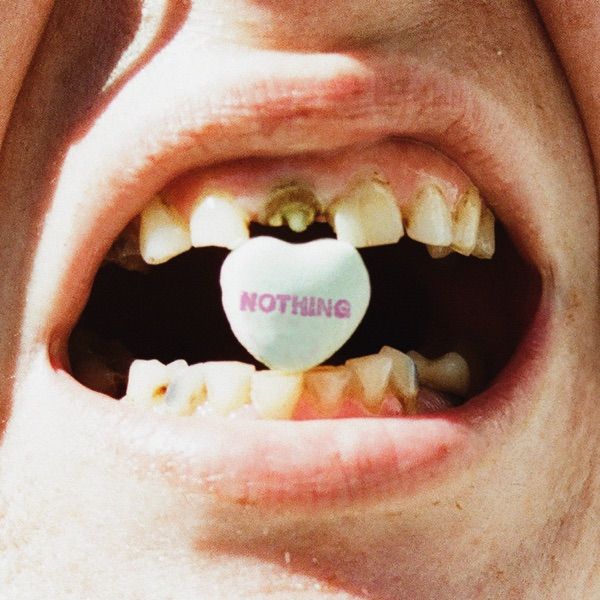
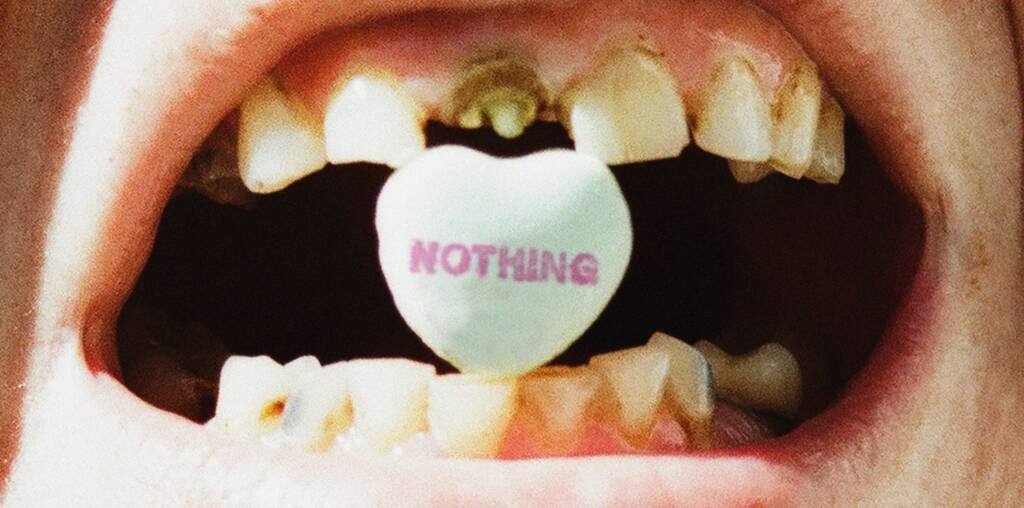
So it’s surprising that a short history of decay is the least gazey record Nothing have ever made. At the same time, it’s also the closest they’ve come to copy-pasting the genre’s most definitive sounds. The album alternates between ambitious doom-pop adorned with horns and harps on the one hand and well-executed but occasionally forgettable pastel blasts of noise à la m b v on the other. The more ornate tracks’ departure feels nearly as monumental—and often as successful—as Deafheaven’s shift to clean singing on Infinite Granite; the trad shoegaze feels like a retrenchment. As Nothing simultaneously push past their established sound and retreat to a safer form of shoegaze they’d not played before, a short history of decay can feel oddly anonymous.
Palermo’s primary gift is for melodies that yearn for innocence from a place of exhausted experience. Those melodies give his songs a kind of moral authority—like proof that what he’d lived through had scarred but not destroyed him. In “never come never morning,” with the armor of the band’s heaviness replaced by strummed acoustic guitars and humming violins, what might previously have come across as tenderness sounds instead like an almost physical vulnerability. There’s an odd tension to the song, as if it’s ripe with pain but won’t allow itself to burst. That bulk makes it feel misshapen, the song’s emotional core more of a burden than it’s capable of bearing.
Other experiments fare better. The lightly baroque pop of “the rain don’t care” starts like John Lennon trying to write a Paul McCartney song and landing on Oasis. Palermo sings the melody like it’s a tangled necklace he’s patiently picking apart. He moves delicately, stepping around the columns of piano chords keeping the song upright. On “purple strings,” he sounds like he’s been awake for days, his voice thin and sapped of energy; he delivers the line “I’m getting to know myself” with such despondence he doesn’t need to tell you how little he likes what he sees. Mary Lattimore’s harp spangles the background, while Camille Getz drags her violin across the track, a clever acoustic rendering of a classic shoegaze guitar squeal. While Palermo’s grainy vocals blow through the excellent “ballet of the traitor,” a sticky guitar that could’ve been pulled from a Tears for Fears B-side keeps him tacked down. None of these songs is revolutionary; there are no sounds in “nerve scales” you haven’t heard elsewhere, though you may not have heard them on a previous Nothing record. But the conviction with which they’re played and the positioning of Palermo’s voice—the emotional north star—in relation to the surrounding music allows the band to find a new kind of transcendence.
Part of what made Nothing’s early records so powerful was discipline. The guitarists played with military precision and sangfroid, using volume and distortion to blow the listener back instead of chaotic fretwork and tremolo bends; the interplay of dark guitar and light vocal was as high contrast as a xeroxed punk flyer. On “cannibal world,” it all blends together in an indistinct mash of glide guitar and mumbled singing. A drum’n’bass breakbeat spices the song up a bit, but it lacks the propulsion and dance-music logic that makes Nuclear Daisies’ break-gaze so compelling. A distant piano and screeching counter-riff shade the title track’s monochrome wash, deepening the howling noise into a kind of crestfallen sigh, but all the clashing overtones turn the rest of the song into a nauseated blur. It works, but anyone who’s spent any time with Loveless knows that it’s always worked. Nothing might perfectly recreate an admittedly breathtaking tone, but they lose their personality in the process.
a short history of decay shares a name with a 1949 book by Romanian philosopher Emil Cioran, which is, indeed, a short history of how decay seeps into human institutions and civilization at large to become their defining characteristic. Cioran was, to put it lightly, a pessimist, but he found a kind of hope in destruction; when rot is allowed to run its course, the rotten object is no more, and something new and more fully alive can be built in its place. Of course, every new thing is built from the raw material of the old, so in a certain sense, nothing really goes away—it just gets transfigured. For a band that uses its biggest moment in the spotlight to upend the sound that got it there, it’s a clever metaphor. With a short history of decay, Nothing have begun to build something fresh and exciting; it’s a shame they didn’t finish clearing the rot first.