
 Written by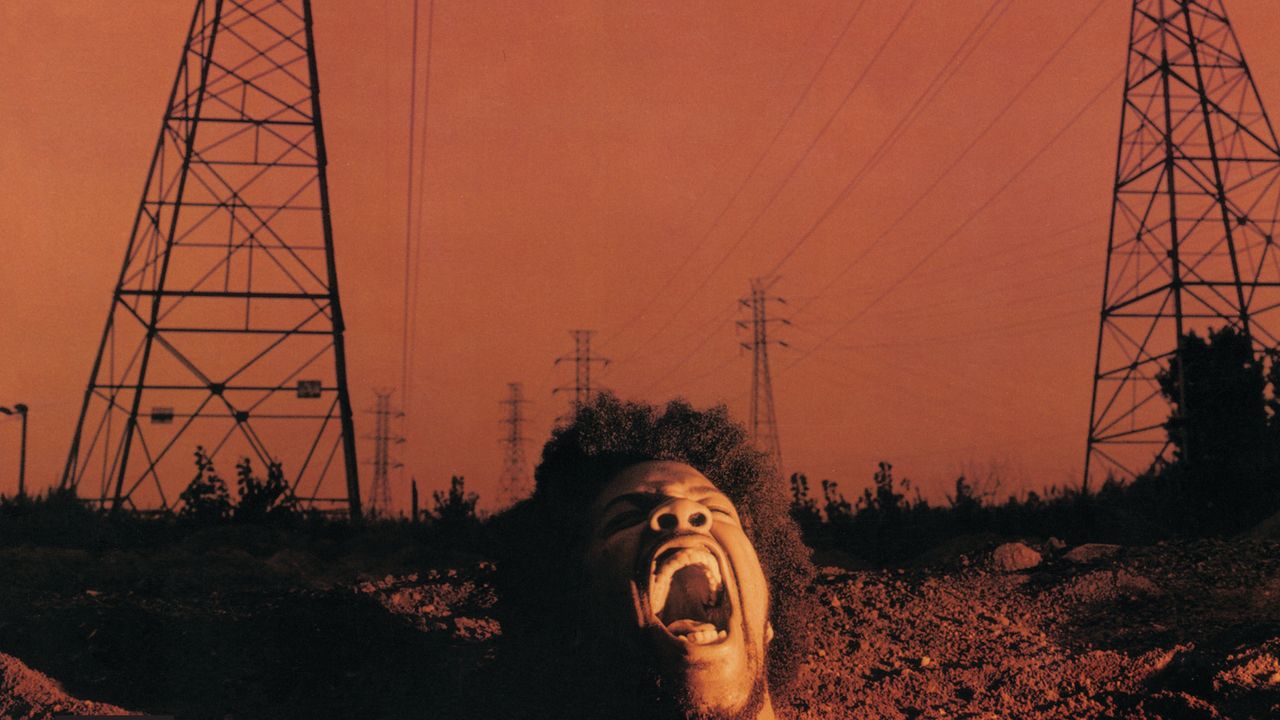
When Adario Strange visited Reggie Noble for his first-ever Source cover story in November 1994, the music journalist did not meet the same Redman that later interviewers would: humble, engaging, eager to please. Instead, Noble brought his face inches from Strange’s, breath hot and eyes rolling. “If someone was to come into this room right now and pop you and me in the head and kill us,” Noble demanded, “when we turned around, what would we see? Would we see the devil sittin’ there in that seat ready to blow our head off, or would we see a regular motherfucker?”
Redman was in a strange headspace in 1994. Most of his professional and personal life—and, since he’d been living on Erick Sermon’s couch since he got kicked out of his parents’ house as a teen, the two were one and the same—had disintegrated around him. Sermon, his mentor, was in the midst of a painful split-up with his creative partner, PMD. The Hit Squad, the extended family of East Coast rhymers that took in Redman alongside Das EFX, K-Solo, and Keith Murray, took sides like children in a divorce.
No score yet, be the first to add.
The split was messy and ugly, with figurative and literal shots fired, some of which left bullet holes in Sermon’s house while Redman still lived there. His friends were maybe trying to kill each other; the tour to promote his debut, Whut? Thee Album, was kneecapped by the squabble. Two years earlier, he’d been a part of one of the most vibrant extended families in rap. Now, he was almost completely alone.
By Noble’s own account, he spent these years dusted on a cocktail of drugs, primarily acid and PCP, and there were multiple signs during the run-up to Dare Iz a Darkside, Redman’s second album, that things were off. The Source story was not a fluke: Bad energy radiates from him in every surviving interview clip from the era, his eyes glazed and darting, body language tense and charged. He looks wary, belligerent, like someone you would not want to tap on the shoulder.
“I don’t remember none of that process,” he reflected years later, attempting to recall the making of Darkside. The album remains something of a little brother in Redman’s discography, neither the album that broke him nationally (that would be 1996’s Muddy Waters) nor the album that announced him as a solo force. “That’s my least likable album,” he said once. It’s also his purest.
For Redman, being likable was a responsibility. Before he rapped, he was a DJ for DoItAll, of the group Lordz of the Underground, performing under the name Kut-Killa. As a solo artist, he carried the hype man’s sense of duty: There was always a crowd to rock, a battle opponent to decimate, cheap seats in the back that deserved their show, too. Dare Iz a Darkside represents the one time in his long career that Reggie Noble forgot to be ingratiating. The imagined audience in his head disappeared. Left to his own career devices and marooned in a sea of bad neurochemicals, he turned the lights down, cranked the bass up to numbing levels, and blacked out.
The press run played up the album’s supposed darkness. TV promos mimicked the grimy exploitation horror films that Noble probably stayed up late watching, and between-song skits framed the album as a series of dispatches from “WFDS Radio” (We’re From the Dark Side), while haunted-house sounds—pitched-down cackles, and whooshing wind—filled the background. “Take y’all dreams and imaginations to the dark side,” he rapped on “Journey Throo Da Darkside,” but the darkness of Redman’s second album is atmospheric, that of a closet or a blacklit room.
Sinking into darkness requires sitting still, and sitting still was never Redman’s style. He switches voices, flows, characters, often mid-verse: On “Green Island,” he briefly assumes the voice of an alter ego named “Uncle Quilly,” complaining about “y’all whippersnappers with your caps on backwards,” before switching back just as abruptly. He pinballs off the walls of each beat, lighting up odd corners, like this representative stretch from “We Run N.Y.”: “I flew the coop like Big Bird in Timb boots/I skywalk the planet like my codename was Luke/From the darkside, I’m from the darkside, pa/I’m above the law like I’m Steven Seagal.” Big Bird, Luke Skywalker, Steven Seagal: What were we talking about again?
But every once in a while, something else emerges like a gaseous bubble from a tarpit: “When I die, I just wanna come back as the Nile on the river,” he raps on “Da Journee,” out of nowhere. It’s a brief glimpse into the haunted landscape of Reggie Noble’s mind. On “Bobyahed2dis,” he makes ominous references to hangings in Texas, and there are namechecks on multiple songs of Jacob’s ladder—either the Old Testament vision or (more likely) the hallucinatory 1990 psychological horror film.
There are other bits of lore buried in the songs—clues to the turbulence in Noble’s life, even if he wasn’t the type to linger. The album’s lead single, “Rockafella,” was named for a fallen friend of Noble’s, a Brooklyn rapper and fellow EPMD protégé on whose debut album he’d planned to work. The only surviving snippet of the late rapper’s would-be album plays for a few seconds, uninterrupted, before Redman’s “Rockafella” begins. On “Noorotic,” he tells a story about getting held up at gunpoint for his truck, using the next line to aggressively downplay the danger: “I laughed, because fuck the cash, I just wanted my tape back.” He references “bom-ba-zee,” or PCP, multiple times in passing—sobering reminders that his mind was running on dirty fuel.
Redman produced most of the album himself, with some assistance from his mentor Erick Sermon and Rockwilder, which adds to its claustrophobic insularity. He didn’t get his fingers dusty digging for samples: “The Payback,” “It’s Yours,” “Planet Rock,” “I Want’a Do Something Freaky to You.” By 1994, these were already pieces of hip-hop’s public property, and rapping over them was like stealing a fountain from a park. What was more interesting is what he did to them: The bass throughout Darkside is so clotted and muffled that it drowns out everything except the faintest imprint of the sample source.
Even inside your headphones, the album sounds like it’s coming through the floor of a downstairs apartment. It makes you feel like your gums are swelling up; it makes you want to lick your lips. It’s a reminder that weed isn’t always a hedonistic drug, and listening feels unpleasantly like being too high to focus on anything except the unbearable volume of your thoughts. Often, the songs stop after a single verse, the music snapping off like a vintage TV, with the cathode tubes still crackling.
Dare Iz a Darkside spawned no hits—the closest, “Can’t Wait,” stalled at No. 61 on the Billboard Hot R&B/Hip-Hop Singles & Tracks chart and No. 94 on the Hot 100. However, No. 94 is still technically on the Hot 100, Redman’s first appearance there, and Darkside eventually went gold at a time when Def Jam badly needed a success.
The quintessential ’80s rap label was struggling to find its footing in the ’90s: Beastie Boys had left, along with Rick Rubin, the label’s architect. Slick Rick was in jail, and two of their flagship acts, Public Enemy and Run-D.M.C., were threatening to become nostalgia acts. After a string of bum signings (The Afros? Bytches With Problems?), the company found itself saddled with $19 million in debt. It only pulled out of the nosedive after signing Warren G and Redman.
Redman was the ideal artist to help the label weather this transition. His career was forged in the late ’80s, when rappers found strength in numbers, bulking up into sprawling crews—the Juice Crew, the Bomb Squad, the Hit Squad, Native Tongues. But unlike his peers, many of whom he shouts out lovingly across Darkside, he was at home in the ’90s, when MTV pointed a path forward for rappers to be marquee stars all by themselves.
Redman’s relationship to mainstream success was always complicated. He jeered at the idea of platinum sales in interviews—“I’d rather be a consecutive gold artist than go platinum one year and then don’t go nothing the other year, like a lot of groups I could name,” he said in 1995. He eventually went platinum twice, once for Blackout!, his collaborative album with Method Man, and once on his own, for 1998’s Doc’s Da Name 2000. He was so anti-glamour that he posed for that first Source cover in 1994 with a wad of tissue visible in one nostril, testament to his chronic allergies. But in 2001, he also told The Source that one of the first rap records he ever bought was DJ Jazzy Jeff & the Fresh Prince’s “Girls Ain’t Nothin But Trouble.” Years later, when he embraced MTV, it was easy to see the lessons he drew from the Fresh Prince, the most telegenic rapper in history.
Redman didn’t want to be a traditionalist, like his compatriot Buckshot in the New York boom-bap group Black Moon. He also didn’t want to be a hip-hop Looney Tunes character, like Busta Rhymes. He lived somewhere in between these two poles: He was both the scowling guy in the cypher and the showman mugging for the camera. This split—between class clown and rugged elder statesman, between the purist and the hambone—was very much a Jersey thing.
At the dawn of the ’90s, Redman’s home state was seething with starving rappers in search of a national market. With Naughty By Nature, whose breakout preceded Redman’s by a few years, the wider world got its first taste of how a New Jersey rapper might look, sound, and feel. In general, a “New Jersey rapper” during these years was someone unpolished but ready with a big grin, a hard rhymer pushing on the lyrical vanguard of what anyone in New York could do with simile, metaphor, assonance, with onomatopoeia and enjambment. But New Jersey rappers also tended to be smart-asses who would never think to refer to themselves as teachers or gods.
Over the course of the decade, Redman slowly became the mayor of these guys—“the hero of the weirdos,” as he puts it on Darkside’s “Cosmic Slop.” He was the bummy underground dude who became famous for being a bummy underground dude, which is a strange place to be, as it means you are no longer, by definition, an actual underground bum. If you were the type of person to own a Staten Island crash pad with a broken doorbell and friends sleeping on your floor, you probably weren’t also the person who invited MTV Cribs to film it, but Redman did.
For this reason, it sometimes seems like Redman’s influence has gotten lost in the couch cushions of hip-hop. He’s often namechecked as one of the greats, but he’s not quite taken seriously enough to inspire militant reverence. Instead, he has had to settle for the stoners’ currency: universal affection. Through the haze of Darkside, Redman’s pride in his ability to “go in any hood and puff a blunt with any nigga” is audible. “I bet you can’t do that,” he taunted, and given the politics of rap in the early ’90s, he might have been right. “Smoked out with MC Eiht and Compton Most Wanted/Ninety degrees, smoke with L.O.D. on the Island,” he raps on “A Million and 1 Buddah Spots.” As the conflict between the East and West Coast heated up, Redman offered the fragile olive branch of the blunt.
Here was another secret upside to being a Jersey rapper: You could serve as the bridge between coasts. Ice-T was born and raised in Redman’s hometown, Newark. Treach was a close personal friend of Tupac’s, and Pac’s Outlawz hailed mostly from Montclair and Irvington. Newark is still several thousand miles away from California, but it’s technically closer than Manhattan, and in Redman’s music it feels even closer. Has anyone else from the tri-state area sounded so at home rapping over West Coast G-funk? It’s no accident that he appeared on All Eyez on Me, at the height of the coastal wars.
Dare Iz a Darkside is Redman’s most unapologetically G-funk-inspired album, right down to the album cover, a clear homage to Maggot Brain. He shared Erick Sermon’s sweet tooth for the West Coast’s rubbery Parliament–Funkadelic samples, but he took it even further. He promises to “lick your funky emotions,” which is not an offer you heard from a lot of East Coast rappers in the early ’90s. He chanted along with the “dog-catcher” part of Parliament’s “Atomic Dog” only one year after Snoop Doggy Dogg’s “Who Am I (What’s My Name)?” He copied Ice Cube’s famous “Fuck you, Ice Cube” chant—“Fuck you, Redman”—on “Noorotic.”
Redman didn’t just want to jack the sounds of P-funk, but channel the spirit. He wanted to be scatalogical, the way Snoop and Dre were. He wanted to be, in a word, gross—to make people’s noses wrinkle, to be thrown out of the venue for his obscene rhymes. He was “sick like sickle-cell anemia,” he went “rah-rah like I got cerebral palsy.” Slick Rick might’ve named a song “Lick the Balls,” but he sounded positively gentlemanly next to this: “I let your girl suck my dick from the back and let your moms give me cornrows on my crack,” Redman snickers on “Noorotic.” This all sounds juvenile (and it is), but there was a sense of mission behind it. When Red rapped that he offered “too much funk to cope with,” he meant “funk” like George Clinton meant it—something truly and gratifyingly disgusting, an exploration into the fetid corners of the human body to discover what embarrassing truths were hidden there.
The most famous Redman disciple is, of course, Eminem, who put Reggie Noble first on his list of favorite rappers of all time on “Till I Collapse.” But focusing only on Redman’s influence on Em does a disservice to his pervasiveness. When I first heard the Flint, Michigan rapper Rio Da Yung OG, another dead-serious clown whose jokes hit like uppercuts to the jaw, I heard Redman. Schoolboy Q’s erratic, unpredictable lily pad-hopping carries traces of Redman’s style: stoned but not calm; menacing, but not scary; funny, but not silly. The stream-of-consciousness raps and channel-flipping beats of Madvillainy carry the imprint of Dare Iz a Darkside. Whenever a rapper digs into their brain folds to root out whatever lint has accumulated there, Redman’s spirit lingers.
None of these rappers, to the best of my knowledge, have directly cited Reggie Noble. This is another lamentable link to Jersey hip-hop history, which is full of unacknowledged influences and unsung heroes. People like Duke Bootee, for example, who helped write Grandmaster Flash’s “The Message,” or the Camden rap duo Krown Rulers, whom many New Jersey hip-hop fans assumed were from Philly, since South Jersey artists often got their only radio play on Philadelphia’s Power 105. In this light, Dare Iz a Darkside might be the perfect Redman album: an influence that rappers don’t acknowledge from an album that the rapper himself doesn’t remember making.
Additional research by Deirdre McCabe Nolan.