 Written by
Madonna appears to the dreamer in a “sensual, lacy black outfit.” She stands beside a sofa upon which a naked figure lies covered by a sheet. Wordlessly, Madonna lifts the cover to reveal the dreamer’s father’s penis. Madonna says nothing, but it’s clear from her silence that she registers just how shameful and titillating this whole experience is. Suddenly, the man’s body ages, and in an instant, his genitals are withered. “Madonna had something to do with the transformation,” the dreamer (Barbara, 34) reported. “She seemed to be having fun teaching me whatever the lessons were in this situation: basically, that it was alright for me to have all my sexual feelings. They didn’t need to be acted on, but should at the very least be acknowledged.”
A decade into her career, Madonna had penetrated beyond the public imagination and into its deepest subconscious. By 1993, the singer had inspired enough nightly visitations around the world that the folklorist Kay Turner compiled a whole anthology. I Dream of Madonna is both a weird relic and a fascinating record of the artist as a prism for the collective unconscious (see also The I Hate Madonna Handbook). The most common fantasies Turner recorded were of being friends with the singer, although water (which apparently has deep erotic symbolism) also snaked its way through the dream lives of her respondents. On any given evening, Madonna’s appearance could range from soothing to nightmarish to incredibly profound, but there she was all the same: an ambiguous icon, plainly and playfully shedding light on her audience’s most basic and unspeakable desires.
No score yet, be the first to add.
At the height of her powers—with record-breaking album sales, sold-out tour dates, and a catalog of undeniable hits—Madonna had more than just a mononym. To detractors, her name was a byword for modern depravity, a one-woman wrecking crew whose transgressions ranged from desperate to demonic. But for fans, the music she made and the poses she struck were as infinite and immersive as a hall of mirrors. Standing on stage she could evoke a whole universe of associations—shape-shifting from one archetype to another, time-warping from one era to the next. Here she was: Marie Antoinette at the VMAs and Madonna©️on the Lower East Side, Blonde Venus and Blonde Bombshell, It Girl and Material Girl. In Alek Keshishian’s 1991 documentary masterpiece, Madonna: Truth or Dare, the singer never misses a chance to blur the line between live performance and a life of performance. “She doesn’t want to live off camera, much less talk,” her soon-to-be-ex lover Warren Beatty muses with comic (bordering on cosmic) exasperation. “Why would you say something if it’s off-camera, what point is there existing?”
Twisting and maneuvering her own fame, Madonna ditched the Old Hollywood model of stardom as a manicured cult of personality in favor of celebrity as a never-ending, Warholian soap opera. By the early ’90s, she had been the third rail of sexual discourse for almost a decade, electrifying audiences and sending conservatives into convulsions with every new release. Parallel to this spectacle ran an infinitely more interesting story: the tale of a lapsed Catholic and her quest to define what she really believed about herself and the world. Without a cosmic script and contemptuous of a patriarch’s guiding hand, Madonna’s work plunged headlong into sex and emotion: the ecstatic coupling of people between sheets and on the dancefloor as the ultimate vehicle for spiritual transcendence.
For young women coming into their power and gay men adrift through the long night of the ’80s, witnessing Madonna’s belief in herself was revelatory. But as the artist’s imperial era crested, so too did the debates that she’d helped to stoke. The second wave of feminism was fragmenting over whether pornography, sex work, and S&M were inherently misogynistic. An emboldened right wing had found new purpose in waging culture war, specifically targeting the work of transgressive artists like Robert Mapplethorpe and Andres Serrano. By the time Ronald Reagan first addressed AIDS in a speech, in 1987, 21,000 Americans had died of the disease; the long official silence emboldened religious zealots to publicly demonize its victims.
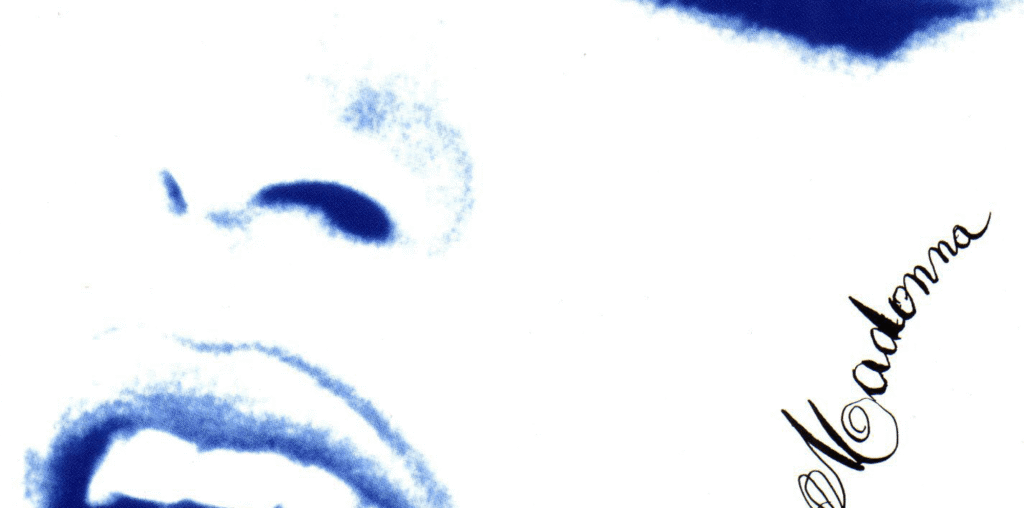
Sex, death, and world domination would be a heady combination for any artist, and Erotica both courted and was overwhelmed by controversy. Made with unprecedented resources, Madonna’s fifth album represented one of the most high-profile and musically accomplished releases of her career. It also stands as her first outright stumble, marking the end of her unrivaled domination over pop culture. It is an uneasy record that is both interior and communal, pitched between the bedroom, the dancefloor, and the analyst’s couch. Rather than reflecting the tumult of the wider world, the album creates a contained universe where the fantasies are as compelling as the contradictions. This is a dance record that recreates a nightclub’s liberation on a corporate scale, that flaunts its sexuality while grappling with matters of life and death.
Though she’d proven how explosive (and profitable) the fusion of commerce and controversy could be, in 1992 Madonna was working on another level altogether. Ahead of Erotica, the singer formed a venture with Time Warner called Maverick. Billed as an “artistic think tank,” the deal was said at the time to be the largest ever signed by a pop artist, besting even Michael Jackson’s record-breaking arrangement with Sony. Erotica would be among its inaugural releases, set to appear alongside Madonna’s hotly anticipated Sex book, as well as her star turn in the erotic thriller Body of Evidence. Despite its enormous reach, it became something of a forgotten album. “Most people want to hear me say I regret putting out my Sex book. I don’t,” Madonna lamented to Time. “What was problematic was putting out my Erotica album at the same time. I love that record, and it was overlooked. Everything I did for the next three years was dwarfed by my book.”
Sex is a volume of beautiful Steven Meisel art pornography that miraculously became an American publishing phenomenon. Like the videos for “Vogue” and “Justify My Love,” the book envisions a glamorous underworld where porn stars mingle with princesses, supermodels don’t wear clothes, and everything is about sex including power. The book’s provocations are cheeky and surface, and Sex doesn’t aspire to be anything but playfully perverse. Even then, reality casts an unavoidable shadow. “Everything you are about to see and read is a fantasy, a dream, pretend,” Madonna wrote in the introduction, “But if I were to make my dreams real, I would certainly use condoms.”
Where Sex is dedicated to pure sensation, Erotica touches on more painful and conflicted feelings. A cold breeze blows through the record, and the liberated nightclub scenes within are never totally removed from the wider world without. While a number of songs double down on steaminess, there are just as many concerned with drift, transience, and the pits of being down and out in love. Dance music’s pleasure principle is still present in Shep Pettibone and Andre Betts’ production, but it often feels muted, brittle, and slightly hollowed out. In a review for Rolling Stone, Arion Berger singled out the tension between Madonna’s sultry vocals and the chilliness of the underlying tracks. “[Erotica’s] cold, remote sound systematically undoes every one of the singer’s intimate promises,” she wrote. “Her [music] teases and then denies with the grim control of a dominatrix.”
Though the album shares a kinky aesthetic with Sex, S&M really only appears on the title track, when Madonna saunters onto the beat in the guise of her alter ego “Mistress Dita.” But the greater themes of dominance and submission, having and withholding, carry all through the record. Most of the characters Madonna channels are lost in a purgatory of need. The dancefloor she conjures is populated by hungry ghosts: givers who cannot receive pleasure and receivers who cannot take it. As emcee, Dita sums up the record’s elliptical theory of pleasure and pain in the final moments of the title track. “Only the one that hurts you can make you feel better,” she intones with sexy, shark-eyed menace, “Only the one that inflicts the pain can take it away.”
This idea sounds fine enough when you’re tied to a bedpost, but it makes for a pretty merciless view of adult relationships. More than whips or chains, Erotica’s harshest punishments are meted out in the form of mixed messages, broken promises, and sharp tongue lashings. Over wailing synths and a relentless beat, “Words” explores the gulf between a verbally abusive partner’s sweet nothings and his loaded insults. Language is both his tool of seduction and his method of control, and as her mind (and the beat) swirls to a point of realization, she finally comes to understand how empty his words were all along.
Elsewhere, silence is just as punishing. On “Bad Girl,” Madonna portrays a woman who has slowly grown apart from her partner but doesn’t have the heart to tell him. Instead she papers over the growing chasm between them by acting out in self-destruction. The song features one of Madonna’s all-time best vocal performances, capturing the subtle agonies of her character’s joyless spiral from guilt and loneliness to heartbreak and resignation. David Fincher’s brilliant, noir-inflected music video spells out the subtext of what listeners will already know: This story will not end well.
For an album ostensibly dedicated to sex, fulfillment is relatively hard to come by. Even on “Rain” and “Secret Garden,” which are some of the most rapturously toe-curling on the record, ecstasy is fleeting and intermittent, bookended by periods of fallowness and drought. The mood on these songs is fragile, her voice never rising above their carefully maintained atmospheres. “Rain” in particular is a small masterpiece, a sound bath of new age vapor and high-definition synths that feels like a long-delayed exhale after a lifetime of expectation. Without sustained attention, this spell can very easily come undone. The real issues arise when Madonna undercuts the vibe with paint-by-numbers naughtiness and mood-killing humor. The record reaches a nadir midway through “Where Life Begins,” when she evokes Colonel Sanders to describe cunnilingus as “finger lickin’ good.”
It often seems on Erotica that Madonna takes greater pleasure dressing someone down than getting them off. Some of the most fun (and funniest) songs on the album also happen to be the most mean-spirited. “This is not a love song,” Madonna disclaims at the beginning of “Bye Bye Baby,” before using her most flirtatious baby voice to rub salt in her ex’s wound. “Thief of Hearts” opens with the sound of a glass bottle breaking and a snarling, theatrical “bitch,” before the singer holds the pointy end of her spite up to her romantic rival’s neck over a throttling house beat. As she turns to slam the door on a fickle lover at the end of “Waiting,” she pauses to deadpan, “And the next time you want pussy/Just take a look in the mirror, baby!”
By all accounts, Erotica was a very fun record to make. The sound that Pettibone and Betts developed came together gradually, as they worked around the chaos of Madonna’s schedule. It was also the product of chance, experimentation, and messing around. “Fever” was initially a placeholder for a song that hadn’t panned out, until Madonna decided to cover Peggy Lee in earnest. The steam-rolling reggae of “Why’s It So Hard” was inspired by a pair of Caribbean vacations Madonna and Pettibone took halfway through production. While mixing “Waiting,” Betts freestyled a tall tale for the studio hands about having sex with Madonna in the back of a limousine. When he accidentally cued up that version during a listening session with executives, she insisted that it make the cut. It found its way onto the final track list as “Did You Do It?”
One of Erotica’s greatest strengths is the way it’s structured like a mix. At an hour and 15 minutes, it remains Madonna’s longest album to date and makes remarkable use of its length by layering, sampling, and calling back to other tracks from her discography. “Waiting” flips the breathless plea of “Justify My Love” into something much bleaker—a woman circling the drain over a man’s withheld affection. As the song’s merciless drum break stutters, switches gears, and barrels back, Madonna gamely keeps up until the object of her desire ceases to be worth the chase. It would not be nearly as affecting if it were cut down; Betts and Pettibone make wasted time sound completely hypnotic.
“Deeper and Deeper” on the other hand is quite simply one of the most perfect pop songs ever put to record. Like many Madonna tracks, it’s about liberation on a dancefloor that’s overseen, like the masks above a theater, by the inescapable figures of “mama” and “daddy.” The lyrics are as open-ended as the music is sweeping, but fans and critics have long read them from the perspective of a gay man coming out of the closet: “This feeling inside/I can’t explain/But my love is alive/And I’m never gonna hide it again!” Here is Madonna triggering the dream effect: a person at a psychic crossroads, torn between primary influences and inconvenient desires, assuming their fullest, most contradictory self. As “Deeper and Deeper” crosses its massive flamenco bridge and blares into its grand finale, the song’s hard-won freedom is underlined by a sudden interpellation from “Vogue”: “You got to just let your body move to the music!”
Initially, Madonna requested that Pettibone and Betts give the record a ragged edge that evoked not a nightclub, but an alleyway in Harlem. Mercifully, this idea was discarded, but even then her reputation as a culture vulture had already begun to take hold. (“It is [the] position of outsider that enables [Madonna] to colonize and appropriate black experience for her own opportunistic ends even as she attempts to mask her acts of racist aggression as affirmation,” bell hooks wrote in her scorching 1992 essay “Plantation Mistress or Soul Sister?”) By Erotica, whatever outsider position Madonna had once assumed was no longer tenable. She was not only a superstar but the figurehead of major business interests; her appropriation was no longer playful but hugely consequential, capable of gentrifying whole cultural ecosystems. “House isn’t so much a sound as a situation,” DJ Sprinkles intoned on Midtown 120 Blues before singling Madonna out for making an egalitarian hash out of the circumstances that created voguing: “Madonna was taking in tons of money, while the Queen who actually taught her how to Vogue was sitting at a table in front of me, broke.”
Erotica’s political consciousness is summed up in two songs. “Why’s It So Hard” is a question aimed at everyone and no one, and follows a line of inquiry so lofty that you’d be mistaken for assuming someone had accidentally remixed a Davos speech. It’s a preview of the clumsy, high-minded celebrity concern that would make Madonna’s more embarrassing political gestures an irresistible target of satire in the future. On the other hand, “In This Life” is grounded in an unmistakably personal conviction. The ballad reckons with the deaths of her dear friends Christopher Flynn, Martin Burgoyne, and Keith Haring from AIDS. Madonna’s heartbreak lingers on the particular joy of her relationship with each as she pleads with the universe to reveal a greater meaning in all this loss. Here is the record’s clearest stumbling block to simple pleasure, a reminder of sex’s relationship to mortality.
But even though Erotica has several such moments of humanity, the public was only prepared to accept it as spectacle. By creating a rarified space on the record and in Sex, Madonna had inadvertently drawn attention to her own distance from ordinary people. The never-ending soap opera had become repetitive; the envelope-pushing edginess that had made her famous was increasingly seen as button-pushing for attention’s sake. This awkwardness came to a head in a torturous 1994 appearance on Late Night with David Letterman, where her flailing attempts to shock the host—and his aggressive parries—audibly annoyed the studio audience. “We know that Madonna is not going to appear on a show unless she can make an impact,” Letterman’s musical director Paul Shaffer reflected years later. “I remember saying to myself, ‘the Material Girl has no material.’”
Madonna’s marvelous hall of mirrors had turned into a nightmare. This was a time when graffiti appeared around New York loudly proclaiming “COST FUCKED MADONNA,” when Steven Tyler told a joke about sexually assaulting her while accepting the top prize at the VMAs, when Steve Allen intimated the world would be better off if she were dead. In Mary Gabriel’s biography, Madonna: A Rebel Life, she reports that while shooting Dangerous Game with Abel Ferrara, both director and co-star James Russo physically struck the singer, with Ferrara later instructing the “ugliest, smelliest film crew member to simulate having sex with her for a scene.” She would later confide to Harvey Keitel that the ordeal had reminded her of being raped.
By Madonna standards, sales of Erotica were disappointing. Combined with devastating reviews for Body of Evidence and a hurricane of bad press, this period was only redeemed by the success of her Girlie Show tour, which kept the sexuality but recast it in a comic light. The lasting effects on her reputation and psyche were painful. “People who don’t think the controversies and the press affect her are wrong,” her brother and tour director Christopher Ciccone said. “There is definitely a cost.” She would privately describe the aftermath as “rock bottom… it was a really rough time.” In the following years, the singer would dig deeper and expose less: 1994’s Bedtime Stories and 1998’s Ray of Light prioritized self-realization over sexual liberation. These records represented a tactical retreat after a period of scorching over-exposure, by getting back in touch with herself rather than serving up scandal.
In time Erotica would be surpassed by other records that took the play of sexual archetypes to more vulnerable and defiant extremes. The idea of dedicating an album to honor the multitudes of an artist’s sex life is a much safer bet for younger pop singers today, who now have a fuller, ready-made language to defend their artistry from personal insult. What is remarkable about Erotica is how it resisted enormous external pressure to keep its vision intact. Madonna’s resources, stardom, and unrivaled control were not enough to keep the noise of the wider world from echoing throughout the fantasy that she had conjured. There is an inescapable public dimension to our private lives, and the record works most meaningfully when it channels this turbulence. Erotica’s zone apart still makes for a powerful, if exposed, refuge; a place to hold worldly upheaval and personal turmoil in artful suspense, to take stock and come to terms with oneself, a space to dream.