
 Written by
 Joseph Kamaru’s breakout album, Peel, might never have existed without COVID-19. He recorded its six long tracks of lightless drone at home in Nairobi in April 2020, after the sudden global shutdown had scuttled plans for a European tour. Peter Rehberg, head of Vienna’s Editions Mego label, received the demo while stuck in Berlin during the first quarantine period; he said that the unreleased album became his personal soundtrack for those featureless weeks.
Peel was released in July of that year, at a moment when the stillness of the world masked a deeper unease. Kamaru’s album, unlike more conventionally soothing strains of ambient music, reflected that thrumming sense of disquiet. It often felt like a million things were happening at once under the surface of the music, though you’d be hard pressed to pinpoint a single one of them: gravitational fields colliding, ocean currents flowing into one another, legions of bacteria mounting invisible wars. It was nominally an ambient record, but its outward calm seemed to mask wave upon wave of energy, surging toward a climax that never came.
No score yet, be the first to add.

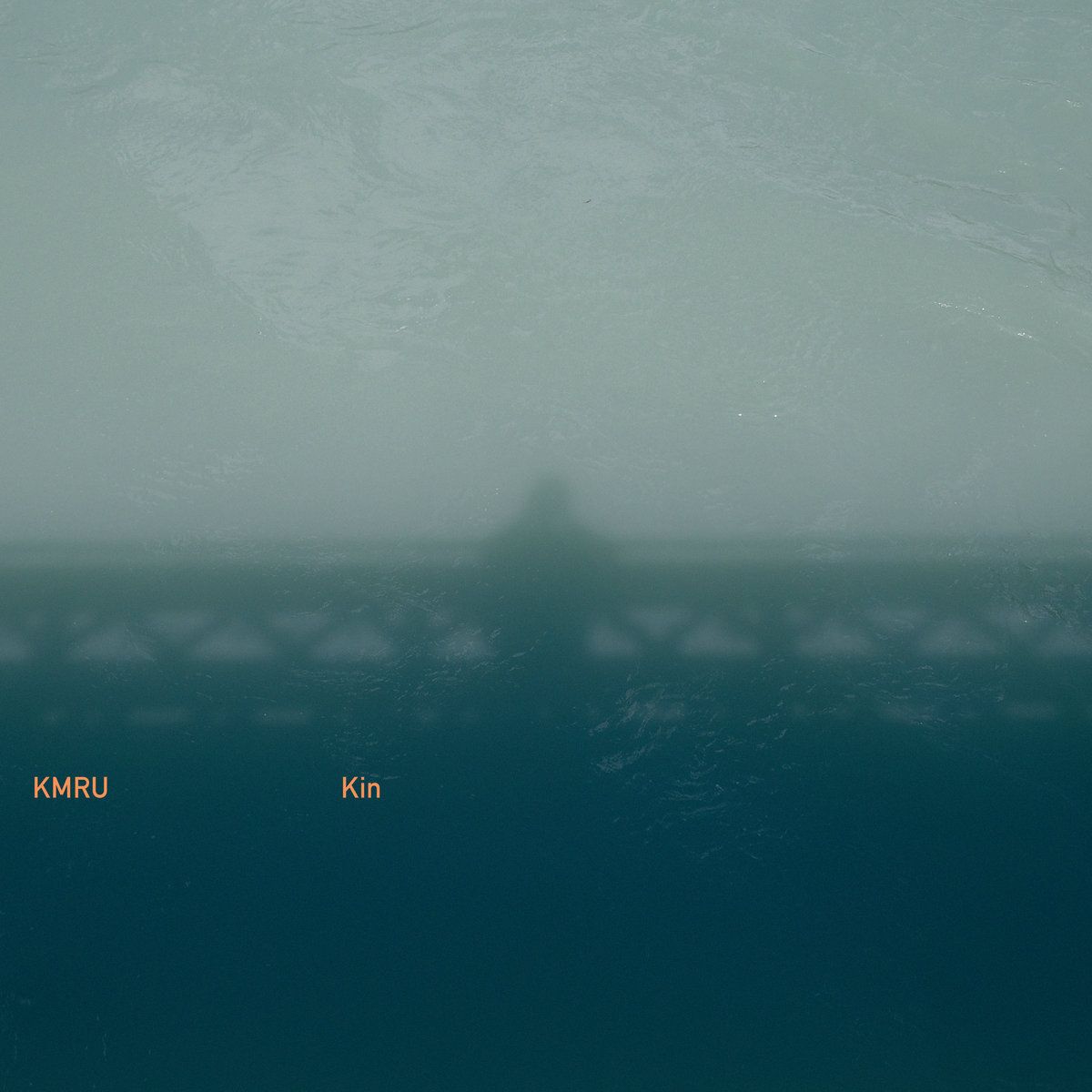
Since then, Kamaru—better known as KMRU—has put out more than a dozen releases, proving as versatile as he is prolific. He has explored Nairobi’s electromagnetic signature and quotidian soundscapes; undertaken critical histories of colonialist extraction; collaborated with noise musician Aho Ssan and dub bulldozer Kevin Richard Martin; and anthologized the work of his grandfather and namesake, a famed benga musician and political activist. But until now, he had not released anything that felt like a companion to Peel. More than any of his albums in the intervening years, Kin assumes that role. It offers a vision of ambient music as a vast matrix of overlapping vibrations, both meditative and galvanizing.
Kamaru began work on Kin early in 2021, while Peel was still new to the world, guided by conversations with Rehberg about what shape a follow-up might take. But when Rehberg died of a heart attack that July, a year after Peel’s release, the Kenyan musician stepped back from the project for a while, and he took his time completing it the following year.
Though Kin marks Kamaru’s return to Mego, he has said that he doesn’t see it as a proper sequel; if there’s one song from his breakout LP that sets the tone for the new album, it’s Peel’s “Klang,” whose rumbling expanse of diamantine feedback and helter-skelter throb made it a stylistic outlier among its duskier, more muted neighbors. Virtually all of Kin borrows its distortion and unstable vibrations, making the new record a far less soothing listen than its predecessor. It opens calmly enough, a lone synth fanning out in wavering fourths, like fingers tracing lazy circles through clear blue water. But soon, a foamy layer of distortion coats everything, blurring the space between the intervals as a high, keening melody—it could be whistling wind or a crying voice—cuts across the top. A sweetly charred amuse-bouche, the track is over in just three minutes, but the fuzzed-out textures return on “Blurred,” a 12-minute collaboration with Kamaru’s one-time tourmate Fennesz that sounds almost like an a wordless, hi-def take on the blissed-out noise fantasia of Flying Saucer Attack.
Those gravelly, overdriven textures tend to define the bulk of Kin, coming to a head on “We Are,” whose piercing feedback burns icy hot—almost painfully so at high volumes, though the song’s short length makes it feel more like a study in contrast than an endurance test. That’s especially true given the serene aquatic swirl of “Maybe,” which proceeds it. Kin’s lone outlier, “Maybe” makes the new album—five jagged shards and one tide-smoothed stone—feel like the inverse of Peel’s ratio of gentle and bracing. But as before, texture is only part of the story. What makes KMRU’s work so distinctive and compelling is its inner complexity.
It’s impossible to say exactly how he made these tracks. An avid field recordist, Kamaru has spoken of running his documentations of his surroundings—buses and bustling markets in Nairobi, sirens and birdsong in Berlin—through various types of digital processing, stretching and mulching and interweaving them with synths until the humdrum becomes musical. There are few obvious signs of the outside world on Kin. What you notice instead, if you really listen, are the interconnected systems at play—knotty lattices of varying rhythms running out of sync; melodies accruing from multiple overlapping lines, approximating the medieval technique of hocketing.
Nowhere is this intricacy more apparent than in the closing track, “By Absence.” It evolves gradually over the course of its 20-minute run, growing from a buzzing array of parallel lines into a coruscating symphony of buzz and birdsong. Accidental melodies fade in and out of earshot; pulsing chords rise up from below and are swallowed back into the murk, only to be replaced by other pulses running at different tempi, giving the impression of wheels within wheels within wheels. A sneaky decrescendo three quarters of the way through gives way to a thundering climax just before the whole thing fades out in a slow-motion fireworks display, embers tracing arcs in the darkness. I’m guessing that the title might be a tribute to Rehberg, to whom the album is dedicated. But rather than absence, the track—like the rest of the album—gives the impression of an overwhelming fullness, a life force captured in a riot of barely controlled waveforms.