 Written by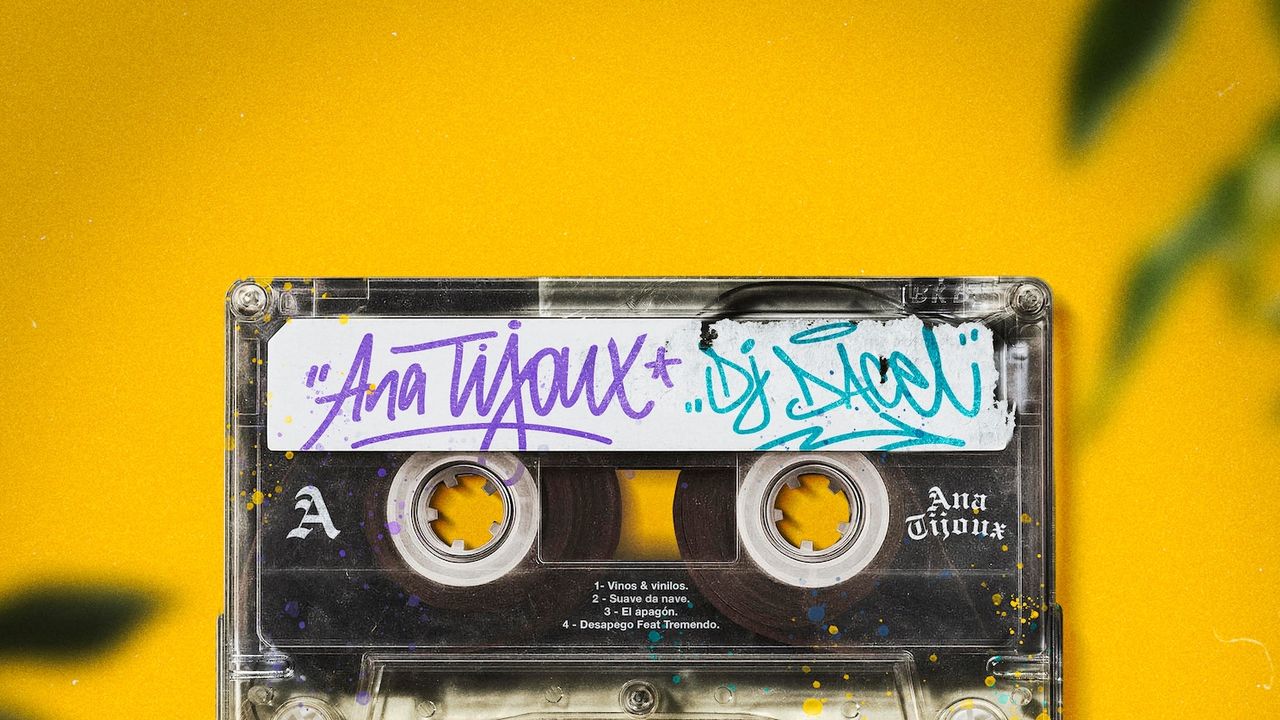
In numerology, 97 (with the 9 and 7 added to make 16) is a number tied to introspection and altruism. Ana Tijoux—the French-born Chilean MC who made a name for herself with politically minded music both as a solo artist and a member of Makiza—has a tie to the number. It’s present in the title of “1977,” the solo breakout song that looms over her career. On her new 97 EP, Tijoux invokes this personal sacred integer for a team-up with longtime collaborator DJ Dacel; here, 97 commemorates the year the pair first met.
Assembled during a spitfire four-hour session at Dacel’s house in Chile, 97 leans hard into nostalgia. The production is squarely old-school, full of record scratches, jazz trumpets, and deconstructed bossa nova percussion. It’s grounded by Tijoux’s earthy flow, a staccato that has more in common with Lauryn Hill than Ivy Queen. 97 is an outlier within Tijoux’s discography in that it’s not music to march the streets to: Instead, it’s an invitation to rest, a love letter to the homies, and a dedication to the people who keep the revolutionary artist strong under the weight of the world. Aside from “Apagón”—a maelstrom of horns, crackling vinyl, and trip-hop-esque production that’s more lively than the rest of the EP—97 is made for opening a bottle of Malbec and kicking it. It’s a soundtrack for conversation and processing, rather than action itself.
No score yet, be the first to add.
Connection is the core of 97. Aside from the night of freestyling that birthed these tracks, Tijoux gives herself permission to mourn and celebrate, sentiments that sandwich the record. Opener “Vinos y Vinilos” (“Wine and Vinyls”) pours one out for absent friends, as well as Tijoux’s personal heroes and references: A Tribe Called Quest, Slum Village, John Coltrane. “Las leyendas nunca mueren, siempre en mi altar” (“Legends never die, they’re always on my altar”), she raps over warm samba percussion, piano, and scribble scratching. “Desapego,” with Spanish MC Tremendo, deals with finding emotional freedom after letting go of a past love: “Fuimos fuego y ahora hielo/Ahora nos toca este duelo,” Tijoux raps, the fires of love now frozen in pain. Weighed down by old clothes and memories, the heavy lyrics bely her signature optimism. But, ever the champion of change for a better world, she ultimately rises above.
Tijoux’s celebrated career also includes a decade-long pause. Following 2014’s “Somos Sur,” a collaboration with British Palestinian rapper Shadia Mansour that called for unity across the Global South, Tijoux took an extended break from music, raised two children, grieved a sister lost to cancer, and moved to Barcelona. When her return to the mic on 2024’s Vida coincided with world attention on the occupation in the Gaza Strip, Tijoux responded with typical outspokenness, wearing a keffiyeh on NPR’s Tiny Desk.
For all its focus on the value of rest and friendship, 97 never loses the plot. On “Apagón,” she calls out artists who opt to refrain from reflecting the times: “Despolitizado está de moda y atractivo.” If being apolitical is fashionable, Tijoux stays holding the front—even from the couch, wine in hand. On “Suave Da Nave,” named after Brazilian slang for “smooth sailing,” she invites us aboard her little boat, still chugging along though rough waters, to look at the stars. Without space to recover, how else can one fight on?