 Written by
 42 Dugg: The Story Behind the Voice of Detroit | Raptology Documentary
In rap, some artists break through because they are polished enough for the industry to package. Others break through because there is simply no way to ignore them. 42 Dugg has always felt like the second kind. His voice came in rough, compressed, and instantly recognizable, like every line had already been through some kind of pressure before it ever touched a beat. There was no clean pop-star arrival to his rise. There was Detroit, there was pain, there was prison, and then there was the kind of momentum that starts moving so fast it can either make a career or expose every weakness around it.
By the time the mainstream truly caught up with him, 42 Dugg already sounded like somebody who had lived several chapters ahead of his own fame. Listeners heard the hunger immediately. What they also heard, whether they realized it or not, was tension. Even on records that felt triumphant, there was always something anxious moving underneath them. That edge became part of what made him compelling. It also became impossible to separate from the story.
His rise was tied to one of the strongest alliances a young rapper could ask for: Lil Baby and Yo Gotti, two major power centers who saw something in him early. But that rise was never smooth. Legal issues kept interrupting momentum. Headlines about court dates and jail time kept pushing against headlines about songs, plaques, tours, and label growth. And through it all, 42 Dugg remained one of the few rappers whose voice could make a single verse feel like a whole life compressed into a minute.
Detroit Raised the Tone Before the Industry Ever Heard It
Detroit rap has its own grammar. It rewards bluntness, local texture, pressure, and a refusal to over-explain what the streets already understand. 42 Dugg fit that tradition naturally, but he also brought something stranger and harder to duplicate. His delivery sounded pinched, urgent, and melodic without ever becoming soft. It was not the kind of voice that asked for mainstream approval. It cut through because it sounded like it had already been tested somewhere more serious than a studio session.
Born Dion Marquise Hayes, 42 Dugg came out of Detroit’s East Side carrying a story that was already shaped by incarceration. He has spoken about starting to rap while locked up, and that origin matters because it explains a lot about the tension in his music. There is hunger there, but there is also confinement. Even when he talks like a man in motion, the records often feel like they were written by someone who knows exactly how fast freedom can vanish.
That sense of compressed life is part of why his music connected so quickly with listeners who were not even from Detroit. He did not sound industry-built. He sounded already formed by circumstance. In an era when so many artists arrive pre-filtered for maximum playlist appeal, 42 Dugg felt jagged in a way that made him believable. The flaws were not something to smooth out. They were part of the signature.
Need press for your music?
Get featured on Raptology and put your release in front of rap fans, artists, and industry readers.
The Co-Sign That Became a Career Shift
A lot of artists get a look from bigger names. Not all of them get a real investment. 42 Dugg’s situation with Lil Baby and Yo Gotti mattered because it was not just a passing feature or a social media nod. It became infrastructure. He was brought into a rare position that connected him to Lil Baby’s 4PF world and Yo Gotti’s CMG machine, a pairing that instantly raised both his visibility and the expectations around him.
That kind of backing can change a career overnight, especially for a rapper coming from a city with as much raw talent as Detroit but not always the same mainstream pipeline as Atlanta. Suddenly, Dugg was not only being judged as a promising Detroit artist. He was being measured as someone stamped by two of rap’s strongest names in the business. That comes with opportunity, but it also comes with a different scale of scrutiny. Every move matters more. Every misstep expands.
What made the partnership work artistically was chemistry. Lil Baby and 42 Dugg did not sound forced together. They sounded like artists who could both understand urgency and turn it into something commercial without draining the life out of it. Their records hit because one brought polished acceleration while the other brought a harder edge that made the songs feel grounded. It was not mentor and student. It felt closer to alignment.
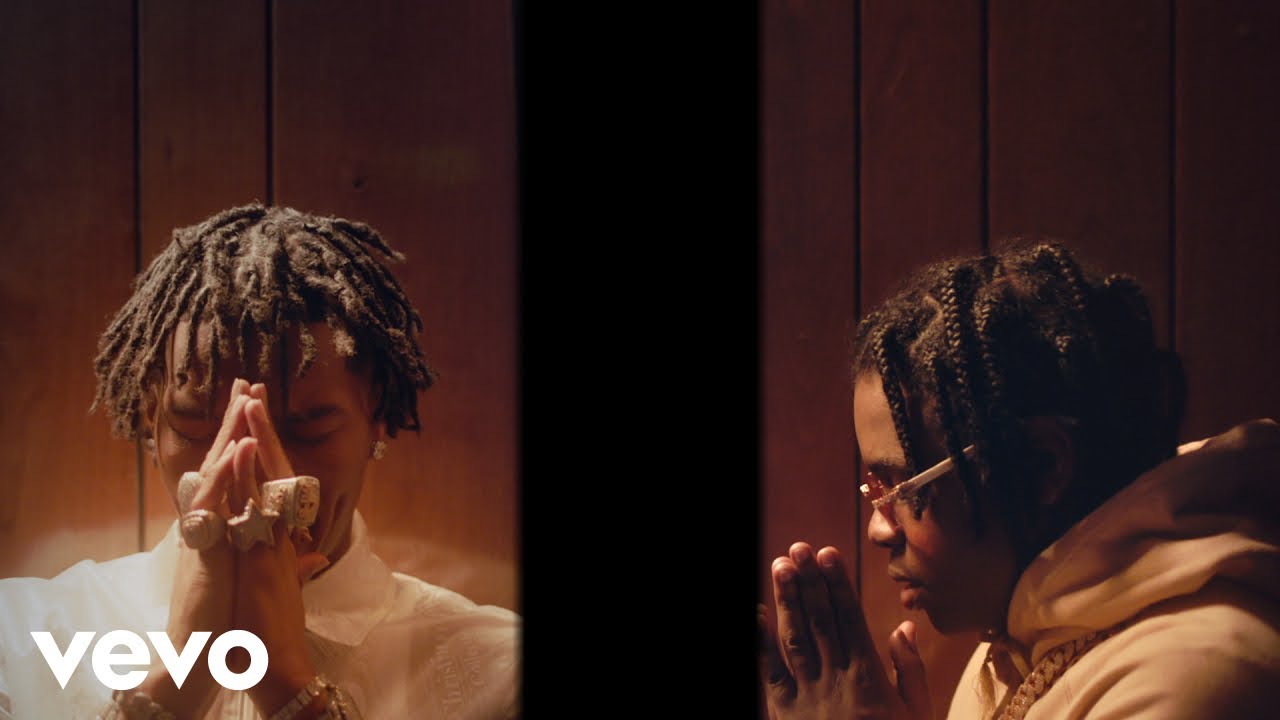
“Grace” helped widen the lane. Then “We Paid” kicked the door open. Once that record took off, 42 Dugg was no longer a name people only knew if they were tapped into Detroit or label movements. He was suddenly attached to one of the biggest rap records of the moment, and his contribution was not forgettable filler. It was one of the reasons the record stuck. His whistle, his tone, and his clipped confidence became instantly recognizable to listeners who had never heard him before.
When the Breakout Hits, the Pressure Gets Louder
This is where people often misunderstand rap success. A breakout does not erase the problems that came before it. It magnifies them. Fame puts more money, more eyes, more pressure, and more consequences around an artist all at once. In 42 Dugg’s case, the rise happened while legal issues were still close enough to keep disrupting the narrative. That is what made his career feel unstable even while his numbers suggested growth.
In public, it looked like a dream setup. Major co-signs, real hits, recognizable branding, and strong label support. Underneath that, there was a different story unfolding. Gun-related legal trouble, sentencing, and then the decision not to surrender on time turned what could have been a steady ascent into something punctured by stops and setbacks. For a rapper whose entire appeal depended in part on momentum, those interruptions mattered.
It is easy to talk about legal pressure as if it is just another chapter in a standard rap script. But timing is everything in this business. A year lost during a key growth window can do real damage. Tours stall. Releases shift. Features do not hit the same. The audience keeps moving. The market is brutal in that way. It never promises to wait for anybody, no matter how talented they are.
Embedded from 42 Dugg’s public Instagram.
The Legal Weight Never Fully Left the Story
A lot of rappers carry legal history into their careers. What made 42 Dugg’s case feel especially disruptive was how closely it stayed attached to the rise itself. His gun case put him in the kind of federal spotlight that can change an artist’s schedule, their image, and the way the public talks about them. When he later failed to report to serve a sentence, the story grew even heavier. It became less about one setback and more about a pattern of interruption.
For artists coming from environments where survival already requires hyper-awareness, the transition into fame can be deeply uneven. Success changes the setting, but it does not automatically retrain the instincts. That contradiction hangs over a lot of street rap stories. The world sees a rapper with money, fame, and an opportunity to move differently. The artist often still moves with the reflexes of somebody shaped in a much harsher environment.
In 42 Dugg’s case, the legal pressure became part of his public identity whether he wanted it to or not. It affected how people talked about his future. It fed the broader rap conversation about wasted momentum. And it placed a question over his career that had little to do with talent: would he have enough uninterrupted time to become everything his early records suggested he could be?
That is part of what makes his story more complicated than a simple rise-and-fall narrative. The music never stopped sounding important. The issue was never whether he had enough ability. The issue was whether the conditions around him would allow the career to stabilize.
Promote your music video on Raptology
Get coverage, placement, and visibility for your latest release on one of hip-hop’s most active indie media platforms.
Loyalty Became More Than Branding
In rap, loyalty gets said a lot. It gets worn on chains, captioned under photos, and turned into song titles. But fans can tell when loyalty is just a pose and when it actually survives rough seasons. One of the reasons 42 Dugg kept his place in the conversation is that his support from bigger names did not seem to vanish the moment legal trouble complicated the rollout. That mattered. It made the alliances around him feel real.
Lil Baby’s role in the story is especially important because it framed 42 Dugg not just as another artist benefiting from a feature, but as someone whose talent had genuinely earned respect from one of the biggest stars in rap. Yo Gotti’s involvement widened that legitimacy even more. Being tied to both 4PF and CMG made him feel protected by power, but it also raised the stakes. If you are backed by names like that, the public expects impact. Anything less gets read as underachievement, even when the reasons are more complicated.
At the same time, loyalty has a darker edge in street rap. The same codes that help keep an artist grounded can also keep them tethered to the pressures that shaped them. You hear that contradiction in 42 Dugg’s music. There is pride in where he comes from, but there is also the sense that the same environment that made the sound powerful may never fully let the person escape it.
Why the Voice Stayed Bigger Than the Setbacks
What kept 42 Dugg relevant through all of this was the one thing nobody else could replicate cleanly: the voice itself. Plenty of artists can borrow cadence. Plenty can try to imitate urgency. But Dugg’s delivery feels too specific to duplicate without sounding watered down. It is not just the texture. It is the emotional pressure inside it. Every line sounds like it came from a place where speaking too softly was never an option.
That is why listeners kept checking for him even when the release schedule became uneven. There are stars who depend on constant visibility to remain important. Then there are artists whose sound is distinct enough that absence can actually intensify curiosity. 42 Dugg belongs closer to the second group. When he returns, people remember quickly because there are not many other rappers occupying the exact same space.
His music also sits at an interesting intersection between Detroit rap and the broader Southern-dominated mainstream. He never sounded like he was abandoning Detroit, but he had enough crossover chemistry with artists like Lil Baby to feel nationally scalable. That balance is hard to achieve. Too regional, and the ceiling can stay limited. Too polished, and the original base may feel abandoned. Dugg often managed to hold both ends of the rope at once.
The Return Was About More Than Music
When 42 Dugg returned with new music after prison, the significance was larger than the songs themselves. The comeback was a test of whether the story could keep moving. His 2024 debut studio album felt like an attempt to reassert control over a narrative that too often drifted into legal headlines. Then the arrival of new material in 2026 signaled something else: not just recovery, but persistence.
That persistence matters in an era where rap consumes artists at an unforgiving speed. The internet likes simple stories. You are either the new thing or the cautionary tale. 42 Dugg’s career has resisted that clean sorting. He has had too much success to be dismissed as wasted potential, but too many interruptions to be framed as a fully stable mainstream ascent. He sits in that uneasy middle space, and that is exactly what makes the story worth telling.
There is also something very Detroit about that position. The city’s rap scene has long produced artists whose talent feels inseparable from struggle, and whose charisma grows partly out of how directly they translate pressure into music. 42 Dugg does not feel like a detached celebrity who happened to come from a hard background. He still feels connected to the texture that made his records land in the first place.
The Story Behind the Voice of Detroit
In the end, 42 Dugg’s career says a lot about modern rap and the price of arriving from the kinds of places fans claim to respect. The same authenticity that makes the music powerful can also make the path unstable. The same loyalty that strengthens an artist’s image can keep them emotionally tied to environments that make peace difficult. The same fame that looks like freedom can bring a different kind of confinement when the law is still close behind it.
That is why his story lingers. It is not simply the story of a rapper who got hot next to Lil Baby. It is the story of a voice that made it out far enough to be heard everywhere, while still carrying the weight of where it came from. Detroit gave him the tension. The industry gave him scale. Legal pressure kept forcing both worlds to collide.
Through all of it, the voice stayed distinct. Sharp. Strained. Unmistakable. And maybe that is the clearest reason 42 Dugg remains important. Even when the road got messy, even when momentum broke, even when the headlines shifted away from music, he still sounded like somebody the rap game could not fully replace.
Hulda Hicks was born in Brooklyn, NY in the late ’70s, at the time when Hip-Hop music was just emerging as an art form. Her entire life was influenced by the culture, having grown up in the epicenter of the creative movement.
As a trained musician and vocalist, Hulda got exposed to the industry in her twenties and has worked on projects with iconic figures such as the Chiffons, the Last Poets, and Montell Jordan, to name a few. Her passion for music extended past the stage on to the page when she began to write ad copy and articles as a freelancer for several underground publications.
A written review from “Jubilee Huldafire” is as authentic as it gets, hailing from one creative mind that has a unique voice, on paper and in person.